Wednesday, 18 January 2012


Tuesday, 17 January 2012
Frankie: Republican Presidential Candidates 2012
-
C’mon wimp, publish me on your blog
this time.
-
No, Frankie, it’s not on. We made a
deal. If you must use me to spew your filth, then I’ll publish your stuff over
on Obnoxious. The style over there is a little more … robust.
-
Pseudo-bourgeois hypocrite! All this
is nothing more than a literary fiction; when you get right down to it, I’m
nothing more than a figment of your imagination anyway.
-
Maybe, but you’re not a very pleasant figment of my imagination.
-
Pleasant, schmeasant, you’re just
chicken, that’s all. What a fucking schizo wimp!
-
If … and this is a hypothetical question
… if I published you this time on “Attempted
Essays,” would you leave me in peace – completely in peace – for, say, two
months at least?
-
A month?
-
Six weeks.
-
O.k.
-
Oh, and Frankie …
-
Yeah?
-
No explicit, graphic descriptions of
what santorum really is.
-
Oh … all right!
[So, here you have it, gentle reader, Frankie
in all his nasty glory. Read on at your own risk …]
They like
to call themselves the greatest democracy in the world – the USA
 On the one
hand there’s the incumbent. Free at last, thank God Almighty, we are free at
last! … Yes, we can!, and all that other good (bull)shit. And what did
On the one
hand there’s the incumbent. Free at last, thank God Almighty, we are free at
last! … Yes, we can!, and all that other good (bull)shit. And what did
Ah, people,
but the crazy thing is, the way it looks right now, he’s going to be re-elected
next November. And you know what makes this craziness down-right bizarre? That
this is probably the best thing that could happen to the USA and the world
because, when you look at what the opposition is offering as alternatives, any
rational being is forced to the conclusion that a wishy-washy, infinitely
flexible Chicago Democrat boss is better than any of the various varieties of lunatic
the Republicans are likely to nominate.
Let’s be thankful for small mercies. Some of
the wackiest have already bowed out; Donald Trump, Sarah Palin, Michele Bachmann
(because Jesus told her to). Herman Cain is gone too and as I’m writing this
reports are coming in that Jon Huntsman has given up – showing, at least, that
the guy seems to actually be basically reasonable and in possession of some
intelligence. Of course, that’s probably what gave him the kiss of death; I’ve
a feeling that the Republican party just doesn’t do reasonable at the moment.
Let’s look at some of the more interesting
fruit and nut cases who are still in there and running. They’re all rich, of
course, because you have to be rich to run for the presidency in the USA
Take Rick Perry. This is the man who wants to abolish
government agencies whose names and functions he can’t remember. The guy has
been governor of Texas ever since Dubya gave
up that job to move on to wrecking the US America
Then there’s the other Rick, Rick Santorum. Jesus
seems to like Ricks. Maybe that’s what’s happening; Jesus has got drunk in
heaven and started roaring out, Rick for
President, as a joke and every Tom, Dick and Harry who’s called Rick thinks
that Jesus means him. (Apart from
Michele Bachman, but her husband, Markus, has probably been taking his
inspiration from the priestly caste snob in The
Life of Brian who claims during the crucifixion, “I’m Rick and so is my
wife!”)
 |
| ... considers entering the race as a compromise candidate ... |
In the special private funny-farm they’ve got
for Republican presidential candidates, Santorum has a whole suite reserved (he
thinks it’s the Presidential Suite). He’s given his name to a rather icky by-product
of anal sex (and if you don’t believe me, just google santorum). [I’ve promised the wimp not to go into any more detail
about this, much as I’d like to; let no one say I’m not a man of my word.] This
guy’s Catholicism is so conservative that he’s been endorsed by the
evangelicals, including the wonderful Mike Huckabee (just be thankful he isn’t running to, though maybe if
Santorum gets the nomination he’ll put him on the ticket as VP). Santorum is so
“pro-life,” he’s not just against abortion – he believes that sex is wrong if
it doesn’t lead to children. Believe me, people, this guy makes Pope Ratzinger
look like a dangerously radical liberation theologian. Santorum can best be
described as the American equivalent of Ahmadinejad.
What about Newt Gingrich? Newt by name, Newt by
nature, I say – the man has many similarities with a resentful lizard suffering
from halitosis. This is the guy who, as House Speaker, gridlocked American
politics back in the nineties because he didn’t like Bill Clinton (or because
he thought Bill Clinton didn’t like him). He wants to build a fence between the
USA and Mexico
Ron Paul is a bit of a maverick. One of his
basic problems is that he’s in the wrong party. Paul’s views make him a natural
leader of the Libertarians but, since they don’t have any national clout, he
has to settle for being a Republican. The guy has the advantage of being pretty
consistent and faithful to his principles; the problem is that these principles
often tend to put him outside the real world. I think he’d feel happier in an America Washington Massachusetts ,
Oregon and California
you could get legally stoned, in Texas and South Carolina
It could also be argued that his age might mean
that America
In the end, it doesn’t really matter – the way
things look at the moment, Mitt Romney is going to get the GOP nomination. What
a prospect! This is a man who believes that some of the lost tribes of Israel
settled in America, were visited there by Jesus after his resurrection and left
divinely inspired records, written on golden plates in a language called “Reformed
Egyptian,” to be discovered by Joseph Smith (guided by angels) nearly eighteen
hundred years later. He also believes that God doesn’t want you to drink
coffee.
The man became a multi-millionaire, running
companies which specialised in asset stripping and hedge funds. His business
background is firmly among the people who caused the financial crisis of 2008,
the consequences of which are still reverberating around the globe.
He has the advantage of being more flexible
than Obama. Having introduced a package for universal health care as Governor
of Massachusetts in that state, he now claims to be against “Obamacare,” though
the basic differences between the two measures are minimal. Watching him
throughout the campaign for the Republican nomination, he seems to be a
chameleon, one capable of taking on whatever opinions necessary to attract the
majority of Republican voters in order to achieve the nomination. His basic
claim for suitability for the job is his long experience in business – if elected
he would then, logically, run the USA
In the end, it probably won’t make all that
much difference whether Obama or Romney rule the USA US
The wimp usually
finishes up his posts with some music. I’d like to dedicate this little number
to Rick Santorum.
Pictures retrieved from:

.jpg)
Wednesday, 11 January 2012
Keith Jarrett’s Rio

As regular
readers of this blog will have noticed, music is an aspect of life which is
very important to me and one which regularly inspires me to posts here;
anything from Bob Dylan to G.F. Handel. My taste is wide-ranging and catholic –
while the core of it is certainly popular music, more particularly what is
called rock music, in the second half of the last century, it also spreads out
in many other directions.
For some
reason recently, something in me had started to whisper … Jazz. Now I would not regard myself as any kind of expert in this
wonderful area of music. I have had phases where I have concerned myself more
with the genre and I am not ignorant of the major movements and currents which have
taken place in this fascinating form of musical expression. I will readily
admit my profound respect and admiration for the genius of many of the great
figures of jazz: from Louis Armstrong to Charlie Parker, Thelonious Monk and
Duke Ellington, John McLoughlin, Gil Evans and Charlie Mingus and, of course, the incomparable,
the divine Miles Davis.
At any
rate, I had the feeling that I needed to listen to some good jazz. And, as it
happened, Christmas had brought a gift token and I had had occasion to read a
review somewhere of what aficionados were describing as the jazz event of 2011 – a new recording of a live concert at the
Teatro Municipal in Rio de Janeiro
And was
transfixed, awestruck, amazed …
Keith
Jarrett will be 67 this year and he’s been on the scene for a long time. He was
a bit of a Wunderkind, possessing
that blessing (and often curse) of many really good musicians, absolute or
perfect pitch. Why curse? Let me explain. While I would in no way describe
myself as a good musician, I do have, not perfect
pitch, but a pretty good sense of pitch. This means, among other things,
that I can hear if an instrument or a singer is out of tune – even to a small
degree – and that it can quite annoy me. Pitch is a difficult thing; there are
styles of singing, for example, which rely on shading it. Bing Crosby’s
crooning is one good example, where he often intentionally starts slightly flat
of the note –and this is all right, because he will then hit the pitch
perfectly. But a singer who tends to consistently sing flat (think of Marc
Almond of Soft Cell singing Tainted Love)
or an out-of-tune guitar can be genuinely painful. And Keith Jarrett has a
reputation as a perfectionist, which must make things (or people) only slightly
out of tune particularly unbearable for him.
Jarrett’s
musicality was recognised and fostered early and as a teenager his interests
gravitated more and more in the jazz direction (one of his early inspirations
was Dave Brubeck). In 1969 Miles Davis basically head-hunted him for his group;
Jarrett played keyboards (along with Chick Corea) on the legendary Miles Davis
at the Fillmore recordings, as well as at the Isle of Wight Festival in 1970.
But despite his reverence for Miles, Jarrett was developing an antipathy to
electronic instruments (particularly keyboards) which gradually moved him out
of the rock-driven fusion style which Davis
Jarrett’s
done most of the things great jazz players do; he’s recorded and performed with
smaller and bigger groups, trios and quartets and quintets and bands and
orchestras (his work with bassist
Gary Peacock and drummer Jack DeJohnette providing a defining expression of
many jazz Standards); he’s explored
different musical directions in that crowded family of jazz styles; he’s
composed and covered the compositions of others. He’s crossed-over (like nearly
everyone who was hip in the sixties and seventies into rock), more
particularly, in his case, into classical music – including composition but
also wonderful performances, particularly of Bach. Yet this kind of description
only skirts around the circumference of what really defines the man. To get
closer to the centre, to the reality, I’ve got to pare it down, cut it back to
the essentials. Because this is also a central part of the reality which is
Keith Jarrett – the pursuit of the logical simplification of things, their
rendering to the essentials; there to let a new, stripped, simple, wonderfully
complex artistic beauty come through.
Jarrett is
a pianist.
Jarrett is
a perfectionist.
Jarrett is
gifted with a sublime musicality.
Jarrett
follows his own particular dedication to one of the central, perhaps the central truth of jazz – improvisation.
And so,
Keith Jarrett regularly takes to the road on tour with the most daunting,
vaunting personal project any musician can take on; just a piano, an audience
and his own, very particular musical genius.
Improvisation
is an essential part of jazz – it’s what you can hear every time you are part
of the audience for any half-decent combo playing live, the musicians merging,
melding, grooving; tossing a theme from one to another, letting each of them
work it a bit, sharing it. Hell, you don’t even need to go as far as a jazz
combo; in my own youthful, amateur adventures in playing rock music, jamming was one of the things which was
most fun when my friends and I gathered to make music. And even I have
experienced that sublime feeling when it clicks,
when you finally get into that wonderful gift of space beyond space, of
timeless time which only making live music can give you.
And it is
this same timeless time, space beyond space that Jarrett is looking for when he
goes on his solo tours. It is one of the most wonderful democratic things about
music that it can provide so much pleasure for anyone who really is engaged in honestly
making music; whether it’s a young enthusiast struggling to get clean chord
sounds out of an electric guitar in a garage band or Daniel Barenboim playing a
Tchaikovsky piano concerto with a symphony orchestra.
But Jarrett
is taking all this one step – one vast step – farther on; he’s making the
music, the completely extemporaneous improvised music, all on his own. It is
what Miles Davis described in wondering bewilderment as Jarrett’s ability to “play
from nothing.” Himself, a Steinway, the audience, and his own genius, his
feeling for music. It is, simultaneously, an amazing exercise in hubris and a
completely humble act of total trust in and adoration of the goddess of music
(and, though the Greeks named Apollo the god of music, take it from me, my
friends, the deity of music is definitely feminine – and she can be a real
bitch sometimes too).
Given the
incredibly high standards he demands of himself, and the breadth of his genius,
these performances can be nothing less than stupendously strenuous occasions
for him. This is, in my view, the reason why Jarrett has the (deserved)
reputation of being so critical and demanding of his audiences, so … narky. He’s
been known to stop playing, for example, and demand that coughers in the
audience either quit coughing or risk being thrown out. Talk about the horror
of the writer before the virgin, empty page; Jarrett sits there evening after
evening, just him and his piano, waiting for the initial inspiration, the
ignition to come. One story tells of the opening of a concert, of minutes going
by in silence – the maestro can’t find a beginning. Finally, someone in the
audience, blessed by some kind of divine intuition, calls out, “D sharp!” “Thank
you,” replies Jarrett and launches into a sublime improvisation. It is no
wonder that this man has made the ghastly acquaintance of nervous breakdowns,
and chronic fatigue syndrome. As he himself describes it, “No matter what people
think, no matter how many hundreds of times I've done it, it doesn't get
easier. It gets harder, because my whole goal is not to repeat myself, and in
some way bring something else into the world that wasn't there before in quite
that way.”
The man is
talented enough, and professional enough, to always give his audiences more
than value for their money. He engages completely with his work, moving
constantly on the piano stool, humming and groaning in dialogue with the emerging
music. But sometimes … very occasionally … it goes beyond that and Keith
Jarrett reaches a pinnacle which goes beyond any descriptions which could be
reached with mere words. It happened at the Köln
Concert (1975) and the Vienna Concert
(1991). And it happened in Rio last April.
“I really
had no idea what I meant, but this concert is it. Everything I played in Rio was improvised, and there is no way that I could have
gotten to this particular musical place a second time, or in a different
country: not even in a different hall or with a different audience, or on a
different night.”
Luckily,
the evening was recorded. I’m not going to give a long description of it here,
if you want this, read some of the links I’ve put at the end of this piece. But,
more importantly, listen to the music. I’ve put some YouTube links into this
essay* but they don’t really do the master justice. This is music which needs
the full wav. format, compromised audio forms like downloaded mp3 files just
don’t hack it. Nor do headphones – if you want to do this music, this
performance (and yourself) justice, listen to it on a decent sound-system. Go
out and buy the CD and listen to it properly.
It doesn’t matter if you’re not into jazz, this music goes far beyond
categories. You won’t regret it.
*The links I originally placed in this essay have since been blocked on YouTube. Those now there are replacements - that ongoing internet theme of intellectual copyright, the rights of record companies, freedom of the web, etc.!
*The links I originally placed in this essay have since been blocked on YouTube. Those now there are replacements - that ongoing internet theme of intellectual copyright, the rights of record companies, freedom of the web, etc.!
Keith Jarrett didn’t pay me to
write this, it was entirely a labour of love! J If you want to read more about the album, try some of
the following links
Photo retrieved from:
Friday, 6 January 2012
Crying Wulff: Germany's Pathetic President
 |
| Herr and Frau Wulff |
It being a
new year and all, I’ve decided to try a little experiment here on this blog.
Although I’ve lived in Germany
For those
of you who do not read German, do not despair! Following the next section in
German, I will return to English, not to offer a direct translation, but to
offer a few more thoughts, inspired by the current difficulties of the German
president, Christian Wulff.
Wir hätten Joachim
Gauck haben können …
Erinnern
Sie sich noch? Es ist kaum mehr als anderthalb Jahre her, dass Horst Köhler
überraschend die Brocken hinschmiss und Deutschland sich einen neuen
Bundespräsidenten suchen musste.
Damals
haben die SPD und die Grünen Joachim Gauck nominiert. Dieser Vorschlag war der
Bundeskanzlerin und ihre Koalition nicht genehm … warum eigentlich nicht? Im
Rückblick hauptsächlich, weil Gaucks Name von der Opposition ins Spiel gebracht
wurde und eine Vollblutregierung nie und nimmer eine Idee der Opposition gutheißen
darf. Dann und heute habe ich geglaubt, dass dies der eigentliche Grund war.
Aber in jenen fernen Tagen, als Westerwelle noch Chef der FDP war, und
Karl-Theodor zu Guttenberg sich im Verteidigungsministerium profilierte, gab es
auch von der Regierungsseite eine (angeblich) sachliche Argumentation.
Das
Problem mit Horst Köhler, hieß es, war, dass er kein Profipolitiker war. Er
verstand nicht, wie Sachen auf der politischen Ebene liefen, deshalb nahm er
manches viel zu ernst, manch anderes nicht ernst genug. So großartig Joachim
Gaucks Persönlichkeit auch sei, er wäre auch ein politischer Fremdling, in
manchen Situationen eine ungesicherte Kugel. Köhler hatte gezeigt, wo so etwas
hinführe, deshalb müsse jetzt ein richtiger Politiker dran. Jemand wie
Christian Wulff eben …
Nun
haben wir den Schlamassel. Abgesehen von eventuellen Fragen bezüglich der
Finanzierung seines Hauses – und seien wir ehrlich: ist irgendjemand im
Mindesten überrascht über kleinere Verflechtungen zwischen Geschäftsleuten und
Politikern? – ausgerechnet ein Berufspolitiker müsste wissen, dass Drohungen
gegen Journalisten und Redakteure, um zu verhindern, dass Geschichten über ihn
geschrieben werden, gar nicht gehen.
Es
gäbe für Frau Merkel eine Lösung für das jetzige Problem. Sie sollte Herrn
Wulff den Rücktritt nahe legen und dann Herr Gauck der Bundesversammlung als
Präsidentschaftskandidat der Regierung vorschlagen. Dabei könnte sie sich auf
Herrn Wulff berufen und die Bereitschaft, aus eigenen Fehlern zu lernen, als
positive Eigenschaft darstellen …
Let me
quickly point out that the office of Federal President in Germany Federal
Republic
It’s not
all that long ago that Germany
In recent
weeks there have been a number of reports circulating in the German media about
how Wulff financed a private house purchase before he became president – it’s a
complicated story involving a private loan from a wealthy businessman (or
rather his wife) and a subsequent bank mortgage with interest rates which were,
to say the least, generous. Questions were asked about the propriety of a
political office holder being accorded this kind of friendly help. It was all
stuff in that seedy grey area where elected politicians and other people of
wealth, influence and power meet and move; cloudy moral areas often, where
friendship and mutual advantage overlap – you scratch my back and I’ll scratch
yours.

As all this
was coming before the public eye, the German president phoned the chief editor
of the Bild newspaper and tried to
have a story killed (Wulff claims that he was only trying to have the story
postponed and has since admitted that the phone-call was a “mistake”). He also
apparently made some other calls, including one to the owner of Bild. The language he used and the
threats he made in the call to the mailbox of the editor are claimed to have
been pretty strong. What exactly was said is not officially known, since –
although Wulff has done the whole public apology and repentance thing – he has
refused the paper permission to publish the content of the message he left.
Leaving the
question of the house financing to one side, it was his attempt to suppress reporting
on the subject which, in my view, makes Wulff’s continuance in his office
impossible. And expressing this opinion makes me immediately uncomfortable, not
because I really have any sympathy for Wulff, but because it puts me into a
situation where I find myself championing the cause of the Bild Zeitung.
Bild, the flagship of the Axel Springer publishing group, is no
shrinking violet. It is a sensationalist, dumbed-down, frequently hysterical,
exploitative rag, which would find itself completely at home in the grubbier
corner of Rupert Murdoch’s media empire. It is also Germany ’s
(and Europe ’s) biggest circulating daily
newspaper. In its chequered history it has not been loath to use its not
inconsiderable power to influence the course of German politics; championing
some politicians, dissing others to the extent that it has practically
destroyed their careers, pushing questionable causes and occasionally fomenting
public opinion in very unsavoury directions. It certainly does not need me to
defend it.
Bild has also enjoyed a mutually parasitic profitable
relationship with Christian Wulff for many years; this was probably why he
thought he could come on so heavy in his attempt to have their story on his
house financing quashed. In any case, it didn’t work; Bild not only published the piece, it also gleefully reported the
president’s attempt to stop it.
He who sups
with the devil should have a long spoon …
But behind
all the Schadenfreude I feel watching
this comedy of fools, the serious issue remains. For a head of state to try to
personally muzzle any organ of the Fourth Estate is not on – even an organ as
disreputable as Bild. If the
president felt that the newspaper was behaving incorrectly, there were enough
legal avenues open to him to have the publication of the article in question
stopped; Germany’s privacy and reputation protection laws are generally a lot
stricter than those in force in, for example, the UK. But Wulff, who is himself
a lawyer, probably knew that he didn’t have a legal leg to stand on.
Will Wulff
remain in office? The one who will ultimately answer this question is, of
course, the real boss in Germany
As with zu
Guttenberg, if Christian Wulff is forced to resign, it will be a result of
widespread public opinion that his behaviour has been unworthy of a president. Should
this happen, the Germans will have proved that they deserve a better president.
At the moment he still seems determined to hang on to his post. But I suspect
that the next weeks may well show that the most serious mistake Wulff has made
was that phone-call to Kai Diekmann, the editor-in-chief of Bild. Not even because it was because it
was a massive abuse of his position – but because the last enemy any mainstream
politician in Germany
Pictures retrieved from:


Saturday, 31 December 2011
Farewell 2011

What is
there to say about 2011? For a number of reasons, mostly personal, I tend to
think, Good riddance, goodbye and thanks
for all the fish! Moreover, rather like Scrooge’s attitude to Christmas, I
cheerfully admit to a tendency to regard the whole New Year brouhaha as
generalised humbug, a completely arbitrary choice of a particular day, ten days
after the winter solstice, to mark the end of one revolution around the sun and
the beginning of the next.
Of course I
am perfectly aware of our human propensity and necessity to organise and
structure the continuous flow of our experience, both individually and
collectively. Indeed (as a long time existentialist) I go even further and
would argue that this organising and structuring is an essential part of the
continual creation of meaning we carry out in order to infuse our existence
with purpose. We are inveterate storytellers, constantly creating and
developing the narratives which are our lives; individual narratives, family
histories, tribal traditions, religious myths, national identities. Time is one of the basic categories we
use to order and structure our life and – because our subjective, unstructured,
immediate experience of time is so fluid and changeable – the one on which we
first create a common consensus out of shared experience and memory. (When did that happen? In the year the great
storm knocked down the old oak or – already on a much more sophisticated
level – When Quirinius was governor in Syria
Any good
complex story will have its subdivisions, its chapters. In an ordinary novel,
chapters will have some kind of thematic form, but the narratives of our
individual and communal lives are so complex that the wider shape of chapters
only become evident much later – and even then are the subject of heated
discussion. Thus, an initial form of standard agreed organisation becomes
indispensable, and so we use years as units to give ourselves provisional,
arbitrary beginnings and endings.
Endings …
and new beginnings. One of the great psychological advantages this kind of
dividing of time gives us is the opportunity to achieve some sort of closure (to use a modern buzz-word) for
all sorts of deeds and experiences we have accumulated. A chance to put things
behind us, to consign them to the past tense of a finished story so that we can,
unburdened, proceed to create new stories. Of course, this can be a mixed kind of
blessing in many respects (repression of all sorts of things not worked through
enough which can often return to bite us nastily in the ass in all sorts of
ways, convenient communal forgetting, etc.), but beyond this caveat we do seem
to need this kind of mechanism to free up our energy, our enthusiasm and our
creativity. Hope was what was left to humanity after Pandora opened the fateful
box, thus releasing all the ills to which we are heir, and the idea of closing
a chapter of the past in order to begin a new page, a new year which will be
better is fundamentally an expression of hope. Unsubstantiated perhaps,
illusory maybe, but none the less real for all that.
So now, the
world is gearing up to put 2011 behind it and begin the new chapter of 2012. I
suppose, if everything could be weighed up and cosmically balanced, some
omniscient statistician might claim that it was just one more year like any
other. But somehow it doesn’t feel like that – at least to me. I am of course
aware that my own perception is grounded in my personal subjective experience
and that this inevitably colours the way I see the wider world – and my
personal view of the year gone by is dominated at the end of it by a number of
negative events, culminating in the death of my brother less than a month ago. There
were other deaths too in my own personal world, as well as some other difficult
things which took place, so that I have a strong personal tendency to echo the
judgement of Queen Elisabeth II on 1992 and refer to an annus horribilis. So it may very well be the case that this
predisposes me to see the glass of 2011 as being very definitely half empty
rather than half full.
 There was
certainly horror enough this year – though this can be said of any year; catastrophes,
killings, sufferings and murders. The earthquake and tsunami which hit Japan in
March were bad enough for the thousands who died, but it can be argued that the
world once more just managed to dodge the bullet of massive radioactive
contamination in the wake of the destruction of the Fukushima plant (though,
like many other events in 2011, the long term consequences still are not clear).
Global warming continued, according to the experts, even if the Durban
Conference managed to keep the international
There was
certainly horror enough this year – though this can be said of any year; catastrophes,
killings, sufferings and murders. The earthquake and tsunami which hit Japan in
March were bad enough for the thousands who died, but it can be argued that the
world once more just managed to dodge the bullet of massive radioactive
contamination in the wake of the destruction of the Fukushima plant (though,
like many other events in 2011, the long term consequences still are not clear).
Global warming continued, according to the experts, even if the Durban
Conference managed to keep the international
It was a
year in which the leaders in the developed world, particularly the USA and
Europe, again failed to deal with the ongoing financial crisis and finally face
down the international money managers, who seem to be able to continue to hold
the rest of the world (in particular the taxpayers) to ransom. While the USA
paralysed itself in a struggle between an increasingly irrational
Republican-dominated Congress and a President who showed his Chicago Democrat
(any deal is better than no deal, as long as you keep your chances of
re-election alive) roots ever more clearly, Europe – dominated by Merkozy –
continued to eschew courage, vision and real leadership in favour of
short-term, self-seeking, selfish narrow national advantage, thus keeping the
Euro in a precarious state, destabilising most of the weaker countries and
forcing them to bear the brunt of huge economic mistakes – self-made to some
extent, but facilitated by the large financial concerns in Frankfurt, Paris and
Wall Stret – and leaving the markets to go on calling the shots. David Cameron
effectively started to take the UK
out of Europe, confirming that real power in Britain
belongs to the latter-day robber-baron bankers in the City of London
If there
were any grounds for hope in 2011, they can perhaps be seen in the fact that
more and more ordinary people finally started to see through the various con-jobs
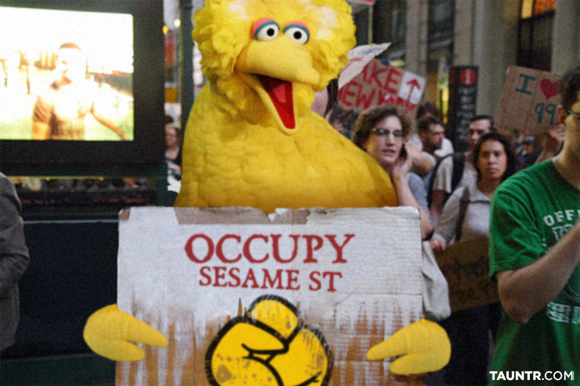
perpetrated on them and began to protest. The various “Occupy” movements were a
signal that you can’t fool all the people (or even 99% of them) all the time. A
wave of courageous protest throughout the Arab world swept away corrupt regimes
and dictatorships in Tunisia ,
Egypt and Libya Russia
But other
brutes continued to hold on to power, increasingly apparently indifferent to
criticisms of their ruthlessness, from Assad in Syria
to Lukashenko in Belarus North Korea
Basta! (And by the way, the use of an Italian word
reminds me of another positive event in 2011: Berlusconi resigned as Prime
Minister of Italy.) I will cry no tears for 2011. Others may feel differently,
those who fell in love this year, those who saw healthy children born, those
who, in thousands of quiet, personal ways, found happiness. Indeed, on
reflection, I too experienced many positive moments as well. Perhaps I need to
let them shine through some more in my own personal recollection, my own story
of 2011. Good stories always have sadness as well as joy, shadows as well as
light. I, and my daughters and grandson, are all alive, active and basically
healthy as we approach the New Year; our lives are progressing gently and
positively, there are friends and family, more than enough love to go round, a modicum of security and lots to
live and hope for. That should be more than enough to be going on with, going
on into 2012.
My wish for
you, gentle reader, for me, for all of us, is that 2012 may be better for us
than 2011. And I will pay no heed to the various loonies who, on the basis of
Mayan calendars or other abstruse so-called prophesies, see the world ending
this year – I hope and believe that I will be writing some sort of similar post
in a year’s time, looking back on 2012 and forward to 2013.
Happy New
Year
Frohes
Neues Jahr
One of the greatest blues rock guitarists in the world, Belfast born Gary Moore, died in 2011. Man, he could make that guitar cry ...
Pictures retrieved from:

Wednesday, 21 December 2011
Family (Thoughts at Christmas)

In the end,
the most important things in life are always personal, intimate, immediate.
Though rulers may make fateful decisions involving the fates of millions,
though corporation chiefs and bank bosses may play with the hard-earned pennies
of us all, gambling the loss of our futures against their short-term selfish
gains, the results of all this remain generally matters for news headlines –
until we concretely, in our own lives, experience their consequences. While it
may be wonderfully noble and represent an elevated level of moral development
to engage ourselves for general principles and the rights and causes of those
far away from us, usually our energy, attention and motivation are most readily
and frequently activated by issues and events which impinge on us personally.
It has
become an almost unquestioned mantra that modern developments in society have
accelerated the breaking down of long-established, traditional forms of living;
that one of the prices our swarming, highly technological, complex contemporary
society demands of us is our abandonment of “natural” structures in favour of
constantly changing “artificial” modes of existence. Traditional ways of
living, based on the family and small communities, it is argued, are being
undermined at all sorts of levels; from globalisation, urbanisation, reliance
on technology, the internet and – of course (at least according to the
conservative, frequently religious, right) – a concerted attack by the ideology
of godless, secular, liberal thinking on the holiest of all holies; “family
values.”
While (as
anyone who reads this blog regularly will know) I would certainly regard myself
as someone who is very critical of many of the trends – including the
fundamental ones – which determine the shape of our contemporary societies and
the direction they are taking, and while I see numerous sources of (to use an
old sixties buzz-word) deep alienation in the way many of us choose or are
forced to live our lives, I still wonder, at a more fundamental level, whether
the basic structures in which we live are not much more resilient than many of
the critics of modern life would have us believe.
Historical
anthropology tells us that, for the greatest part of its history, humanity
lived at the hunter-gatherer level, in so-called band societies, small kin groups of no more than thirty to fifty
individuals. Only with the discovery of the first agricultural techniques (the Neolithic Revolution) around 10,000
years ago, was it possible for humans to gather into larger groups (frequently,
though not always, settled). With these larger groups, other, larger, societal
organisations appeared; villages, tribes, towns and nations. But all of these
other groups were based on the original unit, the closely related kinship band
– in its simplest form, the (extended) family group.
Today we
tend to see the family in its very stripped-down, minimal nuclear form; father,
mother and children, living together as a discrete unit. But, although this
form has been common since the first larger groups of humans settled in one place,
for most of human history the larger extended family was more the norm. In the
end, I believe, it doesn’t really matter; the shapes families (groups of humans
with close genetic relationships between their members) take are fluid and
adaptable. Their basic coeval purpose is to deal with a problem evolution
presented to big-brained, intelligent, versatile humans – their children take
longer to learn, mature and become independent than any other animal, so an
environment has to exist within which this can successfully take place. While
in extreme circumstances this task can be managed by one adult, it is much
easier and more successful when the job of rearing is shared by a coherent
group.
Families,
then, are fundamentally there for children – and this is what makes them so
important for all of us, no matter how much society has changed or is changing.
Family – in whatever form – is the place where we have all spent our most
formative years, where we learned language, mobility, basic social competences,
how to relate to others and our very identity.
Families
evolve and change over the course of their existence. Originating from other
families in a kind of organic development, they grow and take shape, becoming
bigger, then smaller, their centres of gravity changing as new generations grow
into adulthood and form budding new units, which become families in their own
right, in new identities with other families and groups. They are wonderfully
flexible things, continuingly changing, adapting, morphing – dynamic connections
of people; constantly being shaped and amended by their own members according
to the complex relationships of those within them and their reactions to all
sorts of events and influences, both from within and without.
“Happy families are
all alike; every unhappy family is unhappy in its own way.”

Tolstoy’s
famous opening sentence from Anna
Karenina expresses a truth, but it is too simple. For nearly every normal
family is both a place of happiness and unhappiness simultaneously – how could
it be otherwise, since they are the setting in which most of us live most of
our lives? Certainly, as the fundamental units of our existence, and the places,
above all, in which children grow up, seriously dysfunctional families are
places of horror and nightmare – and many of those forced to spend their
childhood in such environments are among the most wounded (and often violent)
people in our societies. But – at a more normal level – tension, conflict and
unhappiness are unavoidable parts of life and it is utopian to believe that
families can be somehow magically excluded from this reality.
Consider,
for example, the process of growing up and maturing. From our teenage years
into early adulthood, a large part of our development has to do with our
personal growth into independence, with testing and defining ourselves in
contrast to others close to us, above all, those who were largely unquestioned
role models and authorities during our childhood. This very necessary part of
becoming an adult is inevitably accompanied by conflict and stress and, even if
you have never had teenage children, all you need to do to realise the truth of
this is to remember your own teenage years. In fact, one of the major function
of families for those approaching adulthood is to betimes become tight,
constraining, frustrating; in this way young people can develop their own
personalities and obtain extra motivation to leave the familiar safeness of the
family structure, explore their independence and, ultimately (most of them),
enter into new relationships and unions which will form the kernels of new
families. And the beauty of all this is that families are not exclusive; you
can form a new one, enter into a familial relationship with the family of a
partner without ever having to really leave your own original one.
I had
reason to think about all this recently, when my original family came together
from three different countries to be together during my brother’s last illness,
to be there for him and for each other, before, during and after his death. Though
we children are all middle-aged now and have new families and networks of
loving relationships of our own, it was a time for us to come together, to find
comfort and strength in each other, to throw ourselves onto the firm support of
our shared relationships, experiences, history. One other positive aspect of
this difficult experience was the solidarity and companionship we experienced
from other, related families – cousins and their
families in turn, all stemming from the original families of my parents. It
was a wonderful realisation for me – that, when push comes to shove, family is
there and it works, on that most
important, personal, immediate, intimate level of living I referred to at the
beginning of this essay.
And, with
Christmas almost here, I find myself thinking about the unit at the core of
that story; a father (even if the fatherhood is somewhat unclear in the
account) and mother together, the mother giving birth, the beginning of a new
family, the beginning of a story. Families are places of shared experiences,
giving rise to shared stories, narratives which are an essential part of our
identity. In the recent coming together of my family, our finding ourselves all
together (even with the aching wound caused by the occasion for it all, the
death of my brother) for the first extended period in years, we spent a lot of
time remembering and retelling the stories of all those years we spent together.
Many of the stories we told had to do with my brother, and in the telling we
discovered some relief from the grief we were all suffering – even finding
ourselves laughing at some of the memories, the common narratives of our own
family history. At the same time, this sharing of memories and stories was a
reaffirmation of our own identity, both individually and collectively; comfort
gained from grounding ourselves once more in that original, secure, familiar
familial reality.
I do not
see family values as being under threat; they are too strong, deep and fundamental
for that and such slogans and fears are no more than chimeras of the religious,
so-called Christian right. There is no prescribed form for families, they can
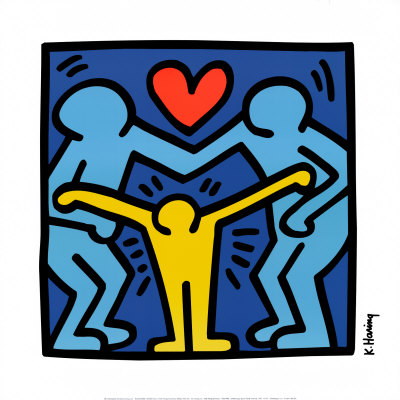
be nuclear, extended, single-parent, gay, patchwork, any form really, as long
as they can be places of security for people and generations to be together to
cherish, accept, annoy and love each other – to live together and out of that
living create their own stories and traditions. Like Christmas – that time of
families coming together in the midst of winter – so often called the family feast.
So, gentle
reader, enjoy this Christmas – and celebrate your family, whatever form it may
take.
Pictures retrieved from

Tuesday, 6 December 2011
For my Brother
 November 24
Repeatedly,
it all seems so unreal,
Something
I’m experiencing at a distance,
Dulled,
blunted, cotton-wool wrapped.
Then the
reality cuts through;
The harsh
searchlight airport night-glare
Making
everything monochrome bright,
Shadows
edged like knives,
The truth
cutting and cruel.
My brother
is dying.
And I am
sitting on a plane,
Flying back
home to Ireland
To take
part in a death watch,
My
awareness ricocheting between shocked numbness
And
unbelieving horror.
This cannot
be happening.
My brother
is dying.
December 6
Once more
sitting on a plane,
Once more
flying back to Ireland
No more
death watch now;
The news
came in the middle of the night,
Digital
text flashing in the dark.
Paddy died in his sleep.
Two
roller-coaster weeks
Of horror
and worry,
Hope and
suffering,
Waiting,
speculating …
Finally
resigning
To the
inevitable.
 The last agony the old Catholic prayer calls
it.
The last agony the old Catholic prayer calls
it.
And, yes,
there was agony enough
And
confusion and distress too.
Oh dear, my
dearest little brother,
You fought beyond
hope, beyond understanding,
Your
stubborn herculean will
Driving
your body to heroic feats of recovery
– astounding the experts –
Before
finally succumbing to the reality
Of multiple
organ failure.
And then
the last, ghastly necessary decisions:
Disconnecting
machines,
Discontinuing
treatment,
Morphine
and sedation,
Sleep …
slipping away … death.
Others (we)
making the unavoidable choices
You could
no longer make for yourself
(And how
you would have hated that,
You who
were always so insistent
On your own
proud, independent autonomy!)
And forever
there will be a hole in my life
Where stood
my constant childhood closest companion,
A central
component in the architecture of my existence,
Unquestioned,
often unthought
(Because so
obvious, inevitable),
A sharing
so close that,
As adults,
It drove us
in very different directions
To explore
diverse aspects of life’s challenges, joys and dangers.
Some dangers
turn out to be fatal.
For me,
there will remain the memory
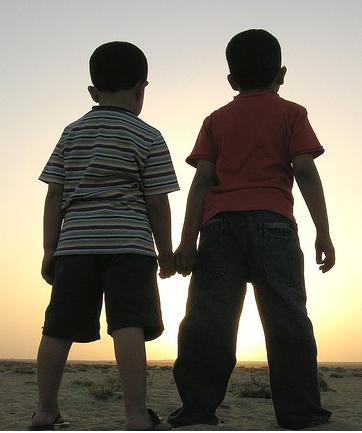
Of two
little boys;
A binary
system
(One
larger, one smaller),
Revolving around
each other
In mutual, unquestioning,
rivalrous, self-sufficient dependency.
And an
image of you as you (aged two, perhaps) look up at me
Trustingly,
And then,
letting go of my hand,
Walk away
alone into the unknown.
Forever.
Paddy Hunt, October 28, 1961 - December 6, 2011
Pictures retrieved from:

Subscribe to:
Posts (Atom)
LinkWithin
