Ideas, philosophy, politics, current events and happenings, music, literature, art and simple incidents out of my everyday life; Reflections and observations which, I hope, might just get you thinking ...
As the
protests grow worldwide, with financial districts of major cities being
occupied everywhere, with the member countries of the Euro group trying to
stabilise the currency and find some way of dealing with the debts of Greece
and (potentially) other countries, under constant attacks from that strange
entity known as “the markets,” there seems to be some hope growing that the
pain in the developed world is finally reaching the level where the demand for
fundamental change is finally emerging from the small niches in which it has
huddled (largely unheard) since the collapse of the iron curtain to encompass
more and more of the mainstream and make it increasingly undeniable.
It is a
truism that things generally have to get worse before they get better and that
a combination of ordinary inertia, fear, conservatism and resignation with our
own personal situation means that it usually takes quite a bit to happen before
a sufficient number of people finally decide that enough is enough and start,
first, to seriously listen to those preaching radical alternatives and,
secondly, to take to the streets to demand that something is done. Yet when it
comes, it can come quickly – a tipping point is reached, the prevailing balance
is lost and we enter uncharted territories as old paradigms dissolve and the
search for new ones begins.
For forty
five years after the Second World War, a stable paradigm prevailed; a world
order dominated by the competition between two mutually exclusive ideologies.
At the end of the ninth decade of the last century, one of those ideologies
imploded and (with a few small exceptions like North
Korea and Cuba)
rapidly disappeared. What called itself “market capitalism” reigned supreme and
many of its proponents seemed to be on the verge of proclaiming a Hegelian end
of history, a brave new world in which unregulated global markets would lead to
an explosion of prosperity, a rising tide lifting billions of boats, a
“creation” of wealth which would continue in
secula seculorum, world without end, amen.
In the
event, it took less than two decades for the new paradigm to start to show
serious cracks and fissures, the consequences of which are still working their
way through the immensely complex, interdependent systems and structures of
which our human polity is made up. The collapse of the US property
bubble and the convulsions in the world of international financial markets
showed that much of the “wealth” which had been “created” had, in fact, never
really existed at all. As is now becoming increasing clear to more and more
people, what had happened was that a very small, immensely powerful group of
corporations and individuals had taken the real wealth of ordinary people and
societies; used this to leverage (what
an amazing word!) a massive amount of fantasy wealth; exchanged much of this
fantasy wealth for the real wealth of ordinary people and societies; worked
themselves into a position where the entire world was dependent on the complex
mixture of real and unreal they had created and were controlling; and, when the
whole thing came down around our ears, demanded ever more of the real wealth we
possessed as ordinary people and societies (or which our children and
grandchildren would earn in the future) in order to keep the crazy system on
which the world was now dependent running.
Moreover,
they’re still doing it, and the amazing thing is that those (in the western
world) who are elected by the people to run things continue to jump to their
dictates. The ongoing Euro-crisis is a very good example of this. Leaving aside
Greece – which is a country with underlying serious problems as a result of
decade-long overspending on current accounts, fuelled by a culture of
tax-evasion by everyone, but particularly the rich – none of the other European
countries currently seen as dangerously weak have such massive problems that
they need be regarded as necessarily being on the verge of collapse. Ireland
was the victim of a classical financial bubble (driven by property speculation)
bursting and is in its current state of difficulty because of an unconditional
guarantee given to the financial institutions (on the insistence of the
European Central Bank) who had played a major part in creating and sustaining
the bubble. Portugal, Spain and Italy
(with Belgium on the verge
of joining them) certainly have difficulties, but their debt situations are all
much healthier than that of the USA.
What has caused, and continues to cause the present difficulties is the
behaviour of many major players on the international financial markets, who –
in time-honoured fashion – have been behaving like classical predators with a
large group of prey; stampeding the herd into panic and then cutting out the
weaker members one by one, harrying them into exhaustion before closing in for the
kill.
Of course,
this is not the official language used to describe the process; here the bon mot is market confidence. That
this increasingly has little to do with basic economic realities and far more
to do with artificially induced expectations, bets on future developments of
every kind (and bets on the bets and betting on losses), all with the goal of
maximising profits for the major players in the complex global financial game
no matter what happens, is becoming clearer to everyone. It’s a roulette game
where every number on the wheel has the colour green and the number 0. The bank
always wins – rarely does anyone else.
The course
of events in the past few years has led to a growing realisation of the
parasitic nature of the corporate financial world structures and the failure –
or seeming inability – of political leaders to exercise any kind of effective
control over them. And, as a result, the level of public indignation and
protest is growing. In many quarters, the realisation seems to be dawning that
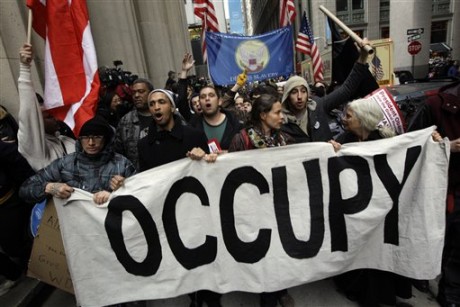
things can’t go on this way, that something has to give. Describing his
perceptions of the US
scene following the clearing of some of the Occupy
protestors, Chris Hedges writes:
“[The corporate bosses] … think it is back to
the business of harvesting what is left of America to swell their personal and
corporate fortunes. But they no longer have any concept of what is happening
around them. They are as mystified and clueless about these uprisings as the
courtiers at Versailles or in the Forbidden City who never understood until the very end
that their world was collapsing.”
According
the Hedges, “this is what revolution looks like.” He may well be right. He goes
on to list the various preconditions set out by the historian Crane Brinton for
a successful revolution and sees them all as being present in the current
situation. And this is the point at which my worries begin. Brinton’s classical
analysis, The Anatomy of Revolutions, concerns itself with the English
(1640s), American, French, and Russian Revolutions. And three of these four
were accompanied by vast suffering and bloodshed and, particularly in the case
of the last two, finished up devouring myriads of their children before
culminating in the dictatorships of Bonaparte and Stalin.
Brinton’s
book was first published in 1938 and the world has moved on quite a bit since.
In contrast to his generally cautionary view concerning the progress of
revolutions, the counter-example of the events around the collapse of communism
in 1989/90 can be given, or even the example of the “Arab Spring” of this year.
But before we all start flocking to the barricades, a few considerations are in
order.
The events
of 1989/90 were momentous; particularly their speed, restraint and generally
peaceful courses. But there were a number of factors at work which suggest that
they were – and will remain – unique. In the first place, there was a clear
vision of an alternative model of society, that which was seen as functioning
in the west. Secondly, there was general support and encouragement for the
dramatic changes taking place from the rest of the world, particularly those in
power there. Thirdly, there was the clearly perceived unwillingness of the
imperial power under its new leader, Mikhail Gorbachev, which had upheld and
guaranteed the status quo ante, to
use force to impede the move for change. Regarding the “Arab Spring,” this is a
process which is still unfolding; it is as yet too early to make any conclusive
judgements concerning its results.
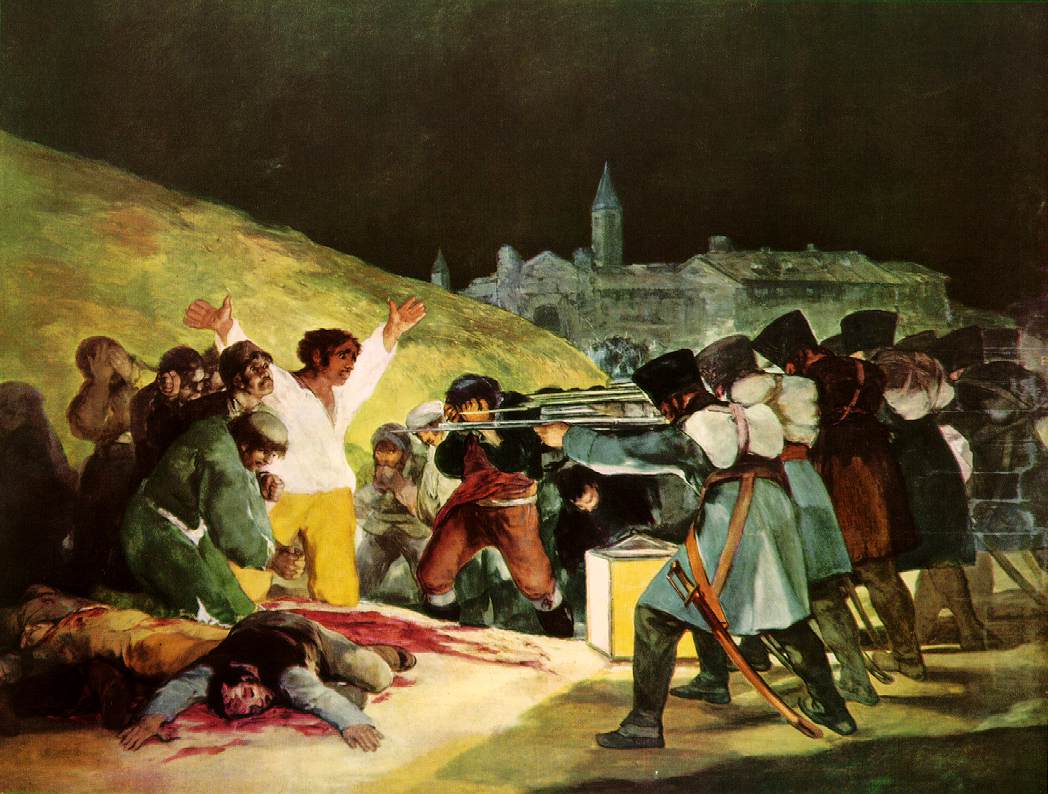
“Revolutions, like
Saturn, devour their own children.”
The saying
dates back to the French Revolution and was, most famously, uttered by Danton
during his trial. It is this observation which gives me cause for concern in
the present situation. My initial inclination is not to shed any tears should
the current corrupt exploitative system, in which the world is ultimately
controlled by a small oligarchy of the immensely rich, whose are prepared to go
on raping the whole planet and everything on it to protect and expand their own
privileges and power, be brought down. More, it is not hard to imagine
scenarios in which I myself would find myself on the streets, howling with the
mob to put the mothafuckas up against the wall. But then I start to ask myself
what we want to replace them with?
There is no
shortage of visions of alternative world orders, suggestions of how to do
things differently, but there is little consensus on what they should be. Our
globalised world has developed into a very complex interconnected networked
system where nearly everything is dependent on nearly everything else and there
is a great danger that if key blocks in that system are destroyed, the whole
thing will come collapsing around our ears – particularly if it is not clear
with what they should be replaced. I see little sense in a process which will
lead to a situation analogous to that in France
in 1794 or Russia
in 1919. Historically, such processes have lead to untold suffering, the deaths
of millions, and the ultimate rise to control of iterations of the original
system of oppression and corruption which called forth the revolution in the
first place.
The
consensus seems to be growing that the present world order is intolerable. I sense
that what we now need most is a wide public dialogue on a global level leading
to concrete suggestions concerning alternatives and agreement about their
implementation. I have little faith that the official forums (like, for
example, the UN) are at all inclined to further such processes. I have some
hope that the groundswell of alternative methods of dialogue and interaction
offered by the digital revolution may lead to the evolution of new structures
which will bear concrete fruits in the real world. But the dangers that the
unbearable contradictions in the current systems, where the pressure for their
destruction is increasing, may lead to general turmoil and systemic collapse
should not be underestimated. If we are not clear about concrete alternatives,
we might find ourselves (that remnant still alive) cowering shivering, hungry,
fearful and traumatised in the ruins of a world we have managed to wreck.
A few days
ago, I found myself driving through the Duchy of Berg, on my way to a wedding
in a neighbouring town. It was a beautiful late autumn morning; the sun, though
growing inexorably weaker as the days become shorter, had gained enough
strength to burn away the early morning fog and shone unobstructed from a bird-egg
blue sky on the last glories of colour which the fading vitality of nature was
able to provide. Red and green had largely disappeared – with the exception of
the dark grey-green of the conifers and the brighter green of many of the
fields – for the first autumn storms had already stripped many leaves from the
trees and most of those remaining had very little chlorophyll left, so that the
boughs and branches were already beginning to show signs of their winter
starkness. November is just around the corner.
It was an
idyllic scene, an overwhelmingly rural scene, rolling hills, fields and
woodlands; one which could almost be pictured as Frodo’s Shire, if you just
imagined the occasional house, power pylon and metalled road away. And then it
struck me that the region I was travelling through was, in fact, part of the
Rhine-Ruhr metropolitan area, the second largest polycentric urban area in Europe (after London), with over 12
million people and a population density of 1,422/sq.km It is,
in economic terms, the largest economic area of Germany, accounting for around 15%
of national GDP, one in which one city boundary frequently borders on the next –
and yet, it is a region which is still predominantly green.
Of course,
Germany is one of the richest countries in the world; a developed land, moving
in many areas into a new technological, almost post-industrial phase, which has
had the time and the wealth to deal with many of the worst excesses of heavy
industrialisation, providing the vast majority of its population with a
standard of living which would be longed for by billions of people throughout
the world.
A world
which, if we are to believe the experts, will welcome its seven billionth
citizen sometime this weekend. The baby may be born in the Rhine-Ruhr area, or
in Tokyo, in Beverly Hills or London; following statistical probabilities,
however, it is more likely to take its first breath in the slums of Cairo or
Mexico City, in the Gaza enclave or one of the camps in Northern Kenya, where
the refugees from the hunger and chaos in Somalia are gathered in teeming
hundreds of thousands. Though it may live its life in prosperity and privilege,
it is more likely to grow up in poverty and existential uncertainty. If it
lives a long life, that child will see a new century, having lived through one
in which, in all likelihood, the human family will have taken the decisions
which will decide whether the future will be bleak and increasingly uncertain
on an increasingly wrecked planet, dominated by violence, poverty, a desperate
struggle for mere survival by the vast majority of people, and death; or one in
which humanity has faced up to the challenges it has created for itself and
developed solutions which guarantee a life in dignity and relative security for
its members.
The Parable of the Yeast
As a young
man in Ireland,
I spent a couple of years with some friends making wine as a hobby. We would
never have described ourselves as oenologists; our primary aim was to produce
significant quantities of a pleasant, drinkable, alcoholic product at an
affordable price. While we experimented (sometimes successfully J) with different local fruits, the easiest way
was to work with grape juice and kits, which could be bought relatively
cheaply.
Apart from
grape juice and the correct ambient temperature, the most important ingredient
was the yeast. Basically, a small amount of dried yeast is added to the raw must and, in around two weeks, it
converts nearly all of the sugar present into alcohol and carbon dioxide – the process
known as fermentation.
It’s well
worth looking at this process a little more closely. If the conditions are
right, that small amount of yeast feels itself in yeast heaven and commences to
behave accordingly. It starts to eat sugar, pissing alcohol and farting carbon
dioxide for all it’s worth to get rid of the waste products. It also begins to
reproduce like hell, being fruitful and multiplying at an incredible rate,
creating a lot more yeast, which also starts to eat sugar, piss alcohol and
fart carbon dioxide. A side effect of this is the generation of a large amount
of heat, something the wine-maker has to keep a close eye on; the yeast does
like it warm, but not too warm, a
potential problem with all the reproduction and metabolising which is going on.
Towards the
end of the process, the conditions change. The sugar starts to grow scarce and
the amount of alcohol now present is proving increasingly poisonous for the
yeast. As resources diminish and toxicity increases the yeast starts to die
off, first slowly, then with increasing rapidity, until, in the end, all the
yeast has died and fallen to the bottom of the fermentation vessel as a
sediment known as the lees and the wine
is basically ready (though to make it drinkable a slower secondary process,
known as malolactic fermentation in
which bacteria convert malic to lactic acid, must still take place).
In times
when I am feeling pessimistic and negative – many would say realistic – I wonder
whether there is any real difference between humanity and yeast. Looking at the
past couple of hundred years, in particular, this view could well be seen as
justified. As a process it is nothing special in nature, it happens all the
time; species finding an environment which particularly suits them,
over-reproducing and exhausting that environment as a result before dying back
in massive numbers to make way for others and allowing new processes to begin. And
we too are a species of life, just as yeast – or lemmings. The problem is that
our environment has become the entire planet and the exhaustion of resources
and the changes we effect on that environment are likely to become so dramatic
that, when the tilt-moment comes and the die-back begins, we will have left an
incredible mess behind us. If that die-back is not accompanied by widespread
nuclear war (still a distinct possibility, particularly in times of increasing
chaos, uncertainty and desperate battles for survival), the planet, and life,
will survive us, but recovery from us will take quite a while.
Yet there
is one aspect which makes us different from the yeast and the lemmings; we have
the capacity to think, to plan, to imagine and envision the possible future and
voluntarily tailor our actions in order to choose the direction in which that
future will grow and thus influence its concrete reality. Up to around a
hundred years ago, it can be argued, there were few enough of us, and the earth
was big and bountiful enough, for such considerations to be unnecessary. That
is no longer the case. We are becoming increasingly aware of our global
interconnectedness in all sorts of ways – also of the consequences of our
unthinking consumption of everything the planet has to offer and of our crazy
merciless competition for increasingly scarce resources. Many major changes
have already taken place and, just like the yeast, our “metabolising,”
reproduction and ever-increasing production of carbon dioxide as a waste
product is already showing signs of raising the temperature in our planetary
fermentation vat to a level which is becoming uncomfortable for us. We have not
yet learned to piss alcohol, but the other waste products we produce are quite
poisonous and damaging enough.
The
(symbolic) birth of Seven Billion Baby can perhaps be an event which helps us
focus on what is at stake – the future of that child and his or her siblings;
the future of all our children and grandchildren. It can be that beautiful
world of the Duchy of Berg I drove through a few mornings ago, but it can also
be the world of the Somali refugee camps in Kenya – or worse. But a world in
which both can coexist and in which, above all, the residents of Berg can go
about their lives largely unconcerned and untouched by the fates of those in
the camps will not be able to continue to exist for much longer, for the
strains and pressures we are creating planet-wide on all sorts of levels will
become increasingly difficult to ignore. If we do not start to act much more
decisively than we have done up to now, I very much fear that that tilt-point
will come and the die-back will begin. And that is something which will profit
none of us (except, perhaps, some fraction of that one percent who have so much
power and money that they can barricade themselves away in enclaves to carry on
some kind of sterile continued existence).
The signs
are increasing that time is running out for us – that it is coming up to a
minute before twelve. What gives me some hope is our capability, despite
everything, for creativity, imagination and empathy. And our ingenuity and
energy when it comes around to getting things done at the last minute.
Happy
birthday, Seven Billion Baby. I wish you lots of luck – you’re going to need
it. But maybe you’ll have it too; after all, seven is supposed to be a lucky
number!
Join me, if
you will, on a little harmless flight of fantasy. Imagine you had the choice of
whenever and wherever in history and geography you could live, and that you
were free, moreover, to choose your status in life there and then too. Where
and when and who would you like to be?
Westport House in Mayo, Ireland
On
reflection, I think I would like to have been an Irish gentleman of comfortable
means in the second half of the eighteenth century. As such, I would have been a
member of a small, privileged elite, the group known as the Anglo-Irish
Ascendancy, which, following the defeat of the old Irish great lords like the
O’Neills and O’Donnells at the end of the sixteenth century and the Cromwellian
defeat and dispossession of the great majority of the remaining native or
Norman Catholic gentry in the middle of the seventeenth, had attained secure
control over both land and power in Ireland. Many were descendants of
Cromwellian officers or settlers, installed by the English in that period, along with some
few older settlers or even native Irish gentry who had accepted English rule
and the English protestant religion.
They grew
to form a peculiar class. The hardening of religious positions in the
seventeenth century led to a situation where, for the vast majority of the
native Irish, Catholicism became more than a religion, advancing to part of a
cultural identity which made the religious difference just one part of a
definition of Irishness, coalescing in self-understood difference from (and
generally sullen opposition to) what was increasingly seen as an unwanted
foreign occupation. This development was, of course, mirrored – and often
exacerbated – by the growth of the Anglo-Irish self-image and the policies of
the controlling English crown, which equated popery with treason and imposed
all sorts of legal sanctions against Catholics (known in Ireland ever since as
the Penal Laws), including
disenfranchisement, inheritance disadvantages, judicial preference of
Protestants, prohibition of worship, etc.
By the
middle of the eighteenth century, the Ascendancy was firmly in control, sure of
their supremacy – both in the superiority of their nature above that of the
native Irish and its guarantee by England. That society was ordered
was a divinely ordained fact of life and their position at the top of the heap
was clearly a reflection of the divine will.
Yet this
was also the era of the enlightenment, an age of reason and even – within
certain boundaries – tolerance. Certainly the atmosphere of the time was one
which respected rationality and moderation and abhorred what was often
described as “enthusiasm.” It is perhaps ironic that it was the general
stability of society, coupled with limited tolerance for ‘free thinkers’ and a
distaste for the religious enthusiasm which had nearly torn Europe apart in the
17th Century, which created the environment in which those ideas
would develop which would lead to the destruction of many of the foundations of
that society; ideas propagated by thinkers such as Hume and Voltaire, Paine and
Rousseau.
This then,
is the background to the Irish gentleman whose life I would like to live. I
imagine my wealth and income as fundamentally based on land, good land; an
estate preferably in CountyMeath, or Kildare, somewhere, at any rate, not too
far from Dublin,
where I would also maintain a town house.
Dublin in the second half of the eighteenth
century is one of the most pleasant European cities in which to have a
residence. Large enough to be a centre of culture, it is still small enough to
be familiar, developing that special identity it retains to this day as a huge
village where everyone, through two or three connections, knows everyone else
worth knowing and where gregariousness is a fundamental fact of life. It is a
city undergoing splendid renewal in what came to be called the Georgian style,
with the building of fine houses, magnificent civic buildings and beautiful
parks, including the largest public park in Europe, the PhoenixPark.
Georgian Doors in Fitzwilliam Square, Dublin
My Dublin residence I
imagine in one of these fine new Georgian streets, at best fronting one of the
tasteful squares built around a green park, such as Mountjoy or Merrion Square,
perhaps even on the central St. Stephens Green. From there I would be able to
easily participate in the busy cultural life of the city; going to musical
performances in Mr. Neal’s Music Hall in Fishamble Street (where Handel’s Messiahwas premiered), attending (if my
wealth were great and my contacts influential enough) civic occasions and balls
at Dublin Castle – the seat of government of the English Lord Lieutenant, the
top aristocrat who represented the crown – perhaps frequenting Sunday services
at St. Patrick’s Cathedral, to hear its great dean, the glorious man of
letters, satirist and addict of controversy, Jonathan Swift, preach.
For my
religion, naturally, would be that of the established church, the Church of
Ireland, the Hibernian version of Anglicanism; an obviously supremely reasonable kind of Protestantism,
retaining much of the better older traditions which had been initially part of
the universal church until Roman popish superstition had perverted them.
Though, if I am to be truthful, my personal religious convictions are not
particularly deep – in fact, if pressed, I would probably describe myself as a
deist, though this is not a position I would loudly profess publicly. Among
educated friends of my own class, my position is widely shared but we still see
the value of religion as a necessary part of societal order and guardian of
public (and, to an extent, private) morality. Moreover, the church provides a
means of living for many younger sons of gentle birth and has, in Ireland,
thrown up such prodigies as the aforementioned Mr. Swift, or the great
philosopher, Bishop Berkeley.
It is
conceivable that I might have a seat in parliament. Indeed, at the end of the
eighteenth century, for 18 glorious years, the Irish parliament in Dublin
succeeded in throwing off practically all the controls the British parliament
in Westminster had accrued over the previous centuries and exercised
wide-ranging autonomy in the administration of the country until fear of French
invasion and native Irish rebellion – the Irish rising of 1798, while
unsuccessful, was alarmingly inspired by French revolutionary ideas – led to
the Act of Union of Great Britain and Ireland in 1800 and the abolition of the
Irish legislature.
I regard
myself as a man of progress, a man of reason. As a young man, following a few
years at TrinityCollege,
I have made the Grand Tour of Europe, experiencing something of life and
culture in continental Europe; an experience
which has reinforced my conviction of the superiority of the British way of
doing things. Nevertheless, combined with a certain studious inclination, the
experience has helped me to improve my knowledge of French, which has basically
replaced Latin as the lingua franca of
civilised men and the mastery of which enables me to maintain a correspondence
with other men of ideas throughout Europe.
As a
gentleman I would be married, though – given the perils associated with
childbirth in a society in which medical knowledge and, in particular, the
knowledge of hygiene were still fairly rudimentary – I may well be a widower. The
path for my sons is clear; the eldest will be my heir, the second would go into
the army (in which case, I will have had to purchase a commission for him), the
third would possibly try to make a career in the church or train in one of the
professions, like law. For my daughters I would have to provide a dowry before
finding suitable husbands for them.
The basis
of my prosperity is my land. Most of this is farmed by tenants, and their rents
make up a considerable portion of my disposable wealth. It is a good time to be
renting land. The spread of the potato has meant that tenant families are able
to feed themselves on relatively small farms, so their numbers are growing and
the possible subdivision of the lands they rent increases my income.
Not that I
regard myself as an exploiter. I see myself as a fair, concerned landlord and
squire, interested in modern ideas of farming, trying to improve the lots of my
tenants (insofar as they are prepared to listen to me), reading and applying
the ideas of modern agricultural thinkers such as Jethro Tull to the model farm
areas of my estate which I administer myself. I see myself as being fair to my
tenants, being approachable and even prepared to postpone rents or find other
solutions, for those going through difficulties. While I deplore their papist
superstition, I am tolerant enough to allow them to follow their superstitious
ways of worship and even have an amiable relationship with their (technically
illegal) priest – quite an educated fellow as a result of a number of years
spent studying abroad in Salamanca and Rome.
Life on my
estate is, in many ways, fairly self-contained. The army of servants necessary
to keep my manor (known to the native Irish as “the Big House”) comes from the
estate and we form a little community of our own. My children all had Irish
wet-nurses – as, indeed, I did too – and, before they were old enough to be
educated and learn the necessary awareness of their status, their playmates
were ordinary peasant children. A large amount of what we consume is produced
on the estate, though such necessities as sherry, claret and port have, of
course, to be imported.
But, in
contrast to the rich cultural life in Dublin,
the intellectual stimulus on the estate is rather poor. Many of the
neighbouring squires are rather ignorant, more interested in hunting, gambling
and duelling than in serious use of the mind. Though my position demands that I
hunt occasionally, I have no interest in gambling, and have seen far too many
men ruined by ill-considered bets, generally fuelled by drink. The number of
educated men around in the vicinity of my estate are not many; the
schoolteacher, the vicar (unfortunately a pompous bore, who drones on
interminably about the dangers of the teachings of Mr. Charles Wesley) and the
doctor and lawyer from the nearby town. They join me regularly for dinner where
we discuss everything from politics to the works of Mr. David Hume and the
Prussian thinker, Emmanuel Kant.
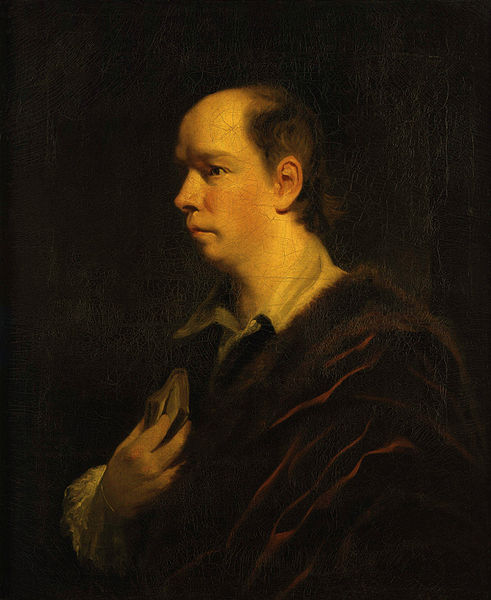
Oliver Goldsmith by Sir Joshua Reynolds
Having
passed fifty, I am starting to feel my age, having begun to suffer from that
curse of men of my class, gout. My friend, the local doctor, speculates that a
diet high in red meat, port and claret may exacerbate the condition, though I
find it hard to accept that my after-dinner port can be a contributory factor
to the pain in my big toe. He might as well claim that it is a result of my wig
being too tight!
I recently
had a visit from one of my university compatriots at Trinity, Mr. Oliver
Goldsmith. A most agreeable fellow, and one of some literary pretensions. He
read to me from his latest work, The
Deserted Village. It is a fancy of mine that his observations concerning
the heedless doings of the richest of men, uncaring of the general common weal,
may retain a significance beyond my own time, still retaining relevance,
perhaps, in centuries still to come:
“Ye friends to truth,
ye statesmen who survey
The rich man's joys
increase, the poor's decay,
'Tis yours to judge
how wide the limits stand
Between a splendid and
an happy land.
Proud swells the tide
with loads of freighted ore,
And shouting Folly
hails them from her shore;
Hoards, even beyond
the miser's wish, abound,
And rich men flock
from all the world around.
Yet count our
gains.This wealth is but a name
That leaves with
useful products still the same.
Not so the loss.The man of wealth and pride
Takes up a space that
many poor supplied;
Space for his lake,
his park's extended bounds,
Space for his horses,
equipage, and hounds;
The robe that wraps
his limbs in silken sloth
Has robbed the
neighbouring fields of half their growth;
Over a
month ago I published a pretty personal post here about the unpleasant
experience of going through burnoutand the practical measures I
was undertaking to deal with it. As a number of things have happened since, I
thought it was time to write an update.
After six
and a half weeks on sick leave, I went back to work last Monday. It wasn’t an
easy decision to make. The enforced pause certainly helped me to clear my head
– to an extent, at least – but the renewal of energy, a “recharging of the
batteries” which I had hoped for, didn’t seem to be happening. I spent much of
the time sitting at home, reading a lot and the normal, unthinking energy which
was available to me for so many years for doing all the myriad things from
housework, to visiting friends, to managing all the basic affairs of everyday
life, to writing didn’t really kick in. Oh, I did manage to do the most
necessary things and even a number of other things which weren’t strictly
necessary but everything was still shaded with a heavy patina of effort; the old lightness which I had
realised I had lost and the loss of which had so shocked and pained me didn’t
appreciably return.
Very well,
I thought to myself, taking time out hasn’t been the panacea I had hoped it
would be. Panaceas rarely are all they are cracked up to be anyway; cure-all
nostrums are usually the province of snake-oil salesmen and the treatment of
suffering in something as complex as the human psyche is also likely to be
complex – a process involving various elements in dynamic relationship with
each other and needing time and space to develop. I had started taking
medication, I’d begun a process of therapy which will (if all goes well and my
health insurance can be given the proper signals to get them to finance it)
grow into a longer phase of classical psychoanalysis, I had discussed my
situation with professionals, family and friends and had productive talks with
my employers concerning certain negative aspects of my concrete work situation.
Now the time had come to take the next step, to climb back on the horse from
which I had fallen.
And so –
not without a large dose of trepidation – I went back to work. One of the
changes I had negotiated with my employers was that I will, for the foreseeable
future, be exclusively assigned to work in the new project we are developing; a
middle-term residential group for the care of very sick children (sometimes
accompanied by their mothers), who are in need of continual, often high-tech
medical support in order to continue their healing process, or just to go on
living. At the moment, the group is composed of four children (aged between six
months and eleven years) and two adults (who are only there temporarily, these
places to be ultimately available to children as well) in temporary,
provisional accommodation. Permanent, custom-built quarters are presently being
completed and we will be moving in there before the end of the year.
Six
patients all in need of extensive, complex, permanent, time-consuming intensive
care, with two nurses always on duty; there is plenty to do. The first
twelve-hour shift saw me exhausted at the end but it was a good kind of exhaustion – that kind of tiredness which comes from
having worked hard doing tasks which offer a sense of immediate value and
worth. In the course of the week I found myself quickly adjusting to the
physical demands of the job. And I realised that the enforced pause had, in
fact, done more for me than I had thought. I found myself better able to cope
with the various time-consuming idiocies enforced on anyone working in any of
the over-developed, over-regulated, under-staffed, under-paid, misfinanced
lunatic complexities which are a characteristic of health-systems all over the
world. The senseless bureaucratic and administrative hurdles which
independently uncontrollably burgeon in any system beyond a particular level of
complexity, which would have had me seething with frustration a few months ago
(this itself a symptom of the fact that I had gone way beyond my own tolerance
levels), I could now accept with a lot more serenity as part of the inevitable Catch 22 reality in which all of us in our mad modern
society are more or less caught.
I am not cured – this will be a long journey, and
relative health and sickness are always just a snapshot of an instant in the
constant complex dynamic interactive process which is life anyway. But I find
myself seeing things more positively and see grounds for hope that my basic
levels of essential energy will increase in the doings of things rather than
waiting for them to grow so that I can do things.
I decided
to be basically open with my colleagues (without going too much into details)
about the reason for my absence. I received unexpected support for this during
the week. The manager/trainer of one of the most prestigious Bundesliga soccer teams, Schalke 04, Ralf Rangnick, resigned his
position last Thursday with immediate effect. The reason he gave was the
spectacular, honest admission that he was suffering from an exhaustion and
burnout syndrome. While, as with most news items in our high-speed,
media-driven world, it will be a seven-day wonder, such public announcements do
help the process of bringing various manifestations of mental suffering and
illness into the realm of more serious open discussion and further the process
of dismantling taboos, clichés, speechlessness and misunderstandings about such
issues which are widespread in our societies.
Returning
to work, I discovered that others had very different difficulties to deal with.
I have written about Jennya number of timeshere before. To recapitulate:
Jenny is a three-year old girl, who is deaf and dumb, suffers from a partial
facial paralysis, a dangerous weakness of her respiratory musculature, an
inability to swallow and some balance and coordination disturbances. As a
result, she has a tracheotomy tube in her throat and spends long periods daily
on a respirator. She is also very intelligent and extremely lively.
Complicated
gene tests have confirmed a couple of weeks ago that Jenny suffers from something
called Brown-Vialetto-Van Laere syndrome. This, of course, means nothing to
her, but it tells us that her prognosis is very bad as the general course of
the illness is progressive.
Jenny was
dealing with two much more urgent problems. A month ago, my colleague Jan, who
was the member of our team who had the deepest relationship of us all with her
(in a very real sense, a replacement father-figure), suddenly and completely
unexpectedly died in his sleep. He was two years older than me. At exactly the
same time, Jenny contracted a very serious case of pneumonia, which
necessitated a stay in the Intensive Care Unit in our local hospital. Given the
fact that she is living with a hole in her windpipe where nature never intended
that a hole should be, this is the kind of thing which can happen; it almost
certainly won’t be the last time. When she returned, it had to be explained to
her that Jan would never be coming back.
She has
understood that and – we think – she has accepted, according to her own
categories, that he has not abandoned
her. But she misses him and suffers from his absence.
She greeted
me like a long lost friend (which, I suppose, I was to her) and seems to have
transferred some of her fixation with Jan to me. She stuck to me like a burr
all week long, appointing herself my assistant nurse and accompanying me when I
went to the other children to take care of them. This has been made somewhat
more complicated by the fact that she needs extra oxygen all the time at the
moment, so that I spent a lot of time lugging her oxygen tank with me.
For the
events of the past weeks have weakened her. After a maximum of four hours, the
effort of breathing independently has so exhausted her that she has to be put
on the respirator for a couple of hours. Her continence – which she had
achieved shortly before the illness commenced nearly a year ago, lost then and
won back again in the past six months – has taken a hit. This annoys and
embarrasses her, but she’s got enough determination to get it back once more. And
she retains the capability to put all of her intelligence and creativity into
continually working on marvellously extensive and sophisticated communication,
despite her deafness and lack of speech.
Given her
confirmed diagnosis, we are haunted by the dark suspicion that she may have
already seen her physical zenith. Perhaps. But we shouldn’t write our prognoses
without figuring in Jenny’s determination and stubbornness. They are part of a
complex, fascinating personality which makes her occasionally amazingly
frustrating but more often supremely rewarding to care for – sometimes simultaneously!
Engaging
with Jenny has, at any rate, done me good. It is an intense, positively
strenuous relationship which, in the way which children determine, takes place
primarily on the emotional level of the ever emerging now. A condition which leaves very little room for depression. And
for all that I am deeply thankful to my young friend. Having climbed back up on
that horse, I sense that I am not alone; Jenny is there too, sitting in front
of me.
Though the song seemed appropriate to me anyway, the fact that David Coverdale celebrated his sixtieth birthday this week makes it even more so.
Sometimes I
feel the urge to try a different kind of writing to that which I generally
publish on this blog. Regular readers will have noticed that in such cases I
tend to make use of obnoxi.us, the platform my friend Chris Jenkins has created. For those who do not
know it, here’s the basic statement of the philosophy; “Obnoxi.us is a loose collection
of writers, artists, gadflies and trolls. Our purpose is to entertain and
enrage in the quest to make you think.”
So it’s
over at obnoxi.us that I let my nasty alter-ego, Frankie, out of his cage every
now and again. And where I try out other things as well.
So when my
muse wagged her ass recently and seductively suggested that I might try my hand
at a little fiction, it was clear to me that – if it worked – I should publish
it over there.
In my
teenage years in a small town in the west of Ireland, Thin Lizzy were one of my
favourite rock groups; something I believe I shared with the majority of my
contemporaries. Along with Rory Gallagher, they were the first to come out of Ireland and
make a really serious impression on
the international rock scene. Their first, and probably greatest hit, Whiskey in the Jar(1972) served to give diddle-ee-eye
traditional Irish music real credibility for my generation and has become a
classic rock standard often covered since; most notably perhaps by Metallica,
winning a Grammy for their performance of the song in 2000.
Thin Lizzy
saw many great musicians as part of their line-up over the years, including
Snowy White, Midge Ure and the incomparable late Gary Moore, but the front-man
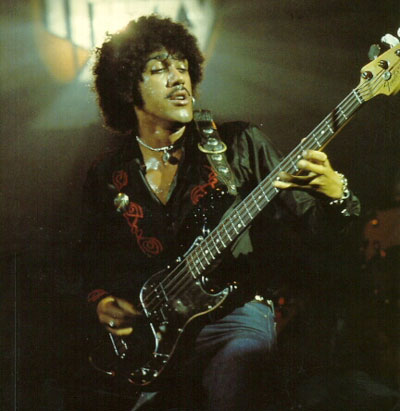
and the soul of the band was their bass player and singer, Phil Lynott. Phil
was an amazing, larger than life character, that most seldom of phenomena, a
black Irishman, whose singing was always characterised by a broad Dublin accent. His
childhood was not easy, growing up as an illegitimate mixed-race kid with his
grandmother in very modest circumstances in Dublin in the 1950s. But he came out of this
background with a suave, piratical coolness,
which he projected on a level comparable with Jimi Hendrix.
And, just
like Hendrix, he lived the rock and roll life in the fast lane, dying as a
result of drink and drugs at the age of only thirty-six. His native city of Dublin commemorated him
with a life-size bronze statue in 2005.
This little
story was inspired by a 1977 song by Lizzy, Dancing in the Moonlight. It’s a modest homage to the group, especially to Phil and Gary, who are now rocking
the angels.
So here’s
the link. And while you’re there, check out obnoxi.us. There is some very good stuff over there …
Like most of the world, I presume, I find myself this weekend remembering that Tuesday in September ten years ago when we watched with horror as the hijacked planes crashed into the TwinTowers and the world was changed. If nothing else, the media won’t let us forget it; for the last week or longer we’ve been bombarded with specials, pictures, analyses, talking heads, etc., a phenomenon which will reach its peak on Sunday.
This alone makes me reluctant to write this – there’s more than enough being published on the subject. Yet, despite this, I feel a need to not let the day go by without reflecting on it myself. The first thing that occurs to me is how successful Osama bin Laden was with the diabolical action he and his followers planned and followed through. Terrorism has as its primary aim the spread of terror – fear – and confusion, the provocation of reaction in response to the initial act of terror; a reaction which serves to bring the agenda of the terrorists to the fore, to win attention for their cause, to help them recruit followers so that their agenda can be followed through on, to force those they see as their foes to act on their terms. In all of these goals Al Qaida was successful.
More of the long term goals of the Islamicist terror organisation have also been advanced. Ten years after 9/11, after a decade of war which has caused the deaths of thousands of western troops, the deaths of hundreds of thousands of Afghans and Pakistanis, and the spending/waste of hundreds of billions of dollars, Afghanistan is still not pacified and it looks like the Taliban (even if only as part of a very slightly more moderate coalition) are poised to return to some kind of power in a chaotic Afghanistan still dominated by warlords, corruption and fundamentalist Islam. Iraq has been wrecked; a brutal secularist-inclined dictator has been removed but fundamentalist Islam is several orders stronger in the country than it was ten years ago. And more hundreds of thousands have died. Fundamentalist Islam still rules in Iran. Nuclear-armed Pakistan – most frighteningly – is on the edge of falling under Islamicist control. Only Saudi Arabia, bin Laden’s primary goal, still remains fragilely under the control of the House of Saud but even here rich fundamentalist Wahabists, who do not belong to the clique around the king, continue to finance Islamicist radicalism globally.
While Al Qaida seems to have lost some impetus in the past few years, it remains as dangerous as it was ten years ago – if not more so. The group has fissioned, spawning dozens of autonomous cells worldwide, many of them composed of second or third generation immigrants who are completely at home in the countries of the west in which they are located.
The other major question is the effect the 9/11 attacks (and those following them in Indonesia, London, Madrid, Mumbai, etc.) and the “War on Terror” instituted under the leadership of the USA have had on those societies which see themselves as based on ideals of freedom and democracy. Here too the balance after ten years is sombre. It is understandable that security became an aspect which increased in importance for those societies under attack after the fall of the TwinTowers. What is questionable is the extent to which other values have been subordinated to the perceived demands of security and how high the price of this subordination has been.
There are values which belong to the fundamental building blocks of open, free societies, values which have developed and been achieved over the course of hundreds of years, often as a result of long struggles and suffering on the part of many brave people. Values like habeas corpus, due process, the right to a free trial and legal representation, the inadmissibility of purported evidence obtained under duress or torture, the rights of innocent, uninvolved civilians to integrity of life, limb and property, the presumption of innocence until proof of guilt, rights of privacy.
An Afghan child injured in a US bombing raid
All of these rights and values have been seriously compromised in the past decade, both in those democratic societies considered under attack as well as in those countries where various military actions have been carried out, countries like Iraq, Afghanistan and Pakistan. The Homeland Security Act, Guantanamo, Abu Ghraib, extraordinary rendition of suspects and their torture in countries like Iraq, Afghanistan, Mubarrak’s Egypt and Ghadaffi’s Libya, the treatment of many of those who have attempted to make abuses of the law public (whistleblowers like Bradley Manning), lies told to the world (Saddam Hussein’s possession of Weapons of Mass Destruction), the bombing and killing of innocent civilians in Iraq, Afghanistan and Pakistan (“collateral damage”) all represent betrayals of the values which Al Qaida was attacking on 9/11 and which the western authorities in various governments, particularly in the USA and the UK, have ostensibly been defending.
Those who wish to justify such things will claim necessity as their reason; the ongoing situation demands them, they are the lesser evil and, in such a war context, the end justifies the means. Yet all these arguments are questionable. Ten years after its inception, the so-called War on Terror shows no sign of being brought to a successful conclusion, even if Osama bin Laden was finally run to ground this year (on the territory of a putative ally of the US). Many of the actions justified according to this rationale have been counter-productive; one need only look at the negative results the pictures of the abuse and humiliation of the suspects held in Abu Ghraib had on Muslim public opinion worldwide.
The War on Terror is a dangerous and misleading misnomer. You cannot fight a war against an idea or a concept – and the Islamicist terror which found its expression in 9/11 is the expression of a (ghastly and horrible) ideology – wars are fought against people. Ideas and concepts can only be combated by other ideas. And the ideas at the basis of the open and (generally) free societies of the west, the values which the USA understands as the foundation of its democracy, are worth defending and proclaiming. Moreover, if we are convinced of their worth, then we must surely be confident of their power to prevail over the half-baked idiocy of those ideologies which are presented by simplistic fundamentalists (of whatever persuasion). But this cannot take place as long as our leaders and decision makers betray these very values in their proclaimed measures to defend them. The cynical saying regarding the destroyed town of Bến Tre in Vietnam in 1968, attributed to an unnamed US major by Peter Arnett, comes to mind; “It became necessary to destroy the town to save it.”
An open, free society will always be vulnerable, to an extent, to the attacks of those who reject its values. That is the price we pay for freedom. But we can only defend and spread that freedom by ourselves adhering to those values which are its foundation.
 November 24
 The last agony the old Catholic prayer calls
it.
The last agony the old Catholic prayer calls
it.