Seiten

Wednesday, 28 March 2012

Aspie


They are there in every school, I suppose, a couple of kids who are so weird that they are way out there in the perimeter. But generally, unlike those of a rock poet’s shamanistic vision, the only stoning they get is not the immaculate one of enlightenment and hallucinogens, but rather the sharp-cornered rocks lobbed by their peers. For there are none as conservative, as intolerant, as teenagers when it comes to those who are beyond the perimeters of what is in, and the instinct of the herd to mob the one who is different (particularly when that one is weaker) is very strong. What I learned from Brendan’s story is that this instinct remains just as active even when those teenagers have reached what is supposed to be (young) adulthood.

The family came to Sligo from America, where the children had been born, when Brendan was ten or eleven. That alone would have made them exotic in a small western Irish town, but it was an exoticism which the kids could have mined positively if they had the basic social smarts to realise it. Brendan didn’t. Clumsy, lanky, pale, wearing glasses with thick lenses and thicker black plastic frames and strange, very unhip American clothes (you could see his mother had chosen them for him) – loud check pants and windbreakers – he came as an outsider and remained one.

His accent proclaimed his American background, his opinions reinforced it; he aggressively trumpeted the superiority of the land of his birth. He was, in today’s language, in many ways a typical nerd, though his interests weren’t in the technical area. What precisely his interests were, I no longer know – and probably didn’t know then. They certainly had little in common with those of the rest of us at the all-boy secondary school we attended; football, pop and rock music, girls. Girls? The idea of the shambling Brendan – his loud honking voice, his strange conversational obsessions, his runny nose, his unconscious frequent scratching of his crotch – with a girl was simply laughable. He was never present at any of the discos where we met with the girls from the convent schools, was never involved in any of the groups of teenagers who met after school in various locations in town – strutting and flirting, smoking and preening, yakking and courting, all the rituals of puberty

And he was the butt of all the careless, brutal cruelty to which teenage boys are prone. We’re in the study-hall; a place where different classes were compulsorily shoved together when teachers called in sick. Brendan is bent over some schoolwork, trying to ignore the world around him, scratching his crotch.

“Hey, Brendan! Hey, Todd! D’ya hear the one about the Bates family?
… Well, there’s Mister Bates. And Missus Bates. And their son …little MasterBates!”
“Yuck yuck yuck … Haw haw haw … Har har har!”
“Hey, Todd! You like pulling your wire?”

I would like to say that I defended him, stood up to the crowd, befriended him. It’s not true – I was far removed from the necessary self-assurance to do that kind of thing, to take a public stance against the mob and its leaders. I didn’t like him either, found him just as weird as all the others. The most I can say is that I didn’t take part; I found the cruelty somehow shameful and kept out of it. And for this reason, I was one of the few he interacted with at all.

But our interactions were seldom. I did not seek him out, and he wasn’t in my class anyway – apart from one or two subjects in the senior cycle. He was sickly and missed an awful lot of school. I’m sure he was subject to a lot more intensive bullying and brutality, particularly on the way home from school, but we had different routes home so I didn’t witness anything. To be honest, he just didn’t figure on my radar screen most of the time. I had other, more interesting, more important interests and concerns.

With the knowledge I have now, and the generally increased consciousness of psychology and various personality differences which is far more widespread today than it was thirty five years ago, I have no trouble putting a label on the young Brendan Todd – as I believe most of my readers will have done as well by now. Brendan was a textbook example of somebody with a fully-fledged Asperger Syndrome. But for us teenagers in Sligo back then, the term Asperger had as much meaning as an artichoke.

At any rate, I left Sligo in 1977 to join the Dominican Order, and left Brendan behind too. He (and his family) had decided – largely because of his sickly nature, it was said (though I believe that the worries of his parents concerning his ability to live an autonomous life as a student away from home also played a large role) – that he would study by correspondence at the British Open University. I was sure I’d seen the last of him and forgot him pretty quickly.

* * * * *

Two years later the Order sent me to UCD (University College Dublin), Ireland’s largest university, recently moved to a modern, US-style campus in Belfield, a former estate in one of the prosperous suburbs of Ireland’s upper-middle and middle-class elite on Dublin’s south side. I was to study history and philosophy.

The first couple of weeks were pleasantly chaotic, getting ourselves organised, getting to know people, finding our way around, making first friendships. One of the organisational things which had to be done was the election of representatives of First Arts to the Students Union. There was some kind of address from the Union people in Theatre L, the largest of the lecture theatres, after a history lecture, and people interested in being candidates were invited to speak to the gathered multitude. Nobody was taking the whole affair all that seriously and there was a considerable buzz of conversation among the couple of hundred students assembled. Suddenly a strange, freakish figure gambolled up to the microphone and announced excitedly,

“My name is Brendan Todd, and I’M A REVOLUTIONARY MARXIST!!!”

He then proceeded to harangue us for a couple of minutes, honking and gesticulating like Grover from Sesame Street. The crowd loved him and cheered him on. This was entertainment pure, the weirdo was absolutely hilarious and apparently believed all the bullshit he was spouting. He apparently also believed that all the applause and acclamation was for him and his message. I was aghast.

“They can’t be taking him seriously!”
“Of course not. But he’s going to be elected all the same,” Peter, one of my newly made friends, commented.
“But they can’t, he’s … he’s not all there. I know him. He has a major screw loose. He actually believes they support him and his arguments!”
“That doesn’t matter. I know some of those guys down there who are egging him on. They don’t give a fuck, but they’ll do anything for a joke. And that Todd fellow is a great joke. He’s like John Cleese in Fawlty Towers! How do you know him, anyway?”

And so I renewed my acquaintance with Brendan Todd. Apart from his conversion from a USA fanatic to revolutionary Marxism, he hadn’t really changed. In the course of time, I discovered that his Open University correspondence studies had fallen victim to an epic post office strike which had lasted over four months and that this had resulted in his decision to begin his studies once more at UCD.

He tried to get me to endorse his candidature. I refused. It didn’t matter, he was elected anyway, as Peter had predicted. In the following years he became something of a legend in College, making regular speeches and harangues and was re-elected to Union positions regularly. I have no idea how the various other people involved in the union managed him.

I honestly believe that he spent those years as a self-proclaimed political activist without ever realising that hardly anyone took him seriously and that those whom he regarded as his friends and supporters were actually taking the piss out of him. For Brendan’s social skills were as non-existent as ever. He stumbled around college like a clumsy crow, dressed usually in a baggy anorak and ill-fitting, often dirty clothes. His sense of personal hygiene was somewhat underdeveloped, which meant that he often smelled … ripe.

I mention this because it was difficult to completely ignore. Brendan was one of those people with no sense of that private space, that bubble with a radius of around two to three feet (depending on the situation) we all carry around with us, and therefore invaded it continuously. He was, as the Americans put it, continually “in your face,” with his pale face, greasy black hair and interminable loud declamations. He was always telling you about what he thought and what he was doing – he never showed the slightest interest in what others thought or were doing, unless these were directly related to what was occupying him at the time. But this difficulty in relating to others, achieving empathy, is a typical symptom of people with Asperger’s Syndrome.

He developed a strong crush on a girl I knew quite well. Anna was a well-mannered, gentle soul, who would never have been capable of telling him to simply fuck off. It is questionable as to whether this would have worked anyway; he seemed to be completely impervious to signals, hints and even insults, though he could react verbally aggressively if he felt threatened. If you were sitting in a group which included Anna in the college restaurant or bar, you could be sure that he would join it. She put up with him, pleasantly and patiently, as he sat too near to her, noisily breathing through his nose.

* * * * *

On the last weekend in January 1982, the annual Irish History Students Conference took place in the holiday town of Bundoran in the north west of Ireland, not far from Brendan’s home town of Sligo. Even thirty years later I am still certain of the date, for there was a young American guest lecturer at UCD who was with us and spent the Sunday searching frantically for a possibility of hearing the Super Bowl on radio, or at least getting the results (the San Francisco 49ers beat the Cincinnati Bengals).

It was basically an opportunity to stay in a hotel, party and drink a lot for the weekend. I was one of the few students present who was actually providing the alibi function of delivering a paper (it meant I got my costs paid for). And party we did. My hotel room-mate, who was part of the organising committee seemed to have invited around fifty people back to our room after the formal Saturday evening dinner – at about four in the morning, I evicted two people who were getting to know each other very well from my bed and went to sleep while the party roared on around me.

But Brendan was no longer there, though he was booked in for the weekend. On Saturday afternoon a couple of his “friends” had decided to have a bit of fun. The details of what happened I don’t know. What I do know is that around five o’clock Anna, uncharacteristically spitting fury, found me and asked for my help.

“Those stupid bastards! Brendan doesn’t drink, I think it interferes with medication he’s taking, or something. Anyway, they’ve been spiking his lemonade with vodka all afternoon. They thought it was funny! He’s puked on himself, and had a fall and cut himself …”
“Christ! Does he need a doctor?”
“I don’t think so, but we’ve called one anyway. Geraldine and some of the other girls have put him to bed. But I don’t know if he should stay here. Somebody said you knew his family …?”
“Well, not really, but I think I can find out his parents’ telephone number and ask them to come. It wouldn’t take them much more than half an hour.”
“You’re a dear! Would you ever?”

I phoned his father and explained the situation. He knew who I was; his family and my father’s family originally came from the same corner of north Roscommon and there may even have been some distant marital connection a couple of generations back. He grasped the situation quickly without me having to go into many details and less than an hour later he and his wife turned up at the hotel.

As his wife accompanied their shambling son to the car he thanked me for my concern. I said it was nothing and felt I should apologise for my fellows.

“Some people think that cruelty’s funny,” I said. “Brendan sometimes doesn’t realise …”
“Brendan hasn’t had it easy. There are still things that are more … difficult for him.”

His eyes said far more than his words. They showed love, and concern, and not a small amount of helplessness. We nodded farewell to each other, he got into the car and they drove away.

* * * * *

We graduated that autumn and I haven’t seen or heard of Brendan Todd since. An internet search before writing this turned up nothing. I sometimes wonder what became of him.

(Note: “Brendan Todd” is, of course, a pseudonym [as is “Anna”]. However, I think anyone who was at UCD between 1979 and 1982 will recognise him immediately.)


Pictures retrieved from:

Thursday, 22 March 2012

Around the World in 1762


Madame de Pompadour - Francois Boucher

It’s been quite a while since I warmed up the old time machine in the garden shed for a quick trip around the world. High time, therefore, to power up the motors, check the dials, make sure that all the screws and bolts are secure and take a look at the way things were. After all, any machine will rust up if it’s not used every now and again. We’ve already looked at 1810 and 1911. I thought this time we’d go a little further back, turning the main dial back a quarter of a millennium, to 1762.

The machine is programmed to follow the rising sun, so we begin over the Pacific. Though some European explorers have made contact with the various groups of Pacific islands, their influence has been small; indigenous Polynesian peoples still live their various diverse forms of life, largely undisturbed. The same can be said for Australia and New Zealand. This isolation will not, however, last much longer. Interest in the Pacific area is growing in Europe, and in six years time the Royal Society will send an expedition, under the command of James Cook – who in 1762 is charting the coasts of eastern Canada and Newfoundland – to observe the transit of Venus on Tahiti and explore large amounts of the New Zealand and Australian coastlines.

Japan is still a largely closed country, the Tokugawa Shogunate strictly controlling very limited trade with the gaijin western foreigners following the sakoku (“locked country”) policy. In China, the Manchus are at the height of their power, the Qianlong Emperor of the Qing Dynasty, who reigned for almost sixty years, almost until the end of the century, exercising control over an area more or less contiguous with the modern Peoples Republic. There is increasing trade with Europeans, particularly in tea, which is becoming ever more popular in Europe, especially in Britain and its colonies. The British and Dutch East India Companies are competitors in the tea business. The Portuguese maintain their trade colony in Macao, but it is in decline. Hong Kong is an unimportant island, inhabited by a few thousand fishermen and charcoal burners.

Farther south, however, Europeans are more present, the Spaniards controlling the Philippines and the Dutch firmly ensconced in what is now Indonesia. There is no love lost between the Protestant Dutch, on the one hand, and the Catholic Spaniards and Portuguese on the other, they have been rivals for lucrative trade and influence in Eastern Asia for a hundred and fifty years now.

Clive with Family - Joshua Reynolds
To the west, the Seven Year War, which is still raging in Central Europe, has taken on a global aspect with a world-wide struggle for power and influence between France and Britain having far-reaching consequences for India. By 1762, the British – in the form of the East India Company and its brilliant, ruthless military and administrative genius, Robert Clive – has managed to basically wipe out French influence in the subcontinent and to majorly expand its power (and profits) in the increasingly moribund Mughal (Mogul) Empire. It is no exaggeration to claim that the British Empire in India was basically founded in the 1750s and 60s.

Africa at this time is haemorrhaging people, both from the east and west coasts, in the ghastly form of slavery. A majority of the slaves have originally been captured by other Africans as a result of raids or wars – in East Africa they are sold to Arab traders who sell them on throughout the Middle East and the Orient; in West Africa it is the Europeans who have an insatiable thirst for labourers to use in their American colonies, above all in the Caribbean, where the vastly lucrative cultivation of sugar demands huge amounts of human workers for its brutally hard cultivation, harvesting and processing. By the middle of the 18th Century, the entire economies of islands like French Saint-Domingue (Haiti), Martinique and Guadaloupe and British Barbados and Jamaica are almost totally based on sugar, making vast profits for a small group of unbelievably rich sugar barons. But slaves from West Africa are also being shipped in their hundreds of thousands to Portuguese Brazil and the more southerly British colonies in North America, to work on the growing tobacco and cotton plantations.

Europe is at war, though the Seven Year War is winding down and will end next year. On the continent, the major struggle is between Prussia, supported by Britain and some other German allies, on the one side, and France, Austria and Russia on the other. After initial serious setbacks, Frederick the Great of Prussia has basically fought the Austrians and Russians to a standstill – the borders following the end of the war will show few differences to those at the beginning. The struggle between France and Britain rages globally, with the French suffering major losses in India and, above all, Canada. As such, the Seven Year War can reasonably be called the first real World War. Though the short-term costs for Britain are high, the war definitively establishes Britain as one of the foremost world powers. But the administration of global empires frequently involve difficult policy decisions and some of those made by Britain with relation to her American colonies (particularly taxation policies and the prohibition of settlement west of the Appalachians) will have fateful consequences.

Europe and its colonial offspring in the Americas have already begun to cast a longer shadow, one which will grow to dominate the entire globe, for better or worse, in the next two hundred and fifty years, and as such demand our particular attention. It is the century of absolutism, where kings and emperors believe in their divine right to rule and rule accordingly (with the exception of the eccentric Britons, who had severely restricted the power of their monarch to the advantage of Parliament at the end of the 17th Century). But it is also the Century of the Enlightenment, where great minds in Europe and America are thinking about humanity and society in new and radical ways and reaching radical conclusions. In 1762 Jean-Jacques Rousseau publishes two of his most influential works, Emile and The Social Contract. David Hume, in his dry, somewhat cynical art, has managed to call almost everything into question. Voltaire is one of the most admired figures in Europe and has even spent a number of years in Berlin, at the invitation of the Prussian monarch, Frederick the Great – though they soon fell out. For, though the monarchs believed in their absolute right to rule, many of them were open for the ideas of the new thinkers of the Enlightenment – ideas like tolerance and rationality. The Empress Elizabeth of Russia, who dies at the beginning of the year, takes pride in the fact that not a single Russian has been executed during her twenty year reign.

Though it is a time where women are regarded, almost universally, as inferior to men, in 1762 women are in charge of some of the most powerful empires in the world. Elizabeth will be succeeded this year, after a few months of rule by her son, Peter III, by her daughter-in-law, the German born Catherine the Great. The Austrian Empire is ruled by the firm hand of Maria Theresa. And even in France, where the king is Louis XV, it is no secret that the real power behind the throne is his mistress, Madame de Pompadour.

The young Mozart
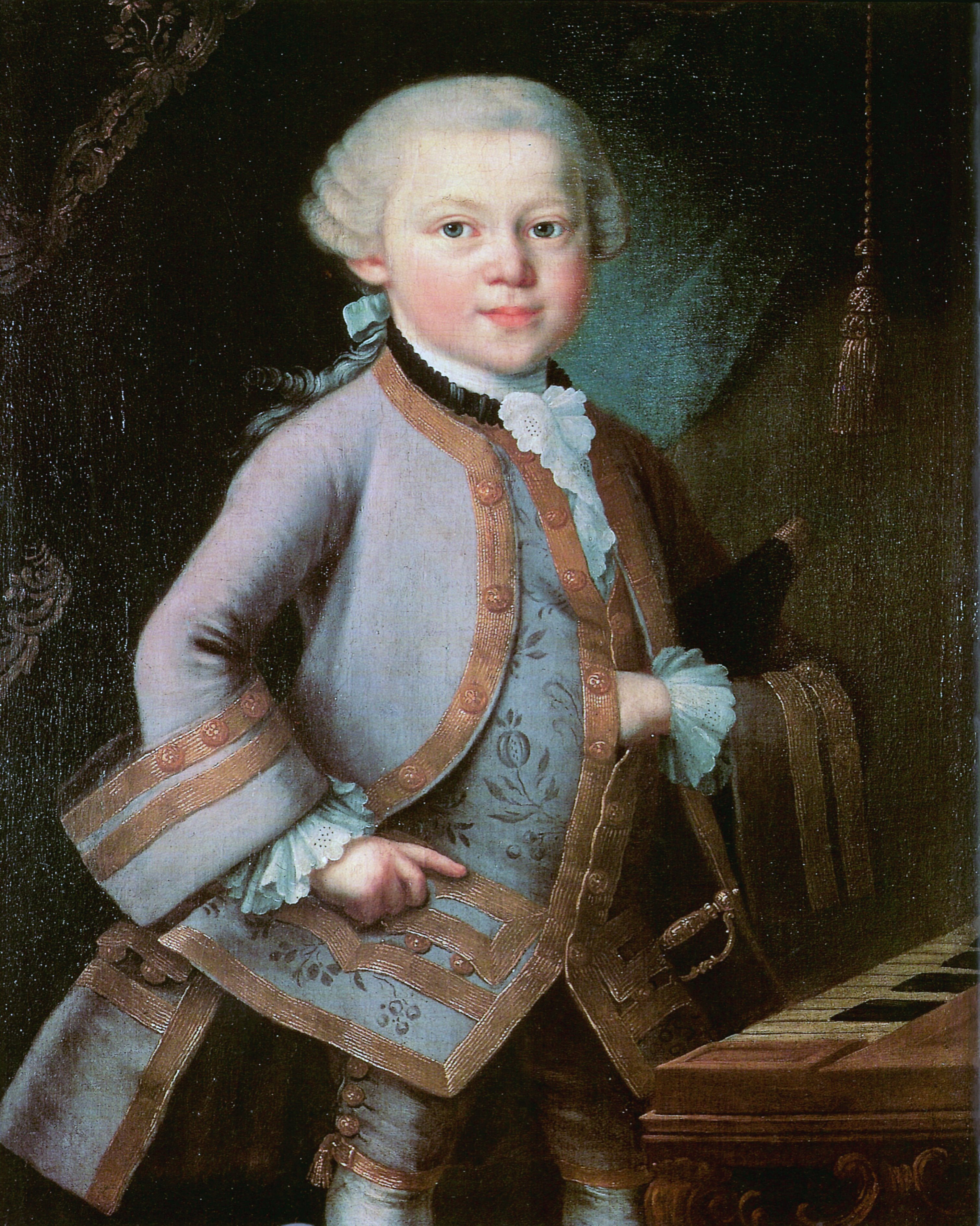
In art, it is a period where, it seemed, everyone who was anyone wanted to have their portrait painted – if you had enough money, you could visit London and have your image preserved for eternity by Joshua Reynolds or Thomas Gainsborough. In music, a golden age is dawning. Joseph Hayden, who has just become Kapellmeister to the immensely wealthy Esterházy family, will write his 9th Symphony. In Salzburg Leopold Mozart, having discovered that his daughter, Nannerl, and especially his six-year-old son, Wolfgang, are musically gifted, has resolved to use their talents to secure his family fortunes and will embark with them this year on a musical tour of Europe. The Jackson Five of classical music.

While South and Central America remain under Spanish or (in the case of Brazil) Portuguese control, Britain, with the enthusiastic help of its colonists, has succeeded in throwing France out of most of North America. Wolfe’s defeat of Montcalm at the siege of Quebec in 1759 paved the way for British sovereignty over Canada. But the high costs of the war would lead Britain to increase taxation in its American colonies. In so far as the British felt obliged to justify this at all, they argued that the colonists were the ones who had benefited most from the victory, saved as they were from the undoubted horrors of French rule. But the one great advantage the colonists had hoped for, the right to expand westwards beyond the Appalachians, was denied to them by their British overlords, who had given the native tribes (many of whom had allied themselves with the French in the war) assurances that there would be no white settlement in Trans-Appalachia. The seeds of the American Revolution were sown, seeds which would be watered by the ideas of the Enlightenment. And practical experience in the French and Indian War (as the Seven Year War was known in America) was also significant for the future – one of the major American military talents to cut his teeth in the conflict was the young Virginian, George Washington.

But for all the sprouting ideas of the Enlightenment, all the signs of the changes still to come, life, for most of the world population in 1762 (around 850 million), goes on as it had always done. Most people still wrestle an uncertain, insecure life from the land, are illiterate (or poorly educated at best), living often short lives of brutally hard work, sickness, hunger, exploitation at the hands of the rich and powerful, and often violent death. In Britain, the transformation which will become known as the Industrial Revolution has already begun; in two years time James Hargreaves will build his first Spinning Jenny and the new “Factory System,” where relatively lowly skilled workers are gathered in larger numbers to use increasingly complex technology to produce large quantities of manufactured products, is starting to make a mark in various areas of production. One of the most successful early entrepreneurs to make his name and fortune in this manner, is the pottery manufacturer, Josiah Wedgewood (the grandfather of Charles Darwin), who set up the first true pottery factory near Manchester in the 1750s. But the widespread growth of new, immensely more productive methods of production– as well as political and many other changes – which will transform the world, are still a few decades in the future.


Pictures retrieved from:

Saturday, 17 March 2012

Hail Glorious Saint Paddy


The top o’ the mornin’ to ye! Begorrah, bedad, an’ bejaysus, sure isn’t it a grand day and all for us to be celebratin’ the feast of our own glorious Saint Patrick, it bein’ fifteen hundred and eighty years since he arrived on the misty green shamrock shores of the dear auld emerald isle, wavin’ his bishop’s crozier to banish the snakes and bring the benighted pagan Oirish into the bosom of God’s holy church?

Is that enough stage-Irishness for you? Enough Paddywhackerry? Will you wear the green today, go off to watch or even march in the parade and get all tipsy and lachrymose on green beer, Guinness or whiskey (always to be spelled with an “e”)?

In Germany, where I live, St. Patrick’s Day barely causes a blip on the radar screen, apart from parties organised in the Irish Pubs, one of Ireland’s most successful modern cultural exports, which can be found in nearly every middle-sized town. There’s a street in the Altstadt of Düsseldorf which has three of them, one being a gay pub. And speaking of gays, as far as I know, the Ancient Order of Hibernians, organisers of the New York parade, still don’t allow openly LGBT organisations to take part. They would do better to recall the great Irish bisexual, Oscar Wilde, and honour his memory.

Contradictions. Insofar as national stereotypes are valid at all, the Irish are nearly as full of them as the stereotype neurotic New York Jew. There is a kind of deep insecurity at the heart of the Irish character, born of an unholy conjunction of colonial oppression and Catholic guilt. And even these further stereotypes are themselves contradictory. For while there is no doubt that the “native Irish” were exploited, oppressed, discriminated against, killed and starved in their millions by the more powerful English between the 17th and the 19th Centuries, at the same time there was much of what was Irish which contributed to the growing identity of Britishness during that period, and – particularly in the 19th Century – there were many Irish people who were as comfortable with the dual identity of Irish and British as most Scots and Welsh are today (and, indeed, in the 20th Century, hundreds of thousands of Irish immigrants in Britain who have adopted a British identity, while retaining, to various degrees, a sense of their original Irishness).

Then there’s Catholicism. Similar to the Poles, religious separateness developed in Ireland as a defining national characteristic in reaction to English acceptance of the Reformation. Because the English became Protestant, it became a part of Irish self-definition to be Catholic and, the more being Catholic became a criterion for discrimination and persecution, the more stubbornly the Irish clung to it. Yet parallel to all this, most serious Irish nationalist thinkers retained a strong sense that being Catholic was not synonymous with being Irish and a large number of those who developed and espoused ideas of Irish separatism were Protestant, from Jonathan Swift to Wolfe Tone, Charles Stewart Parnell to Oscar Wilde, W.B. Yeats to Douglas Hyde (independent Ireland’s first president).

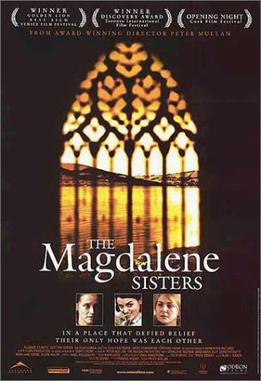
But Catholicism remained a major part of the Irish identity, for many the defining component. The decades of national trauma following the disaster of the great potato famine in the middle of the 19th Century coincided with a restructuring of the Catholic Church worldwide along strict, all-encompassing, highly-structured lines, defining itself sharply in contrast to the ever more pervasive ideas of the Enlightenment, politically expressed in the American and French Revolutions. The result, in Ireland, was a particularist Nationalist culture, whose religious component offered an extra reason to reject everything British as being a product of obdurate heretic Protestantism, whose adherents were, basically, damned by God to eternal hellfire. And it was a variety of often joyless Catholicism which defined much of modern life and what it had to offer as “occasions of sin” (most particularly in relation to anything to do with sexuality) and stoked the subconscious Freudian fires of guilt with rigorous efficiency, while at the same time allowing for frequent, ghastly violence, abuse and hypocrisy. To anyone who would dispute this interpretation, I simply recommend watching Peter Mullen’s 2002 film, The Magdalen Sisters, the basic accuracy of which, as far as I know, nobody has been able to call into question.

Hail, glorious St. Patrick, thy words were once strong
Against Satan's wiles and a heretic throng;
Not less is thy might where in Heaven thou art;
Oh, come to our aid, in our battle take part!”

According to my researches, the words of this most popular of hymns to St. Patrick – and one which I learned in my earliest schooldays – were penned by a Sister Agnes in 1920. The “heretic throng” she refers to was, for the Irish Catholics of the time, clearly Protestant. Historically, of course, the Patrick who spread the Christian message in Ireland in the fifth Century (whichever one of them you take, most historians believe there were at least two of them!) had nothing to do with heretics, as those against whom his words were strong were pagans, but that wasn’t important. As a child I was certain – for so I was taught – that Patrick was a Catholic. The fact that the Protestant Church of Ireland also reveres St. Patrick as its founder and that one of its two major cathedrals in Dublin is named after him didn’t matter. As far as we were concerned, those cathedrals were rightfully Catholic anyway, and had been robbed from us by the Protestants during the Reformation. The fact that Patrick was most probably an Englishman, bringing a foreign religion whose basic goal was to extirpate the cultural uniqueness of the native Irish druidal religion, was never presented in these terms and much was made of the remote possibility that the young Romanised Patrick, who had been captured as a slave by Irish pirates and brought to Ireland to herd pigs, in fact came from a settlement on the northern coast of Gaul.

When the Irish Free State became independent in 1922, the predominant ethos became that narrow Catholic definition of Irish identity – a development accelerated by the fact that the great majority of the Protestants on the island lived in the province of Ulster, most of which remained British as Northern Ireland. The new state was over 90% Catholic and for the rest of the 20th Century, the small Protestant minority declined ever further. And that narrow exclusivist understanding of national identity contributed to a withdrawal on many levels from the wider world, contributing even to a declaration of neutrality during World War II. In that atmosphere of righteous isolation, it was possible to cultivate further the national neurotic mythology of persecuted specialness, doomed to suffering, mediocrity and failure by centuries of foreign political, economic and religious oppression.

Even during my childhood it was showing cracks, under assault from (far too slowly) growing prosperity, rock and roll, television and the insistent spiritual “pollution” from a more open, exciting wider world. The Church itself was undergoing its own revolution as a result of Vatican II. From the beginning of the nineties up to a couple of years ago, the roaring of the Celtic Tiger seemed to have been systematically banishing the last vestiges of the old, limited, outdated, claustrophobic national identity to the scrapheap of history.

The Celtic Tiger was so enthusiastically, exaggeratedly embraced by the Irish, perhaps, because it offered a new possibility for self-definition. It certainly ultimately led to a kind of collective unreal hubris, and the throwing out of a number of babies with large amounts of undoubtedly filthy bathwater. All this made the crash, when it inevitably came a few years ago, all the more bitter.

But for all the flaws in the current rescue strategies, and all the suffering the Irish people are currently going through – much of it unnecessarily demanded by a corrupt, twisted, global finance mafia – there is no going back to the old, narrow, neurotic nationalism. That mould, at least, has been broken forever. The Irish who celebrate their national holiday today are undoubtedly more sombre, thoughtful, self-questioning than those of a decade ago. But they are also more mature.

The (Protestant) Irish rebel leader, Robert Emmet, executed in 1803, made a famous last speech, which became part of the sacred scriptures of Irish nationalist republicanism. He finished by saying

“Let no man write my epitaph; for as no man who knows my motives dare now vindicate them, let not prejudice or ignorance, asperse them. Let them and me rest in obscurity and peace, and my tomb remain uninscribed, and my memory in oblivion, until other times and other men can do justice to my character. When my country takes her place among the nations of the earth, then and not till then, let my epitaph be written. I have done.”

Today, I would argue, his country has indeed taken her place among the nations of the earth – no better, but certainly no worse, than most of the others. His epitaph can be written, has, indeed, been written in the course of Irish history since his death, and particularly in the past fifty years, long after notional political independence was achieved.

Happy Saint Patrick’s Day! Be proud to be Irish, because today is the day we allow everyone worldwide to share our identity – with all its flaws and glories J.


Pictures retrieved from:

Sunday, 11 March 2012

Weirder Stuff


While doing a bit of administrative work on this blog recently, I realised that a number of links weren’t leading where they were supposed to go – particularly the ones going to Obnoxi.us. Having checked back with Chris, who originally got the site up and running, I discovered that, owing to, basically, pressure of time, he hadn’t been able to give the site the care it needed and had thus suspended it – hopefully temporarily. I understand his position completely; doing anything right inevitably takes time, and those who take a personally chosen habit like blogging seriously will need no further explanation. It is one of the wonderful things about this still very young virtual world that, while there are many on the web who are only interested in making quick money (sometimes in dubious ways), and many others who work hard on-line earning a living by providing quality services which help us in all sorts of ways, there is a huge group of people exploring the possibilities of the internet to be creative in all sorts of fascinating ways, investing immense amounts of time and energy in what can only be described as labours of love.

In all the discussions raging about digital copyright, SOPA, PIPA, ACTA, etc., there is a fascinating aspect of the virtual world which has not – in my view – received the attention it deserves; the extent to which the practical doings of hundreds of thousands of people on-line call the all-pervasive economic/monetary models of human living, which are the new (generally) unquestioned orthodoxies of our age, into question. For if, on the one hand, there is a general feeling on the part of many people that they should not be forced to pay for music and films, on the other hand, there are just as many more who put their own creative efforts – music, film, writing, photography and all sorts of combinations of the same – online without any thought of remuneration whatsoever. There are whole areas of activity on the web where other, more fundamental currencies than dollars or euros prevail; the satisfaction obtained by sharing one’s creativity with others, the positive feelings engendered through genuine interaction in virtual communities, the incalculable pleasure experienced through expressions of appreciation and praise.

At any rate Obnoxi.us has (temporarily) gone to sleep and I had a problem. Over the past year I had found the site useful for publishing material which I felt was somewhat different to what I was generally posting here on Attempted Essays. Though the essay form of writing is extremely fluid and flexible, it does have its boundaries, and there is a definite difference between an essay and a short story. And then of course, there was the embarrassing question of Frankie. He does have something to say – in his own, er, inimitable way – but I retain the conviction that he is as suitable for Attempted Essays as Sid Vicious would be as a member of Abba. Still, I wasn’t happy about having him consigned to some kind of digital limbo, much as he often deserves it.

For these reasons, I have decided to start a second blog. I won’t be posting there with the same frequency and regularity as here but, from time to time, when the muse kisses me in a particular way, I will be using it for more experimental material than I feel really fits in on Attempted Essays. And it will give Frankie a sort of home of his own.

Allow me, then, to introduce Weirder Stuff. I’ve already put most of the material I’d posted on Obnoxi.us on it (luckily I keep copies of everything I post on one or other of my hard drives). And, as an introduction, there’s also a new science fiction story I finished recently, called


Picture retrieved from

Monday, 5 March 2012

The Happiest Days of our Lives?


When I was ten years old we moved from Wicklow, on the east coast of Ireland, to Sligo on the north-west coast. It was quite a long distance, which meant for us children leaving friends and familiar places definitively behind us. It also meant going to a new school – and that shortly before the end of a school year.

There is a strong tradition of segregated education in Ireland, and so my brother and I landed in St. Antony’s National School for boys, run by a congregation of Catholic teaching brothers. Boys arrived in St. Antony’s in Second or Third Class and it was traditional that classes generally remained with the same teacher until the boys had completed Sixth Class and moved on to Secondary School. My younger brother was lucky enough to be put in the Third Class of a brother who was a born teacher and became something of a beloved legend in the town. In his late eighties, half blind and deaf, he amazingly turned up at my brother’s funeral three months ago, over thirty-eight years after their ways had parted.

I was placed in the class of Thomas Mooney, joining around fifty other ten-year-old boys in our own peculiar blackboard jungle. We were a mixed bunch, mirroring the town in which we lived; one or two kids from wealthier families, a spread of middle and working class youngsters and around seven or eight representatives of what would be called “poor white trash” in parts of the USA. These were children who were more or less disengaged from the whole educational process, missing frequently, mostly not having schoolbooks or anything else with them. The requirement to do or present homework seemed generally foreign to them and they exuded a general atmosphere of resigned untouchability, occasionally tempered with an undertone of dangerous, unpredictable violence, something reinforced by the fact that most of them were up to three years older than the rest of us, having frequently repeated classes. They were just hanging around at school, barely literate, waiting to achieve the age of fourteen, when they could legally get out of a system with which they had no identification and – if they were lucky – find occasional work as labourers somewhere.

A group of over fifty ten-year-old boys is a pretty unruly, often savage mob. A teacher in control of such a group needs an unconscious, all-encompassing, completely confident sense of his own authority, otherwise he is lost before he begins. And Thomas Mooney did not have that authority.

He may have had it previously and he may have achieved it subsequently, but my classmates and I encountered him at a particularly vulnerable stage in his life. When I met him he was around forty years old and had come to St. Antony’s only recently, after the small country school in which he had worked had been closed, a victim of rationalisation. The contrast between dealing with a small number of country children of both sexes, spread over a number of classes all taught by the same teacher in the same room, and a large class of harder, more sophisticated town boys must have been considerable for him. But there were deeper reasons for his debilitating lack of confidence than just this.

Thomas Mooney was married to a woman he loved deeply. They had no children and his wife was seriously ill, suffering (as I am now fairly certain) from chronic deep depression. How do I know this? Because, in his despair, Mr. Mooney told us of it, frequently, at some length.

Was he trying to win our sympathy? At the time I thought so and – along with my classmates, with the callous cruelty of ten-year-olds in a mob – I despised him for it. With the infinite wisdom accrued through a whole decade of life, I judged that he had realised that he lacked that control which was the basic prerequisite for his job and was trying to substitute it by appealing to our better natures. If such was the case, he had miscalculated very badly.

It is not that ten-year-olds don’t have better natures; they do, but they are also in the process of moral development and are subject to many other powerful motivations, one of the strongest being peer pressure. Add to this the fact that children from a very young age have a finely developed sense of the security with which adults perceive their own authority and you can understand why Thomas Mooney never had a chance with us.

He was, at the time, a deeply unhappy man, a subtle, sensitive person questioning many of the fundamental certainties on which his life had been based, and this had fatal consequences for his control over the mob we were. He was the teacher, the enemy, and we sensed his weakness, judged him accordingly, and there was little he could do to reverse this instinctive implacable judgement of failure. He was like a poker player holding a pair of deuces whose opponents were well aware of what he held in his hand – bluffing was useless.

There was an alternative available to him, one hallowed by tradition, and in general accepted use in the school; that of violence and pain. Corporal punishment was, at that time, still legally permitted in Irish schools and most teachers still used a bamboo cane as a disciplinary and pedagogical instrument. At the end of every pause and lunch break a queue of boys could be seen waiting apprehensively before the principal’s office; waiting for the cold, impersonal administration of “six of the best,” to be endured as a consequence for misbehaviour. You presented the flat of the palm of each hand alternatively, open at arms length, anticipating the whish, the crack, and the burning pain. We did not question this – it was an inherent component of the general culture of school – but it reinforced our general feeling of education as a state of low-level warfare between pupils and teachers, a fundamental division between us and them, where they had nearly all the power.

Thomas Mooney refused to use the cane in his classroom. Instead of respecting him for this, we judged it as a further sign of weakness and despised him all the more for it. As a result, his class was generally unruly, undisciplined and loud. He frequently left us for long periods to our own devices, setting us work to do while he sat at his desk, doing I no longer remember what. Maybe nothing at all. It didn’t really concern me.

Though the work he set us to do was sometimes interesting. In Fifth Class, he told us we should begin a project of writing our own books and occasionally showed interest in what we were producing. Most of my classmates took these long periods for personal creativity as an opportunity for goofing off, but I became involved in a complex Buck Rogers-type science fiction epic, heavily influenced by the style of Leslie Charteris’ Saint series (I had discovered the books around that time and they served to increase my admiration for Simon Templar, initially awakened by Roger Moore’s TV depiction of him). However, at a certain stage he lost interest in it and my masterpiece was never finished.

When he applied himself to it, he could be an excellent teacher. He encouraged my interest in history and tried to instil in us a sense of the importance of politics and debate. It was a classroom in which debate was frequent; given his lack of fundamental authority, those of us with rhetorical ability could engage him in endless discussions, or encourage him to hold forth on themes which interested him. But, more often than not, he was listless and unmotivated and frequently avoided teaching subjects, like the Irish which (following the official national ethos of independent Ireland should one day resume its long-lost position as first language of the country) was compulsory and generally hated by a majority of the pupils. Thomas Mooney spoke fluent Irish himself, but seemed to find the effort of pounding it into our thick reluctant skulls too much. Our lack of progress here would cause a number of my fellow pupils serious problems later on (Irish remained compulsory as a major subject right up to the end of secondary school), but, fortunately for me, my parents spotted my deficits pretty quickly and arranged for me to get extra tuition outside school.

When we left him at the end of Sixth Class to move on to secondary education, he took over another group of eight-year-olds in Third Class, but a number of years later I heard he subsequently left to take over a position in a rural school. I suspect that he was very glad of the change and hope that things worked out better for him away from St. Antony’s.

For there was something fundamentally very evil going on in that school, though my brothers and I were fortunately, miraculously untouched by it. During the years I was there, five of the ten teachers (three brothers and two laymen) were sexually abusing many of the boys entrusted to their care. One of them was the tall young brother teaching the class parallel to ours, a class in which I was often a guest on the (not infrequent) occasions when Mr. Mooney called in sick. His ready use of the cane ensured that he had no discipline problems. He also had the custom of having boys sit on his lap for long periods of time – fortunately, he had his particular pets and we guests were not selected for this “special” treatment.

In the many court cases which have taken place since the whistle was finally blown a little more than a decade ago, a number of other teachers gave testimony that they were unaware of what was going on. As far as I can ascertain, Thomas Mooney was not called to testify. Even if he had been, given his detachment and preoccupation with his own problems, I would guess that he would also say that he didn’t know anything. And yet, that visceral part of me which does not always comply with my rational world-view wonders whether the underlying miasma of evil and misery in the school didn’t contribute somehow to his obvious unhappiness.

Those of us who were pupils there – apart from the unfortunates who were the victims of abuse – didn’t realise that there was something fundamentally wrong, but then, of course, kids usually don’t have the comparative apparatus to judge such things. We knew that it was a cold, hard, unloving sort of place, but it was school and we didn’t expect anything else. One of the effects it did have on me was that casual brutalisation which led to my harsh boyish judgement of Mr. Mooney. Under different circumstances I might have learned much more from him and today I regret that I didn’t. If he is still alive today and, by some remote chance, happens to read this, I would like to say to him that I now cherish him retrospectively much more than I did at the time.

(“St. Antony’s” and “Thomas Mooney” are pseudonyms. For those whose stomachs can take it, this link leads to an account of the abuse cases in the school and contains a laudation of the exceptional brother I mentioned in this piece who was my brother’s teacher)


Pictures retrieved from:

Wednesday, 29 February 2012

US Stupidity in Afghanistan


How unbelievably stupid can you get?

A group of US soldiers in Afghanistan, charged with guarding Taliban suspects, first took away their Korans – in case they would use them to pass secret messages to each other – and then burnt them. As if this wasn’t bad enough, they were then careless enough to let other Afghans see them doing this and spread the happy news.

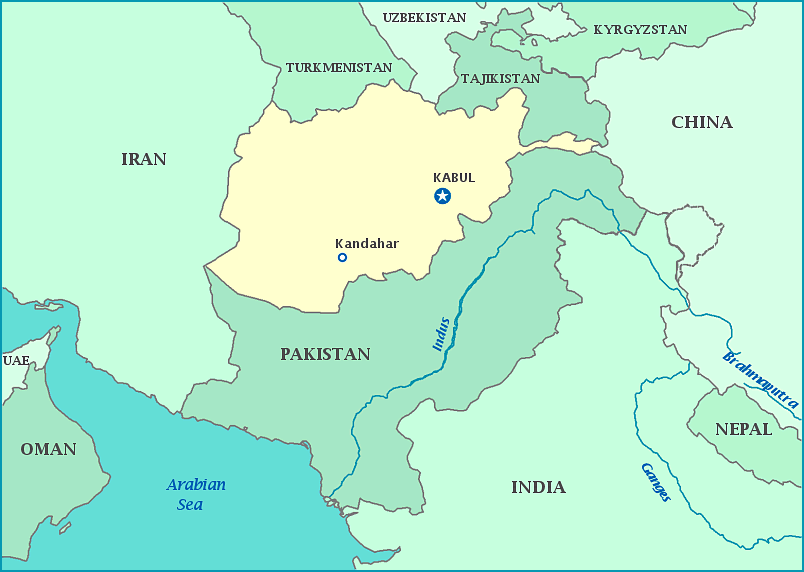
Let me just see if I’ve got this straight. The US armed forces – accompanied by the armed forces of many other nations – went into Afghanistan over ten years ago to kick out the Taliban who had given hospitality and support to Osama bin Laden and Al Qaida. They succeeded in doing that pretty quickly but, for reasons too complex to go into here but which had a lot to do with the fact that Dubya was more concerned with offing Saddam (something his daddy had wisely refrained from doing), finished up getting stuck there. Not a good idea, as the Soviets, the Brits, or even the ancient Greeks under Alexander the Great could have told them. Afghanistan is definitely not a country you want to get stuck in when you’re perceived as a foreign occupying power.

The Afghans don’t like any foreigners telling them what to do, and a large part of their obscure, complex tribal culture has to do with their young men learning to use guns and any other weapons available before they would be ready to shave (if, that is, they shaved, which they generally don’t). The longer the US and other foreign forces remained in the country, the more they were going to be resented and resisted. It is hard to believe that all the experts in the State Department and the Pentagon didn’t know this. Maybe they did, but just decided to ignore it. Or maybe it was just one of the things, as Rumsfeld put it, they didn’t know that they didn’t know.

At any rate, we have moved from a situation where, a decade ago, most Afghans were delighted to see the backs of the Taliban, to a situation where they are now back in a powerful position and gaining ever more support from many Afghans, who see them increasingly as potential liberators from foreign oppressors. What a wonderful example of winning the war only to lose the peace.

Ok, so Afghanistan has turned into a complete mess. To use a US military expression, SNAFU – situation normal all fucked up. In the wake of 9/11, the collective US leadership seems to have forgotten one of the major lessons of Vietnam; be careful about getting into a situation without a clear plan about how to get out of it again. This was something Daddy Bush and Colin Powell understood quite clearly when they sent their troops off to kick Saddam’s ass in Desert Storm over twenty years ago. Dubya never learned this and Powell, apparently, didn’t have the guts to make it clear to him. Anyway, the US – and all their allies – now want nothing more than to get out of there as quickly as possible. At least officially; the chances are that if they succeed in their current disengagement plans there will still be thousands of “advisors” left there, just as there are in Iraq. But that’s all right, it’s just part of the neo-liberal wave of privatisation – war can be privatised too; it passes off the nasty business to mercenaries, who aren’t subject to the same degree of public control and scrutiny as national armed forces, where influential private companies (like Academi, the Company Formerly Known as Blackwater) can earn lots of money, and where military veterans with diverse reasons for not wanting to return to civilian life can find well-paid work.

But even getting out officially isn’t easy. I believe that the US and its allies don’t really give a tinker’s curse about Afghanistan; as far as they are concerned, if the Afghans are intent on living in a barbaric medieval theocracy, where women are treated as chattels, those who don’t share the faith of the rulers live in fear of death, and there’re more or less continual low-level wars between various tribes, then they’re welcome to do so. Admittedly, there is the poppy problem – Afghanistan is the world’s largest producer of non-pharmaceutical grade opiates (92% in 2007) and also, incidentally, the world’s largest producer of hashish – but, despite all the hype about the so-called War on Drugs, I have a feeling that (for all sorts of reasons, many sordid, which I won’t go into here) the US and most other countries can live with that. No, the real problems are the two 500 pound gorillas next door, Iran to the west and, especially, Pakistan to the east.

In the ordinary course of events, Iran would be the easier one. In terms of sympathy, the US and the west have little to lose there anyway. But, leaving aside the large number of people within Iran (many of whom are devout Muslims) who might just have been persuaded that the west could offer them moral support and an alternative model for organising their country, the last thing anyone could want right now is more propaganda fodder for Ahmadinejad and the Islamicist mullahs pulling his strings. Israel and Iran are playing a dangerous game of nuclear chicken at the moment, with vast possibilities of dire consequences and anything which adds fuel to that particular mix, you would think, would be something anyone sane would want to avoid at all costs. Maybe they forgot to tell that to the US soldiers who decided to do some book-burning, and their superior officers who were ignorant enough to allow the situation to develop where they could even consider the idea.

Pakistan is potentially an even bigger problem. While it is still officially seen as the West’s major ally in the area, it is hopelessly corrupt, increasingly unstable, and large areas of its territories bordering on Afghanistan seem to be factually under the control of the Taliban or groups sympathetic to them. After all, that’s where they finally got Bin Laden, in Abottabad in the province of Waziristan. An increasingly likely return to power of the Taliban in Afghanistan might just push Pakistan over the edge into chaos, civil war and an ultimate Islamicist takeover there. It wouldn’t take much pushing. Pakistan has nuclear weapons. It’s an open question as to how India, also a nuclear power, would (understandably) react to such a course of events.

The blatant ignorance which gave rise to this Koran-burning incident is simply mind-boggling. Apart from damaging any claim to some kind of moral high ground which the US might like to appeal to in this whole situation – a claim which actually had some justification in the immediate aftermath of 9/11 but which has been steadily losing credibility ever since – it is abysmally stupid from a practical strategic point of view. If the US wants to ensure any kind of stability in the country and the region after the troops are officially pulled out, the struggle for the hearts and minds of as many Afghans as possible is more vital now than ever.

It makes me wonder about the mind-set prevalent within the US Armed Forces, when any trained soldiers would not be aware of the consequences of such an action. No matter what strength of suspicion about the level of involvement of the detainees with the Taliban, the burning of Korans is a gratuitous act of insane provocation which can only suggest that those responsible are seriously dehumanised. They are not the actions of troops who are fighting to defend the ideals of the American republic throughout the world, but rather of arrogant, imperial occupiers, who could best be compared to the Roman legionaries who played dice at the foot of the cross of Jesus of Nazareth, whom most of them regard as their Saviour and God.

NATO has apologised, Obama has apologised, but it’s not doing all that much good. Perhaps because the incident is not an isolated one. Only a few days earlier, pictures were released of US troops apparently urinating on the bodies of dead opponents. Not to mention all the “collateral damage,” particularly the various killings of innocent children since the ISAF forces arrived in Afghanistan over ten years ago. And then, of course, there was that highly publicised Koran burning by that mad pastor in Florida last year, though at least that one can’t be blamed on the military.

One of the frightening aspects of all this is that it doesn’t even seem to be creating much of a stir in the US, more occupied as it is with Whitney Houston, the Oscars and the ghastly, unreal comedy of the Republican presidential nomination campaign. It would offer some kind of hope if there were any real signals of some sort of public feelings of shame at the actions of its soldiers. But why should the Roman public be concerned about the doings of its legionaries in a remote country, mostly populated by religious fanatics; Pharisees, Sadducees and Zealots – or raghead Salafists, Shi’ites and Talibans? Particularly when there are more interesting bread and circus issues at home.


Pictures retrieved from: 

Tuesday, 21 February 2012

The Nineties - A Golden Age?


The course of human affairs is constant, chaotic and – initially at least – without structure. Only as events recede into the past do we start to identify patterns, to see stories with beginnings, middles and endings, to impose structure and meaning on the raw mass of events which are continually occurring. And even these structures are continually changing; both as stories continue to develop and be told, and as our particular concerns and preoccupations colour the way we create and recreate the structures of meaning we call history.

There is a general historical convention that around thirty years should have elapsed before historians apply themselves to material to “write” history. As far as I can ascertain, this convention (which I encountered when I was studying history) has much to do with the so-called Thirty Year Rule, which legally stipulates in Great Britain, Ireland and Australia, that cabinet records are generally kept confidential for thirty years before being made available to scholars and the general public. But we live in a world where the rate of change has become ever faster, and the amount of information available ever greater, and so – in many cases – there seems to be an increasing willingness to compress this period.

Recently, I have increasingly come across articles on-line which deal with The 90s. It has long been a convention to try to characterise history according to the completely arbitrary framework of the decimal divisions of our conventional recording of time; and decades which seemed to be particularly noteworthy (as decades) have even picked up special sobriquets, be they the Roaring 20s or the Swinging 60s. Still, I will admit to a certain feeling of unease when I see people dealing with the last decade of the past century as a rounded-off period of history. This feeling is a purely subjective one and has, I think, largely to do with the realisation that I am getting older and that periods which I lived through as an adult and which (to me) still seem very recent are, for those a couple of years (or decades) younger than me, as remote as the 60s of my childhood are for me. No sooner have I been forced to accept that, for the young people of today, the 80s are so incredibly long ago – I remember a comment my daughter (disparagingly) made a few years ago watching some film or other, “My God, that’s so eighties!” – now I am expected to do the same with the 90s.

Yet, as a specific period in history, “the 90s” can actually be pretty accurately defined as a particular historical period with a clear beginning and an even clearer ending, even if these are placed a little outside the chronological decade. They began on November 9, 1989, with the Fall of the Berlin Wall and ended on September 11, 2001, with the Fall of the Twin Towers. It was a decade of optimism, of feel-good, of the peace dividend, and the end of the bi-polar conflict which had had the world quaking under the fear of Mutually Assured Destruction since of the end of WWII.

It was, for my generation, a decade with loads of “the future is now” experiences. I remember Bob Dylan commenting on Bill Clinton’s election with some bemusement that he was now older than the president and, indeed, he went along to play “Chimes of Freedom” at Clinton’s inauguration – along with Fleetwood Mac belting out “Don’t Stop Thinking about Tomorrow at the inaugural ball. Come to think of it, Michael Jackson was there too and, hell, Clinton played saxophone for Chrissakes. A few years later, Tony Blair was elected UK prime minister – and he admitted to having played electric guitar in a garage band.

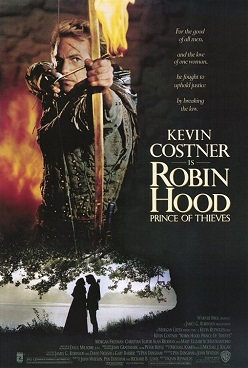
All of these 90s feelings came back to me forcibly  recently when I heard of the death of Whitney Houston. Though her career began in the eighties, it was the film, The Bodyguard, which made her fame undying worldwide, particularly with the song “I Will Always Love You.” And thinking of that film brought me to Kevin Costner, another man who made it big in the nineties. And thinking of Kevin Costner brought me to his version of Robin Hood: Prince of Thieves (1991). The film is overacted and relies in many places on a strong dose of melodramatics but it also has a lightness, almost naïve whimsicalness about it, a deep optimism that everything will work out in the end (which it does, with Sean Connery turning up as Richard Lionheart to bless Robin’s marriage to Marion), which is quintessentially nineties. The film also features a show-stealing performance by Alan Rickman as the wonderfully evil Sheriff of Nottingham, who gets the best lines of the movie

“Just a minute. Robin Hood steals money from my pocket, forcing me to hurt the public, and they love him for it? That's it, then! Cancel the kitchen scraps for lepers and orphans, no more merciful beheadings, and call off Christmas!”

The essential optimism of the 90s, I believe, was a consequence of the collapse of Soviet dominated communism at the end of the 80s. Today, nearly a quarter of a century later, it is easy to forget just how unbelievable this was – and how sudden. In October 1986, the agreement in principle between Reagan and Gorbachev in Reykjavik over the reduction of intermediate nuclear weapons in Europe was regarded with amazement by the world; three years later the Berlin Wall fell, a year after that Germany was reunited, and a year later the Soviet Union ceased to exist. The shadow of the bomb – a continuous reminder of the complete precariousness of human existence on the planet for forty years – disappeared. Truly, the horse had learned to sing, and the song was American. Operation Desert Storm continued the theme and showed that the US could be the global policeman, impressively kicking Iraqi ass and taking names. Moves towards greater European union took place, with the European Community renaming itself Union, welcoming Austria, Sweden and Finland as new members, and making the final preparations for the introduction of a common currency.

Windows 3.0
The digital revolution was gathering speed. While PCs (and Macs) had already been spreading throughout the 80s, in the 90s they finally became a fixture in the majority of the households in the developed world. The internet exploded and by the end of the decade, most of us had mobile phones. The DVD arrived and began to kill VHS. Whereas at the beginning of the decade using a PC was a complicated nerdish business, involving knowing your way around the frustrating vagaries of DOS or cursing a frequently crashing Windows 3.0, by the time Bin Laden’s maniacs were crashing the hijacked planes into the World Trade Center Windows XP had just come on the market.

Of course, whether you experienced the 90s as a Golden Age or not is very much determined by who you were and where you lived. While, for much of the world, things seemed much better in 1995 than they had in 1985, there were gruesome exceptions – Yugoslavia, for example, or Rwanda. And there were those who famously didn’t survive the decade, from Kurt Cobain to Princess Diana.

The Golden Age was, at any rate, doomed. Although the transition to the new millennium went smoothly and the Y2K panic proved unwarranted, the party was coming to an end. In 2000 the Dot-Com Bubble burst and with 9/11 everything changed. Openness, optimism and feel-good were suddenly, catastrophically replaced with defensiveness, paranoia and the War on Terror. We are still living with the consequences.


Pictures retrieved from:

LinkWithin

Related Posts Plugin for WordPress, Blogger...