Seiten

Monday, 3 September 2012

Human Dignity; My Friend Jimmy


For all of my working life in nursing – over twenty years now – I’ve been involved, in one way or another, with the basic limits, the boundaries of life. Either in geriatric care (accompanying people who are coming to the end of their life’s journey), or with people suffering from such serious, complex, debilitating and restricting illness that their continued survival would rapidly be impossible without the comprehensive, continuous support of professional health workers (in my case, people in Persistent Vegetative States). Even in the little group of five children with whom I currently work, three are in a PVS.

It is an area where some very fundamental questions arise. What’s the basic point of life? What is tolerable, intolerable? Where do we draw the line, or can we draw any lines at all? When is a life not worth living any longer? What does “basic human dignity” mean?

Hard questions, questions for which I am ever more unwilling to offer comprehensive answers, or even any answer whatsoever. There are those who find such things in faith, or dogmas derived from faith (though most believers who actually work in this area – in my experience – aren’t big into dogmas), but many of us are not believers, or don’t find our motivation to continue actually doing this work in any kind of religious faith.

I suppose one of the basic things which keeps us at it (apart from the fact that we know how to do it and we need to earn a living) is the very practical experience that this is work which has to be done; done now, done immediately, done continuously. I think it is this daily experience which leads most of those of us who do this kind of thing to a reaction of genuine bewilderment when others praise us for it, you know, “I really admire you for the work you do…” that kind of thing. There is, I suppose, a kind of deep satisfaction in doing the kind of work which you know (at some level) makes a literal life-or-death difference every day, every hour you’re doing it. It certainly beats processing piles of paper or data (something I once did for a year, and which nearly drove me batshit crazy), even if the ultimate results of being a part of such a complex process actually means that practical things happen somewhere.

Nonetheless, we do often find these deeper questions coming up in the course of our daily work. It’s inevitable in this kind of job. And, as I’ve already mentioned, there aren’t any easy answers. Sometimes, faced with someone who seems to be suffering a lot and, at the same time, doesn’t seem to be able to just die, there are no good answers at all. You learn to cultivate a kind of staid attitude of compassionate resignation; you do the best you can, the best possible for the person you’re looking after and try to leave the questions aside. Because, honestly, they don’t help.

No, I often don’t know any answers. What I do know are some stories, one of which I’d like to tell now.

Jimmy was the son of immigrants to Germany from a Mediterranean country. They had left their homeland as young adults over forty years ago, with little education or training, no knowledge of the German language, and very limited concrete knowledge of the kind of life they were going to lead. All they had – like millions of other migrants – was the hope that life elsewhere would offer them and their children more possibilities than a continued existence in the place of their birth.

They quickly found somewhere to live, and jobs to do. There was plenty of work available, even for people without high levels of training and very rudimentary language skills. And, though the work was hard and often monotonous, the money was good and the standard of living (material things like electricity and washing machines and motor cars, and other stuff like health care) almost immediately available to them was far beyond what they could have attained in the old country. Certainly they were homesick, and getting by in a foreign country was often stressful, but they felt sure that their decision had been the right one. If nothing else, their children would have opportunities which would have been impossible at home. And they themselves could dream of moving back home when they retired, the modest amount necessary to build a really comfortable house in their home village saved and a good German pension to give them security in their old age.

They soon had a daughter, but she died shortly after childbirth. And then Jimmy came along. It was a difficult birth and the doctors told the mother that there would be no further children. But Jimmy was a healthy and happy baby and grew up to be a healthy and happy boy.

He became the repository of all his parents’ love, and all of their hopes and expectations. And he lived up to all of these splendidly. He was a lively, fun-loving kid, bright as a button at school, helpful at home, popular in the neighbourhood. He became an altar-boy and learned to play the piano. After finishing secondary school with very good grades, he went back to his home country for a year to do the mandatory military service demanded of all young citizens, even those born and living abroad. When he came back to Germany, he could have gone to university, but elected instead to train as a bank-official. It meant he could continue living at home and it offered him the kind of career his parents could never have hoped for. While Jimmy could have aimed higher, he was quite content with the choice he had made and the life which was unfolding for him.

He had saved some extra money from summer-jobs he had done during his last years at school, and his parents topped up those savings and bought him a car for his twenty-first birthday. And, a few months later, driving to a placement in a branch of the bank which was training him, a few miles from his home town, on a cold January morning, Jimmy hit a patch of ice in a curve on the road and collided with a tree.

The tree won.

The car wasn’t the newest, which meant in January 1997 that it wasn’t equipped with airbags. And, if truth be told, Jimmy was probably travelling a bit faster than was wise when he hit that ice – he was, after all, young and didn’t have all that much driving experience. At any rate, when they pulled him from the wreck he had broken fourteen different bones and had a very serious skull fracture.

For months he wasn’t expected to survive. But his condition slowly stabilised, he came off most of the machines and started to heal. The problem was that skull fracture; Jimmy had very serious brain damage which was irreversible. But he had regained consciousness, and that was both the wonder and the tragedy.

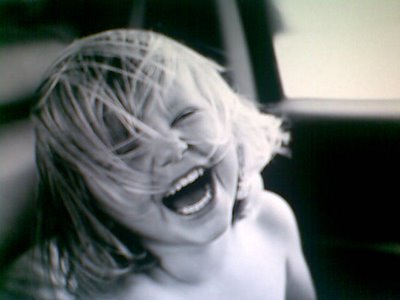
Apart from leaving him almost completely paralysed, the brain damage had wiped out large parts of his rational capacities. It’s hard to really describe his situation to those who do not know him. In a vastly simplified sense, he is frozen at a mental age around equivalent to that of a six-month-old baby. Speech is beyond him, though he is able to understand some of what is said to him. He has a generally friendly disposition, though he is inclined to be a bit reserved with strangers – for he is able to recognise people he knows well. He can shout, or rather, howl, which is something he does continually when he is in discomfort or pain, a situation in which he becomes quite agitated. This happens regularly when he is being washed, cleaned up, or dressed, for all of these operations are both stressful and painful for him. Jimmy’s paralysis is that of the spastic variety, one with an enormously increased muscle tone. This means, for example, that his left forearm has – in the course of the years – completely pulled up flush with his upper arm, so that it takes all the strength of an adult to pull it far enough back to wash it, and check for irritation in the crook of the arm, something which frequently occurs as a result of skin chafing on skin and which then has to be treated. Something Jimmy does not enjoy. Or that his fingers are hopelessly twisted around each other.

As I mentioned, describing his mental state as that of a baby is only a first approximation, for it is no more accurate to describe people with traumatic brain injury as children, than it is to use the same comparison for people suffering from Alzheimer’s. There are superficial, almost coincidental similarities with babies (such as incontinence or linguistic inability), but the basic situation is quite different. And Jimmy has retained some capabilities which are far beyond those of a six-month-old.

Chief among these is a sense of humour. In one sense it has become a little cruder than it used to be – or it may be that some adult limiting conventions have just been burned away. At any rate, Jimmy loves slapstick, the broader the better. Somebody stubbing their toe and then cursing loudly in annoyance will send him into peals of laughter. Abbott and Costello or Laurel and Hardy would be right up his street, but – for some strange reason – Jimmy doesn’t seem able to process TV pictures. The sound alone of somebody cussing is something he finds amusing and the fouler the language the better, as far as he’s concerned. I’ve often driven him into paroxysms of laughter (and distracted him from the most uncomfortable aspects of what I was doing) while caring for him just by making farting noises.

The marvellous thing about Jimmy’s sense of humour is that it’s completely honest, and absolutely total. And it is a gift which he is capable of putting to work in a delightfully mischievous manner. Imagine a group of people sitting around a table, engaged in a serious discussion. Then imagine that Jimmy is there too. This can happen, for he is often sitting in the day-room of the ward where he lives during a staff meeting. Sometimes he simply appears thoughtful, lost in his own special world. But sometimes he feels like establishing communication and he starts looking around at the group, trying to catch someone’s eye. Beware – for if you look at him you’re lost!

When he gains eye-contact with you, he grins. Almost instinctively, you smile back. That’s all the encouragement he needs, indeed, even if you don’t respond, catching your gaze is usually all he needs. He starts to chuckle and this chuckling quickly develops into hearty laughter. Trying to hush him only makes it worse, as he finds such attempts hilarious.

It really doesn’t matter what you do anyway, because Jimmy’s laughter has another killer characteristic. It is irresistibly infectious. There is something so honest, so complete, so true about his laugh that it conquers all attempts to gainsay it. Before you know it, you are laughing too, in the way that you found yourself uncontrollably laughing at something you found funny when you were a child. And, just like it used to happen when you were a child, you soon find everyone in the group trying unsuccessfully to control that urge to laugh, to laugh until your belly hurts and tears are running down your cheeks.

Jimmy has done it again. Wrecking all the pretentions of serious adults at a meeting, he has given them – us – all the priceless gift of joy, taking us beyond the mundane concerns of our reality into a realm of simply revelling in the sheer inexplicable fun of just being alive.

When I hear people discussing situations in which they imagine it would no longer be worth living, in which they feel they would rather be dead, I often find myself thinking of my friend (for this is the best word I can use to describe how I feel about my relationship to him), Jimmy. He is confined to a wheelchair, is incapable of almost every voluntary movement, drools and dribbles, has to be fed through a tube, would lie in his own piss and shit if he were not cleaned up regularly. Is his human dignity worth any less than mine – or yours – because of all this, and because he has been so severely mentally damaged? Is his joy worth less than that of a physicist discovering a new sub-atomic particle, or of a musician in that moment of performance when everything gels, or that of lovers during a shared orgasm?

Despite the conventional tragedy of his story, Jimmy is possibly the happiest person I know. The price he has paid for it in his life is, seen in a conventional way, unacceptably high – one none of us would willingly pay. The loss of the Jimmy who was, all that potential, the life destroyed the moment his car hit that tree, is, of course, heartbreaking. Yet does that detract in any way from the value of his happiness as he is today; make it somehow worth less than those all too seldom and fleeting moments of unalloyed joy the rest of us have to get by with?

I don’t have any answers to questions like that. But then, when I see Jimmy, I don’t need them.


Pictures retrieved from:

Monday, 20 August 2012

Social Health Care


When Danny Boyle (Trainspotters, Slumdog Millionaire), the prestigious director chosen to conceptualise and stage the opening ceremony for the recent Olympic games in London sat down to decide how he was going to do it, he was soon faced with a problem. Not with the concept itself; he quickly came up with the idea of using the occasion to showcase the history of Britain. Moreover, most of the elements were clear; start with a bucolic vision of England’s “green and pleasant Land,” move on to the 18th and 19th Centuries and the Industrial Revolution – the forging of the Olympic rings against a “Satanic Mills” background was a nice touch, I thought – and the final section was easy, from the swinging sixties – Carnaby Street, the Beatles, etc. – into contemporary pop/mobile/internet culture. But what could he chose as the theme for the penultimate, connecting piece?

The basic problem lay in conventional historical British iconography and legend. Ask almost any Britain about the first sixty years of the last century and two themes will automatically come to mind; the Empire and, above all, the war – the Battle of Britain, Dunkirk, the Blitz, brave Britain standing alone against the Nazi juggernaut which had blitzkrieged its way through most of Europe. Yes… Well… Not exactly the most suitable themes for a global Olympic celebration.

Boyle came up with a marvellous concept. Taking the idea of illustrating various themes from Britain’s wonderful panoply of children’s literature (with Mike Oldfield providing the background music), he set this before the background of Britain’s National Health Service.  This portion of the show took its title from the legendary directions in J.M. Barry’s Peter Pan, “second to the right, and straight on till morning.”

The choice of the National Health Service, as the official programme put it, “the institution which more than any other unites our nation,” was inspired. And it sent a clear message to the world about what Britons regard to be the real enduring legacy for them of the epic struggle of the Second World War; the welfare state as embodied, above all, by the comprehensive right of every British resident (and visitor) to free health care. And it is an institution which, despite all the problems, all the complaints, all the shortcomings, bureaucracy, inefficiency and everything else, still enjoys overwhelming support in the British population at large. Even Margaret Thatcher, at the height of her crusade to privatise every aspect of British life except the military, never dared to try to seriously attack the National Health, much though I suspect she would have liked to.

The Olympic opening ceremony was, of course, designed as a spectacle; a playful and artistic presentation, designed to touch us on as many levels as possible, primarily the emotional ones. Were I in a mood to cavil, I would point out that most European countries have a more or less comprehensive public health system, the origins of quite a few of them older than those of Britain’s NHS. But such a criticism would indeed be small-minded, because Danny Boyle’s choice of the NHS as a fundamental icon in the British consciousness of the history of the 20th Century, particularly as a replacement image for the war, makes a much more profound point.

Beyond the concrete territorial aggression of Nazi Germany, the war fought throughout the world in the middle of the last century was a conflict between two ideological systems; to use the title of Karl Popper’s seminal work, the struggle between the Open Society and its enemies. In that respect – and Churchill was the only allied leader who really recognised this while WWII was still going on – the war itself was only half ended in 1945; it took 45 years more for the second form of totalitarianism, Stalinist centrally controlled statism, to follow its dark fascist twin.

The point I am making here is that it seemed perfectly clear to Europeans that a major part of the values which were at stake in the life-and-death struggle with totalitarian ideologies was the right of every man, woman and child to a decent life. And a prerequisite for a decent life is basic health and the treatment of illness. Society cannot guarantee happiness, but one of its most fundamental functions is to make possible for every last member – in the words of the US Declaration of Independence – “the pursuit of happiness.” Illness and disease are a major cause for suffering and, as such, make the pursuit of happiness for those afflicted much more difficult, if not, in many cases, impossible.

Seen in this way, basic health is a fundamental human right, a necessary condition for securing human dignity. This was a widespread consensus among Europeans, faced with the challenge of building up their societies after the trauma of the war, and the defeat of an ideology which despised and rejected the fundamental liberal Enlightenment consensus of what it meant to be human. And so the concept of a right of all citizens to comprehensive health care became a corner-stone of social policy in most post-war western European societies.

Even the USA, reluctantly and in a very limited form, followed this development, this maturing of realisation of the wider consequences of the recognition of the rights ensuing in a society based on the recognition of the inalienable dignity of every human person. In 1965, in the middle of what can well be called the civil rights decade, Medicare and Medicaid were introduced. But in the wake of this, an ideological change started to gain force.

The story of the roots and development of what can be called neo-liberalism or neo-conservatism is beyond the scope of this essay. The very fact that it is vicariously named after two traditionally opposed ideological positions is an indication of the complexity of the subject. Suffice it to say that a combination of economic ideas (Hayek, Friedman, monetarism, etc.), deeper philosophical concepts (Randian Objectivism for example), the growth in size and power of corporations, moving beyond single nations to become transnational molochs, the determination of certain powerful individuals to roll back developments in societies word-wide which increasingly threatened their power and economical bases, and a dollop of fundamentalist evangelical Christianity tossed in to complicate the mix, led to an increasingly popularised basic idea that state/societal/communal acceptance of responsibility for any aspects of life was generally bad, always a curtailment of freedom and only to be accepted as a measure of last resort, to regulate areas of life which could not be regulated any other way. The eighties saw the first concrete political fruits of this new societal paradigm under Reagan in America and Thatcher (who famously stated that there was no such thing as society) in Britain.

A development of the basic concept of general health care as a basic human right became, within this context, almost impossible in the USA, as the Clintons were forced to accept in the early nineties. In Europe too, the public health systems came increasingly under attack from proponents of the political opinion that the state was the root of all evil and that, left to themselves, deregulated “markets” would provide a better world for all. As someone who has been working as a professional within the German social health system for more than twenty years now, I have experienced continually the stress induced by the ongoing war of thousands of attempted cuts and programmes to increase “efficiency.” They have nearly all been carried out at the expense of the weakest of those treated within the system and those who work in the front-line of actually delivering health care. What they have actually managed to save is debatable – the only certainty is that the profits of the most powerful involved in the system (the big pharmaceutical and insurance companies, for example) have been secured and grown.

Fortunately, in most of Europe – despite all the debates, half-truths, propaganda, and downright lies – the fundamental popular support for social health care has been too strong for the neo-libs to succeed in their goal of dismantling it. That is what Danny Boyle was celebrating in the Olympic opening ceremony; even in Britain, the European country most strongly seduced by neo-liberal chimeras, the NHS remains untouchable.

This is why Obamacare is so important. Despite all its considerable flaws, probably inevitable as something resulting from a complex process of political compromise and horse-trading, it represents an enormous step for the USA in a direction of communal moral development, one in which it had so long been behind most of the rest of the western world. And this is why its winding-up in the wake of a Republican victory at the end of this year can be seen as nothing less than a step backwards towards barbarism.

Yes, public health care is expensive. But so is any good health care, and the question remains as to how any society can look at itself in the mirror, knowing that thousands of its members are suffering and dying because they cannot pay for what they need to save their lives.

Moreover, the very question of the costs of comprehensive health-care in any society is more complex than liberal critics would have us believe. Money spent in this area is money which, to an overwhelming extent, remains in circulation in the local areas where the costs are actually produced (apart from the exorbitant sums frequently creamed off by, for example, big pharma), creating secure jobs for thousands of people at all sorts of skill and educational levels, and adding stability and economic life to many communities.

Then there is the oft cited problem of efficiency. It remains an unquestioned aphorism that the profit-driven private sector is always more capable than bureaucratic, over-regulated public enterprises. There is some truth in this. However, two points should be remembered. Quite a proportion of this bureaucratic regulation is occasioned by the need in a complex, publicly-run service to guarantee fairness and accountability. Secondly, it can be asked whether increased efficiency in a predominantly privately organised system actually profits the patients in the end, or whether the end result is not frequently the delivery of the most minimal service possible, for the highest price attainable – frequently at the cost of the weakest people working in the system, not to mention the many patients who are deprived of treatments because there is no money to be made on them, or because they weren’t able to afford an insurance package which would have covered a necessary complex treatment.

I have worked for over twenty years now within a health system which is predominantly publicly organised. There are many aspects of it which are ridiculous, frustrating, badly-organised and just stupid, something about which I tend to frequently rant, as friends and relatives will readily testify. But even in doing this, I realise that I am complaining from a position of relative luxury. In a structure as complex as modern health care, dealing with situations in which many of the people who actually need to avail of the service are in truly extreme situations, defined by pain, uncertainty and fear, there will always difficult issues, with no easy – and sometimes no good – answers.

And, given the fact that research and human ingenuity is always pushing the capability of what medicine can do, there will continually be the question of costs. But for any society which sincerely subscribes to basic values like respect and human dignity, the question must always be; “how much can we afford?” rather than, “how little can we get away with?”

When it comes to the basic question of human health, I am very glad to be living in Western Europe rather than in the USA.


Pictures retrieved from

Saturday, 11 August 2012

Rastaman in Barbados


Sometimes a holiday has to stand for more than just rest and relaxation. By the middle of the nineties, my marriage was floundering. Following a huge row, I left our home on a Sunday evening for a week-long training course, convinced that the whole thing was over. But during a telephone conversation a few days later, my wife suggested we take a holiday and try to see if we could put Humpty Dumpty together again. Her mother would take the children so that we could have the time for ourselves – time to see if we could take all that was good, all that was strong and deep between us, rediscover its value together and put our relationship, functioning, back on the road.

Late winter/early spring is not the best time to look for warm holiday destinations in Europe. But my wife had visited the Caribbean as a girl and had good memories of one particular holiday there and so in March 1995 we found ourselves crossing the Atlantic, our plane stopping to refuel in Newfoundland, on the way to Barbados.

Barbados is the most eastern island in the Caribbean, belonging geographically to the island group known as the Lesser Antilles. It is small (166 sq. miles) and quite densely populated (284.000 inhabitants). Historically a British possession, with an economy based on sugar cane, today it is independent and its major industry is tourism.

Coming from Europe and (I suspect) from the North American continent, the first thing you have to get used to when you arrive in the Caribbean is that time is simply different there. It moves somehow more slowly, languidly. It probably has a lot to do with the balmy temperatures which prevail nearly all the time but I think some of it also comes from the basic attitude to life which seems to be part of the general philosophy of the people who live there. I remember someone who knew Trinidad well once trying to explain it to me with hoary old racist stereotypes about black people being prepared to sit under coconut trees enjoying the sunshine instead of getting up off their asses to do something.

The sad thing about that particular cliché is that it does contain a grain of truth, wrapped up in a huge mantle of prejudice and misunderstanding. The history of the black people (the vast majority of the inhabitants) of the Caribbean is one of hundreds of years of slavery, followed by a further period of notional freedom but systematic continued exploitation by an elite white minority up to around fifty years ago. This kind of experience isn’t exactly conducive to identification with all the values of a system which that elite has used to keep you down, and from which the colour of your skin more or less automatically shuts you out. In fact, independent states of the Caribbean (like Trinidad, Jamaica, the Bahamas, St. Lucia, Barbados, etc.) have generally been doing pretty well since their colonial masters pulled out. (Exceptions like Haiti and Cuba can arguably place most of the blame for their major problems since independence on their former [colonial] masters.)

What the people of the Caribbean do seem to have learned from their history is a certain relaxed attitude to life, an attitude which sees time as the servant of people and not the other way around. You may have to wait a little longer for service in a shop here, but this isn’t because the salesperson doesn’t respect you; rather it’s because (s)he is taking lots of time for every customer, which may include a longer conversation with the person who is ahead of you. Things seem to move more slowly, because there is a feeling that life continuously offers spontaneous small pleasures, pleasures which are there to be savoured. It is, therefore, perhaps not coincidental that the most beloved relic of British colonial rule in the Caribbean is the game of cricket, in which the West Indies are a world power, and where the time for a game is measured in days, not hours. Yet, within the relaxed framework of a cricket game, there are occasions where speed is important, even vital, and anyone who claims that things in the Caribbean are just too slow should just take a look at Usain Bolt.

At any rate, I will admit that, while I found the laid-back, friendly atmosphere in Barbados very pleasant, I experienced some difficulties in adjusting my own attitude to it. I had started an extremely demanding job the year before and it wasn’t easy to just leave it behind me – in my head, I mean. But far more than that, the future of my marriage was also at stake in these two weeks, and this was overshadowing everything else.

One afternoon in the course of the first few days there, somewhere in the middle of the interminable negotiations involved in that summit meeting of hearts, I found myself on my own, walking down Dover Road towards St. Lawrence Gap. Maybe there’d been a row, maybe my wife was just taking a nap, I don’t remember any more. The sun was shining, it was warm, walking was like wading through warm treacle. I seem to remember that I was heading towards the nearest supermarket, probably to pick up a six-pack of Banks beer.

I’m sure I was instantly recognisable as a tourist from Europe or North America; white, slightly sunburnt, obviously preoccupied with my own important affairs. Suddenly I heard a voice calling out to me.

“Hey, mon! How are you, mon?”

I looked around. There was a Rasta-man, sitting on a low wall in the shade.

Fuck it, I thought to myself, I just don’t feel like this shit! All he wants is to hassle me, probably beg a few dollars, or maybe engage me in a discussion about how the white man and Babylon had oppressed the children of Jah. I really don’t need this …

“Hey mon! Doan you wanna talk to I? What’s your problem, mon?”

Damn it! If I just ignore him he might get nasty. I’ve heard that these brothers can get quite aggressive, although it’s supposed to much better in Barbados than in Jamaica.

“No problem, I’ve just got something to do, that’s all. Bit of a hurry …”

“What’s the hurry, mon? Come over here a minute. Need to talk to you, my friend.”

Reluctantly I went over to him. He patted the wall beside him. I sat down.

“So, you’re on holiday, hey? You enjoying yourself? You like Barbados?”

I admitted that I found Barbados very pleasant, very nice.

“So why you look so stressed, my friend? You wanna carry all the cares of the world on your shoulders? I thought you were on holiday. You need to lighten up a bit.”

He looked at me keenly and grinned, his strong white teeth shining warmly, and sang a snatch of Bob Marley’s Three Little Birds, “Don’t worry about a thing, ‘Cause every little thing’s gonna be all right …”

Then he laughed, free and spontaneous, and clapped me on the shoulder.

Even now, I find it hard to describe the feeling that came over me then. It was a strange combination of shame, relief and insight. Caught up in my stereotypical, suspicious, white-bred, first-world superiority, I had misjudged this Rasta-man very badly and I felt ashamed for it. I felt relief, for my feeling of threat was gone and I realised that I was on holidays and didn’t have to carry all my worries around with me. This feeling moved into insight as it became clear to me that, despite all the problems I had to deal with, the world, the day, the moment here and now was beautiful and that, somehow, every little thing was gonna be all right.

We chatted easily after that for a couple of minutes. He asked me about my sunburn and gave me some aloe vera, showing me how to break the thick leaf and rub it on my leg, the cool gel-like sap soothing my irritated skin immediately.

“There’s an answer for everything in nature, mon,” he told me. “Aloe vera is good for sunburn. Even for I-and-I. ‘Cause, you know, the black man can get sunburn too, maybe not so easily, but it can happen.”

He asked me where I was from, how long I was going to stay and wished me all the best for my holiday.

“Now you go on, bro’, and do whatever it is you were going to do. And just remember … Don’t worry about a thing …”

I grinned back at him and we finished the line of the song together.

“…’Cause every little thing’s gonna be all right.”

And so I went my way.

* * *

The holiday, for me, really started after that encounter. My wife and I completed our summit of hearts with a treaty of forgiveness and new beginnings. It didn’t ultimately save the marriage which irrevocably broke down three years later, but, in retrospect, that breakdown was unavoidable. The burden of mutual hurt and the fundamental differences between us led to a situation where we both had to accept, as the German saying puts it, “better a horrible end than horror without end.”

But back then, in March 1995, that was in the future. For the present, we still had the best part of two weeks in Barbados and it turned out to be a wonderful holiday. Thanks in no small part, as far as I’m concerned, to that Rastafarian who helped me get my head straight.

A moment of overstanding where I-and-I learned to aprecilove irie!


Pictures retrieved from:

Friday, 3 August 2012

Pussy Riot


On February 21 this year, a group of women, wearing brightly coloured dresses, tights, and balaclavas, rushed into the sanctuary area of the Russian Orthodox Cathedral of Christ the Saviour in Moscow and for around two minutes performed a protest song in front of the altar, parodying the Christian Sanctus prayer, calling the patriarch of Moscow a “bitch,” and praying to the Mother of God to deliver Russia from Vladimir Putin. The women were members of the political punk group, Pussy Riot.

In March, three alleged members of the group were arrested and – having spent the time since then in custody – were brought to trial on July 30, charged with “premeditated hooliganism performed by an organized group of people motivated by religious hatred or hostility,” the Russian criminal code legalese for what would more commonly be called blasphemy, an offence for which the accused, if found guilty, can be punished with up to seven years in a labour camp. While admitting to participation in the action, Maria Alyokhina, Nadezhda Tolokonnikova and Ekaterina Samutsevitch have pleaded not guilty, insisting that the action was not meant to be offensive.

In terms of the usual judicial ballet, the womens’ plea and their officially stated motivation is understandable, the standard public position for the legal record. It is, of course, also patently untrue. The whole point of actions like this is to be offensive. In fact, seen from this point of view, the courageous action of these women has succeeded beyond their wildest dreams. An action in the course of the election campaign which saw Putin elected as president in Russia in March, protesting against the complex manipulation which is the order of the day in Russian society, to ensure that particular tiny elites retain control of all the major areas of politics and economics, has brought the whole Putinist system into the uncomfortable glare of the global public spotlight.

Faced with structures within which the letter of the law is always scrupulously adhered to, even while its spirit is routinely trampled under foot by those who possess power, this kind of provocation is one of the few avenues of protest open to those who have the civil courage to really challenge established systems which strive to disempower and silence any significant criticism. And the Pussy Riot performance has certainly achieved results. The video of the action which they uploaded to YouTube five months ago has had over 1.5 million clicks, and a quick search of the web reveals many other versions of the same, some of them with hundreds of thousands of views. And the course of events since then has put them firmly at the centre of a worldwide publicity storm, with regular reports and op-eds in practically all the major newspapers and TV channels around the globe, from the New York Times to Al Jazeera.

Agit-art, seen as political provocation, follows the same basic rules as most other acts of public civil disobedience. As much as making your own statement, the whole thing is about getting your opponent to react in a particular way, hopefully overreacting to your initial action in such a fashion as to focus much wider attention on the issue which inspired you to act in the first place. If you do it right, if you’ve gauged your opponent properly, he’s the one who’s going to pick up the ball you placed and run with it. Of course, like any other act of public disobedience, the price you have to pay is measured in your capability to suffer. The Pussy Riot girls have got all this spectacularly right and have managed to manipulate the Russian authorities – on all sorts of levels – to multiply the effect of the initial protest. Moreover, the course of the whole affair and, in particular, almost every action taken by the powers-that-be have served to demonstrate many of serious defects in post-Soviet society about which they are protesting. Like a good judoka, following the principle of seiryoku zen'yō [精力善用, maximum efficiency, minimum effort], they use the strength, speed and momentum of their opponent to bring him to a fall.

The opponent here is clearly Vladimir Putin, but also the whole system which he controls and which supports him and keeps him in power. And there is, indeed, quite a lot to oppose.

Thirteen years ago this month, the increasingly erratic Boris Yeltsin appointed the then almost unknown Putin as Prime Minister and made it known that he regarded him as his successor. Putin became President in 2000 and served two terms until 2008. Constitutionally barred from a third consecutive term, Putin moved sideward for the next four years, serving as his successor’s, Medvedev, Prime Minister, and keeping the reigns of power firmly in his own hands. At the end of last year, Medvedev let it be known that he did not intend to stand for a second term and nominated Putin as a candidate for the presidency[i]. The plan was obvious and it was implemented; Putin would resume the presidency, another two terms would be open to him and thus he could remain the unquestioned strong-man in Russia until at least 2020 (in which year he will still be only 68 years old, still young enough to possibly pull the whole trick off again). And it’s all perfectly legal, perfectly constitutional.

And stinks to high heaven.

Giving him the benefit of some quite serious doubts, I don’t think that Putin is a sociopathic megalomaniac like Kim Jong Il, Stalin or Mao. Oh certainly, he’ll always make sure that his own ass is well covered and he can’t be described as a committed constitutional democrat. He is, above all, a pragmatist and he seems to really believe – with some justification – that he is by far the best at the very difficult job of cat-herding which is governing post-Soviet Russia. Of course, after over a decade of plenitude of power, he is definitely showing major signs of that increasing dissociation from reality which is the endemic sickness of any politician who makes his way to the top, and this is likely to get worse rather than better over the next eight years.

Putin, like all of us, is a product of his experience. He spent his young years as a KGB apparatchik during the last declining Brezhnev years and during the frothy, chaotic reform period of Gorbachev he was stationed in East Germany where he experienced at first hand the implosion of the Soviet imperial system. His rapid climb in the political system took place during the anarchy of the nineties under Yeltsin. And anarchy it was; the Soviet system had collapsed under the weight of its own contradictions and no-one knew what should follow. While others were still debating it, an unprecedented wave of criminality rolled over Russia, at the end of which a few hundred men had succeeded in – basically – stealing everything worth taking from the Russian people, including all the natural resources. And being legitimised by the Yeltsin regime while doing so. These are the so-called oligarchs, men like Berezovsky, Khodorkovsky, Potanin, Malkin and Abramovich. A level further down, criminal Mafia syndicates had filled most of the niches in the post-Soviet vacuum and were operating in ways which make Tony Soprano look like an altar-boy. At the end of the millennium, Russia was characterised by crime, corruption and incompetence on all levels of society, from an unstable, increasingly incompetent, alcoholic president downwards.

When Yeltsin unexpectedly resigned the presidency at the end of 1999, Putin (who had been Prime Minister for less than five months) basically succeeded him as last man standing. He was determined to put Russia back on its feet and was, according to many yardsticks, pretty successful at it too; getting things working, dealing firmly (even brutally, as in Chechnya) with separatists, finally growing the economy. He did a basic deal with the oligarchs, leaving them a generally free hand in business as long as they kept out of politics. Those who weren’t prepared to accept this were also dealt with – today Berezovsky lives in exile in the UK and Khodorkovsky is in jail.

Well, right, you can’t make an omelette without breaking some eggs … and Tsar Vladimir the Competent was making a pretty big omelette. One of those eggshells which was troublesome was the whole area of a free, independent press, particularly in an era where the internet was exploding. During the Yeltsin years, the old Pravda monopoly had become a thing of the past, and in the chaotic anarchy of that time the free press bloomed. More, the Fourth Estate became the one part of society which really worked, and there were lots of people in Russia prepared to watch those in power closely, to dig around and find out what was going on, and to publish or broadcast it.

An uncomfortable group for someone trying to bring a huge chaotic country under control … under his control. All sorts of measures have been taken to bring the media under control, some legal, some semi-legal, some … remember that omelette? Journalists digging around what had been going on in Chechnya were coming up with some serious dirt, and most of them were extremely critical of Putin. Many of them have been killed, most prominently Anna Politkovskaya. While, of course, nobody will ever find any direct connections, there are whispers of Henry II’s comment about being rid of a certain turbulent priest, particularly in a society where there is a strong tradition of absolute obedience to the wishes of political bosses, irrespective of legality, and a still prevailing culture (from the Yeltsin years) of ruthless lawlessness.

And, even while the Pussy riot case is drawing ever more publicity, a new case is developing, with a Putin-critical blogger, Alexei Navalny, being bizarrely charged with stealing timber.

Though there can be no real doubt that Putin enjoys a lot of popularity in Russia, and that his majority in the last election probably reflects the wishes of the majority of Russians. But Tsar Vladimir and his henchmen didn’t get where they are – and don’t remain where they are – by leaving things to chance. So potential opponents are discredited or worse, long before they can pose a real threat, and the free press has been continually pruned back in the past decade.

All of this, but particularly the transparent power-swap deal with Medvedev, forms the background to the Pussy Riot protest in February. The reaction of the Russian authorities has simply served to prove the point the courageous young women were making.

It is absolutely clear that this is a politically motivated prosecution, and the harsh treatment the women have been subjected to since their imprisonment proves it. It is a clear attempt to break them, something confirmed by the fact that they have been offered lenient treatment if they plead guilty. But this they will not do. They are adamant that they had no blasphemous intent, though they were extremely annoyed that the patriarch of Moscow had openly called on believers to vote for Putin this was a political protest. You can read a comment from Nadezhda Tolokonnikova, one of the three, here

And all the publicity, all the pressure both from within Russia and from abroad, looks like it is finally working. The hard hand of the authorities has boomeranged and on Friday Putin himself was reported to have commented that the women should be treated “leniently.” The consensus seems to be growing at the top of the political pyramid that the overreaction of the authorities has been counterproductive and even Patriarch Kyril of Moscow has also become more moderate in his tone. Already the women of Pussy Riot have won a great deal and, if they remain true to themselves – despite the mistreatment, the fear, the uncertainty, all the cruel implements of a state judicial system – they can win even more. What they already have is the respect of hundreds of thousands world-wide. If you want to show them your support and solidarity, you can sign the Amnesty International petition here. In this case, international outrage does seem to be working. And I feel, somehow, that knowing that all these people support them will give the girls strength too.

In the West, we can regard all this with a warm feeling of moral superiority. We have a free press, we have fair and free elections, our presidents retire when their constitutional time is up …

Hmmmm – I wonder whether the difference is really so great. We have our oligarchies too, our 1%, and they seem to be able to manage society so that they remain in control, so that their fortunes can continue to grow, secure and untouched. If you have to blackmail the taxpayers of sovereign countries to guarantee your investment losses, well, that’s just too bad. And if you come from a privileged background but feel you have to make your millions by asset-stripping working companies, putting thousands out of jobs (like a certain US presidential candidate) … that’s more elegant than simply burning their factory down because their bosses have fallen behind with their protection money.

And if some are perceived to pose a real threat to those in power? Ask Julian Assange. Or Bradley Manning.

I wonder whether the only real difference between the West and Russia is that our potentates have had more time to develop real finesse when it comes to protecting their positions. In the relatively young post-Soviet Russia they’re still a little crude about such things. They like to show off their wealth, often with tasteless ostentation. Look at the oligarch, Abramovich, buying Chelsea FC, for chrissakes. It’s so … well … nouveau-rich, darling. Real money, real power has learned to be more careful. Let the masses believe they have control. The reality is different.


[i] Medvedev has, inevitably, become President Putin’s Prime Minister – musical chairs in Moscow.


Pictures retrieved from
  http://freethinker.co.uk/images/uploads/2012/08/o-PUSSY-RIOT-570.jpg
 http://en.wikipedia.org/wiki/File:Vladimir_Putin_beefcake-2.jpg
 http://planetwashington.com/wp-content/uploads/2012/05/vladimir_putin1.jpg
 http://news.bbcimg.co.uk/media/images/49629000/jpg/_49629197_49629196.jpg


Friday, 27 July 2012

Using up the Planet


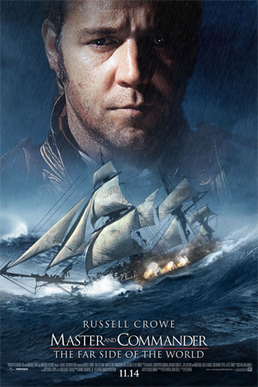
Over the past few months I’ve been working my way – very pleasurably I may add – through the novels of the Master and Commander or Aubrey-Maturin series by Patrick O’Brien. For those who do not know them – and I cannot recommend them highly enough – the books tell of the adventures of Captain Jack Aubrey of the Royal Navy and his friend, the doctor Stephen Maturin, during the Napoleonic Wars.

In twenty books, published over thirty years up to 1999, O’Brien immerses us completely in the world of 200 years ago, a literary and historical tour de force, which critics have favourably compared with the works of C.S. Forester, Anthony Trollope and, above all, Jane Austin, all the more remarkable for the fact that he was writing at the end of the 20th Century. While there are all sorts of themes in the novels about which I could comment here, I was struck today by an aspect which, while mostly incidental to the development of plots and characters, provides a major contrast to our contemporary world.

Stephen Maturin, a well educated and highly intelligent man, is typical of a particular kind of character of that era in which the ideas of the Enlightenment and the Scientific Revolution were spreading throughout the world; the polyglot who is interested in almost everything. His major hobby is one which he describes as that of a “naturalist” or, occasionally, a “natural philosopher,” someone who occupies himself with the scientific discovery, observation and cataloguing of all sorts of living things (his primary area of interest is birds, but he by no means limits himself to the area of ornithology, naming a new species of turtle which he discovers after his friend, Aubrey, and regularly collecting interesting specimens of beetle for his friend and espionage boss, Sir Joseph Blaine). In the course of the books, Maturin regularly takes advantages of his world-spanning voyages with Aubrey to observe all kinds of birds and animals, going into raptures, for example, at his first sight of an albatross and frequently having to bargain with the captain – whose primary concern is the pursuit of his various naval orders – to obtain the opportunity to observe the local fauna in the many parts of the world they visit.

The impression one gets from O’Brien’s descriptions of Maturin’s naturalist activities is one, above all, of burgeoning abundance. So much of the world is still undiscovered, uncatalogued and, even in many of the regions where people are present, most of the birds and animals are largely unimpinged upon by humans. Even in those areas where men are making a living from the hunting of animals – the activities of whalers, particularly those from New England, play a role in a number of the books – the profligate abundance of nature is so great that it seems unimaginable that the activities of humans could ever make a real dent in it.

Well, not quite unimaginable. The Dodo of Mauritius had been rendered extinct by the end of the 17th Century, a fact of which Stephen Maturin is aware. He is also aware of the encroachment of human beings on the habitats of various other creatures, thus making it at first difficult for him to catch a glimpse of the platypus in New South Wales. But around 1812, the planet still seems to be so huge – even if the seafaring adventures of Aubrey and Maturin send them extensively travelling around it, including a circumnavigation – and so teeming with life, that the possibility of humanity significantly damaging it would hardly have occurred to anyone.

A month ago, Lonesome George, the last remaining representative of one of the subspecies of the Galapagos Tortoise, died. Aubrey and Maturin visited the Galapagos on one of their voyages – the visit forms part of the 2003 film of some of their adventures, Master and Commander, starring Russell Crowe and Paul Bettany. Given the longevity of the animals, it is possible that some of thousands of tortoises which they saw there were parents of the far fewer representatives alive today.

Although the world described in O’Brien’s novels is so different to our own, it is not really all that long ago. I’ve described a thought experiment here and it’s worth repeating at this point. Imagine that when you were a baby, a very old person (maybe a neighbour or a relative), over ninety years old, came to visit you and caressed you on the head. Now imagine that that person also had the same experience as a baby, being personally “blessed” by the oldest person in their neighbourhood. If you are over twenty years old today, then that old man or woman was already alive by the time Napoleon was finally defeated at Waterloo.

In that short period, less than the span of three human lives, the world population has grown from around one billion to seven billion people. And those seven million are claiming more and more of the room and resources of the planet for their own exclusive use.

There’s nothing special about this – it’s a basic characteristic of all life forms to exploit their environment to best suit themselves, usually regardless of the consequences, even the consequences for themselves. Any biosphere is in a state of continuously changing dynamic stability, a stability which is always fragile. Balance is always an interplay of a myriad of complex factors and relationships and is always subject to change. In a way, it’s like riding a bike; balance is only possible when there is movement, change.

But generally (and there are always exceptions of sudden, usually catastrophic change) alteration takes place slowly, over hundreds, thousands, millions of years. Against this background evolution unfolds.

Enter human beings. Like no other animal, we are always in a hurry. And we are endlessly, frequently for other species fatally, adaptable. We think, we learn, we plan, and change our behaviour within single generations.

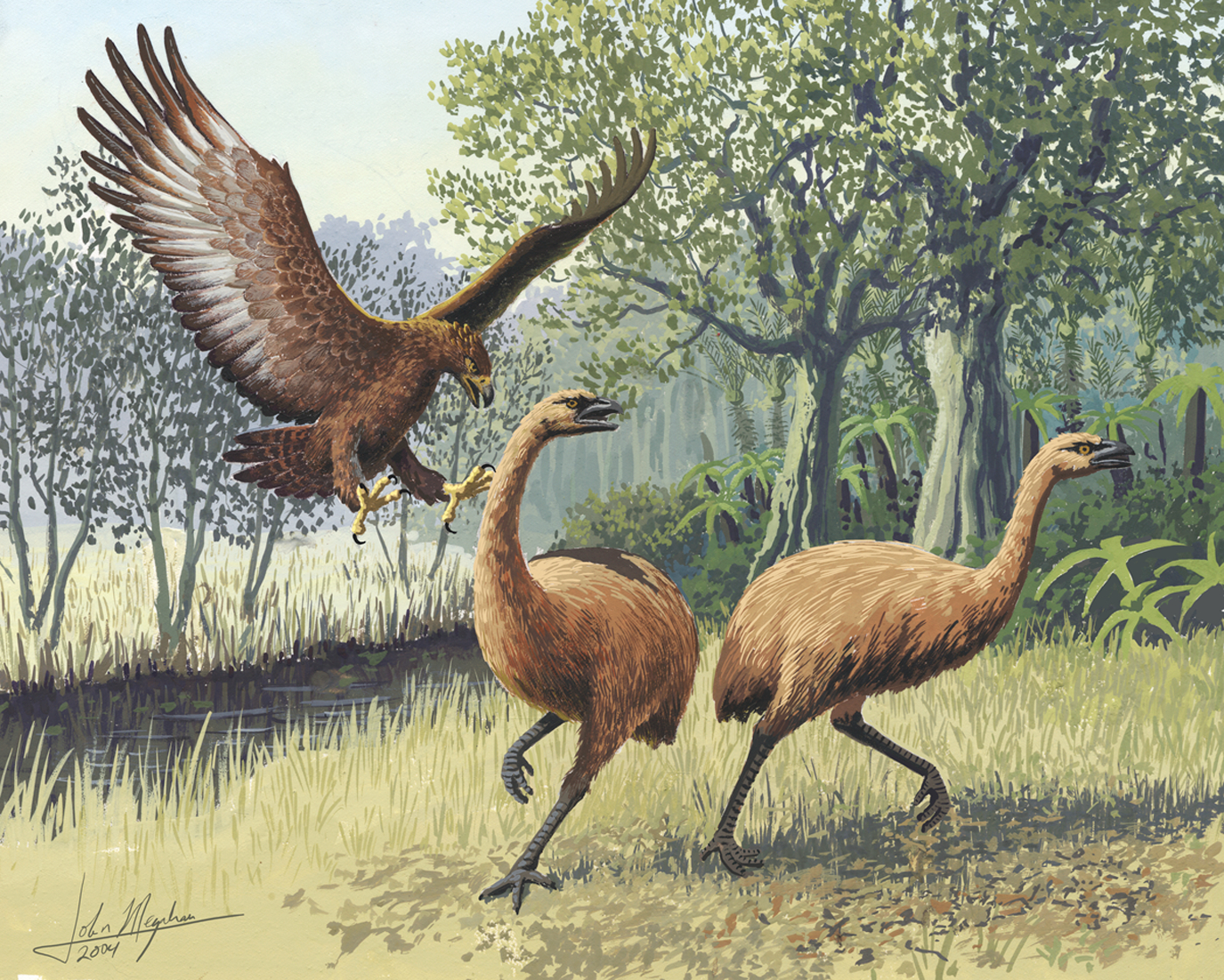
Let’s be clear about this; this is not a modern phenomenon. By the time Europeans were starting to settle Australia (the era of Jack Aubrey and Stephen Maturin) their aboriginal predecessors, arriving on the continent around 50,000 years earlier, had quickly wiped out all the large herbivore animals, and consequently the large carnivores which had preyed on them (megafauna). The same thing happened in North America, leaving only some wolves, bears and the bison around 15,000 years ago, and – most recently – in New Zealand only 700 years ago. That such major extinction events were less common in Eurasia and, above all, Africa, is most probably due to the fact that these were the parts of the world where humans first evolved and developed and thus other large animals had the necessary time to achieve a kind of modus vivendi with the strange non-conforming naked ape.

Haast's Eagle attacking Moas
Nonetheless, as catastrophic as these human settlements were for megafauna species like the giant wombat (diprotodon), the American lion, the sabre-toothed tiger (smilodon), the moa or Haast’s eagle, humans managed to settle into their biospheres in Australia and the Americas – having basically taken over the position at the top of the food-chain. But even within such systems, small new impetuses could lead to massive change. Thus, the reintroduction of the horse (one of those megafauna species wiped out by the first human waves of settlement around 12,000 years ago) into North America by the Spaniards gave rise to the great Plains Indian societies (Apache, Navaho, Comanche, Sioux, etc.) from the end of the 16th Century onwards.

But it was the spread of Europeans in the past five hundred years, driven by a new nexus of ideas and their results, like an aggressively missionary religion, Enlightenment ideas and the mind-set of the ongoing Scientific Revolution, which moved change and the rate of change onto a whole new level. By the beginning of the 19th Century this was really beginning to gather momentum and since then it has simply exploded.

“Increase and multiply, fill the earth and subdue it …” (Genesis 1:28) Well, we’ve certainly done that. The question is whether we haven’t overdone it a bit. The whalers Aubrey and Maturin encountered in their voyagers have largely disappeared – because nearly all the whales have been killed off. The oceans from which the crew of the frigate Surprise regularly fished myriads of anchovies, mackerel or tuna, and which even in my childhood (less than half a century ago) were deemed to be endlessly bountiful are now in danger – in large areas – of being fished out. Just ask the (former) cod fishers of the Newfoundland Grand Banks. And there are many other more complex chain reactions which can also be observed; anyone has gone swimming in or walking on the beaches of the Western Mediterranean in recent years will have noticed the explosive increase in the number of jellyfish … because we have killed off too many of the larger fish which prey on them. Remove one component of a food chain and you can cause all sorts or cascades of change, many of them unforeseeable, and the ecological effects can be colossal. It was rats, who travelled with the first Maoris to New Zealand and who preyed on the eggs of the flightless moas, which were as much responsible for their extinction as their hunting by humans. Rabbits in Australia. More aggressive American grey squirrels driving out the more timid native red varieties in the British Isles. There are countless examples of such unintended consequences and many of them lead to the extinction of species. Some experts predict that the number of existing species on the planet may have been halved by the end of this century.

So what? We need the room and what does it really matter if the final lesser spotted humpbacked toad croaks his last? The law of evolution is the law of the jungle, the survival of the fittest and if humans are the meanest, baddest sons of bitches in the valley of death, well, then, that’s just too tough for the others.

Except that the rules of evolution say nothing about the survival of the winners. Any species is faced with the continual danger that it will become too successful, that it will wipe out all its competitors, neutralise all who would prey on it and thus reproduce until it finishes up destroying the biosphere on which it is dependant. It’s always a danger in any closed system.

We humans have spread all over the planet and, large and complex though it may be, Planet Earth itself is a closed system. The signs are increasing that we are causing rising stress for the planetary eco-system itself. Like an organism with a bacterial infection, we are – in a real sense – giving our planet fever. Seven billion humans produce a lot of heat, particularly as our demand for energy is much higher than any other animal and, ever since we discovered fire, our basic way of producing energy is by burning stuff, and most of the energy produced this way is lost as waste heat. Moreover, from our own biological cellular energy production, to the metabolising of the billions of domestic animals we keep to feed us, to the cars that transport us and the oil-fired power stations which produce our electricity, the basic chemical reaction used to produce energy/heat is always the same. Take any variety of carbon bonded with hydrogen (carbohydrates or hydrocarbons - sugar, wood, oil, etc.), add oxygen and a spark of some kind and you get a more or less energetic reorganisation of elemental molecules to form water and carbon dioxide. It’s simple high-school chemistry and the only process working in the other direction on this planet is photosynthesis. That we are producing lots of heat and carbon-dioxide cannot be disputed, the only question that can be debated is how much of this we have to do before it reaches significant, dangerous levels.

So, as Lenin once asked, what is to be done? Wiping out 85% of the present population of the planet to return to the levels of two centuries ago isn’t really an alternative – although one of the last stages for a species which has become too successful in a closed system is the phenomenon of die-back, where, within a very short period of time, most representatives of the species simply succumb to the consequences of overcrowding and too few resources, The result is either, in the best case, the achievement of a new equilibrium with only a tiny fraction of the species or, at worst, a situation in which this fraction is so small that it is no longer viable and becomes extinct.

But, unlike lemmings, we humans have the value of our intelligence, our ability to plan and anticipate our future. We cannot bring back all the species we have managed to inadvertently kill off, but we can modify our behaviour so as to develop new ways of living on our planet in the future. However, this means changing some of our most basic attitudes. Above all, I believe, we need to look very critically at the whole idea of growth, which is at the basis of the economic and societal models we follow. In the world of Aubrey and Maturin, when the world seemed so huge and so bountiful, there was no need to question it, but today, when the reality of the finite capacities of our planet, large though they may be, is becoming more evident, it will soon become unavoidable. To believe that we can go on growing indefinitely within a finite system is fundamentally illogical.

This does not mean that we must condemn ourselves or our children to restrictive, soul-destroying poverty. A good start, in my view, would be to apply our intelligence, ingenuity and imagination to examining the possibilities involved in the idea of sufficiency.

We don’t really have any other alternatives.

What would the world be, once bereft
Of wet and of wildness? Let them be left,
O let them be left, wildness and wet;
Long live the weeds and the wilderness yet.
Inversnaid, Gerald Manley Hopkins


Pictures retrieved from

LinkWithin

Related Posts Plugin for WordPress, Blogger...