Seiten

Showing posts with label Christmas. Show all posts

Sunday, 23 December 2012

A Kind of Christmas Card ...


The (temporary) creative pause from posting regularly on this blog which I decided to acknowledge (or give myself – I’m not sure which is closer to the truth; probably both) is something that I’m actually finding very pleasant. Just tooling around, doing the stuff that has to be done, spontaneously doing other stuff I feel like doing, it’s all very relaxing. But then there are other things; the things that fall into that wide convergence zone between want to and have to, between can and must.

Including writing this. I’ve never been a Christmas card person, though I remember their contribution to that exciting crescendo of anticipation which is my childhood memory of December, the expectation which is the very soul of the season known as Advent. Back in the day; a pre-digital age, a time when we didn’t even have a telephone (imagine that, if you can!) so that communication between people who didn’t meet regularly was limited to pen and paper, envelopes and stamps, and a postman on a bicycle.

They came daily through our letterbox, first a trickle, increasing to a daily flood as Christmas grew nearer. I remember my mother making a long list of people, buying cards and sheets of stamps and then writing them all. A few would be left in reserve to be sent to those from whom cards were received who had been forgotten on the original list.

And the cards poured in, being opened and set out on every available surface, when these were all used up hung from the walls or ceiling on string catenaries. We use to decorate the house for Christmas in those days too, paper and tinsel chains and garlands hung from the ceiling. As a kid I loved it all; it turned the familiar geography of our living room into a wonderful world of glitter and magic, ruled by the twin sovereigns of the Christmas tree and the crib, Mary and Joseph, the ox, the donkey and the shepherds all gathered around a central empty focus, that space where the baby in the manger would be placed on the evening of Christmas Eve, the first certain signal that Christmas was actually, inevitably here.

I don’t know if people still decorate their living rooms in Ireland today they way they used to do when I was a child. I suspect that fewer do – increased sophistication and a more developed sense of kitch are always purchased at the price of a certain innocent naïveté, and one of the basic facts of temps perdu is that it is like virginity, once lost it is irretrievable. Maybe this is one of the deeper reasons why so many adults are ultimately so often disappointed by Christmas; it is a seductive, insatiable longing for the innocent joy of childhood – a joy which, if truth be told, was probably never as unalloyed in reality as memory likes to present it. But memory is inclined to do that, isn’t it?

However, I realise that my thoughts are wandering in a direction which I had not planned, a direction with intimations of more darkness than I want in this … this what?

I started this by mentioning that I’ve never been a Christmas card person – after I left home, where such things fell primarily in my mother’s area of responsibility, I somehow never managed to make the exercise part of my own personal self-organisation. For too long, I suppose, I was intoxicated by the ephemeral, self-centred, invulnerable immediacy of youth, for too long afterwards I was involved in struggling with my own private demons and the trip-wires they had been busy installing for me in my life.

It’s well over a decade now since I managed to banish most of those demons, or at least to cage them so securely that they can no longer urgently threaten my life or my happiness. In those early days of putting my life back together again I realised the importance of friends and people who love me, and it became clear to me that the ordinary rituals of keeping in touch, however fleetingly, are an important part of nourishing those relationships.

Although I realised that the sending of Christmas cards is one of these important rituals, I consciously decided not to take that way. There had been too many caesuras in my life, too many friends for whom I had no longer addresses, for many of whom I had no contact details whatsoever. But the realisation of these losses, and the personal impoverishment they had given rise to, fortunately coincided with the spread of general digital connectedness at the beginning of the new century.

I had started to renew contact with many old friends, often using the internet to find them. And, as more and more people acquired e-mail accounts, I decided, instead of sending Christmas cards, to commit myself to the new virtual reality and send a longer personal e-mail to all the friends who could be reached by means of a web-tag containing that old mercantile symbol - @.

So, for many years now, I have been writing my Christmas e-mail. But the digital world changes, changes, changes, and my use of it changes too. In the past decade I have made many new acquaintances and established a number of what I regard as real friendships with people whom I have never met in real life. There are people, old friends and new, people all over the world, with whom most of my regular contacts now take place through various social networks; facebook, Google+, blogger, wordpress, and all the other virtual equivalents of the Irish pub, or the 18th Century coffee house.

Therefore, my friends, I have decided to move my Christmas mail here this year. And all of this has been nothing more than my usual rambling, roundabout, long-winded way of getting around to wishing you all a very happy Christmas.

Over the past couple of years I have published a number of essays here on Christmas and I feel no urge to repeat myself – if you really feel like reading them, just type “Christmas” into the search bar on the right of the page. But there was just one idea that occurred to me, which I would like to share with you.

In the Christian version of the much older urge to celebrate mid-winter/new year which seems instinctive to humanity in the northern hemisphere, the angels sing of “peace on earth.” There is something deeply quiet, inherently peaceful, about these shortest days of the year, when nature sleeps and we follow a deep urge to seek sharing and harmony with those we love. It is, perhaps, this longing for fellowship, generosity and solidarity which we try to express in the circle of our loved ones at this time which makes all the violence, injustice and needless pain which humans are capable of inflicting on each other appear so particularly horrible and useless. Whether in Newtown, Connecticut or Aleppo, Syria, in Timbuktu, Mali or Bethlehem, Palestine, the wrongness and futility of violence, hatred and killing strike us particularly at this time of year.

This Christmas, my friends, I wish you and me, us all and the world peace. Peace in our hearts, in our families, our communities, and our countries. Peace on earth. A wish as unfulfilled now as it was two thousand years ago. And yet, a wish still worth wishing. Maybe our wishing it – our really wishing it – is the only thing which stops us from finally and completely destroying ourselves.

Happy Christmas. And peace on earth. Salaam. Shalom. 


Wednesday, 21 December 2011

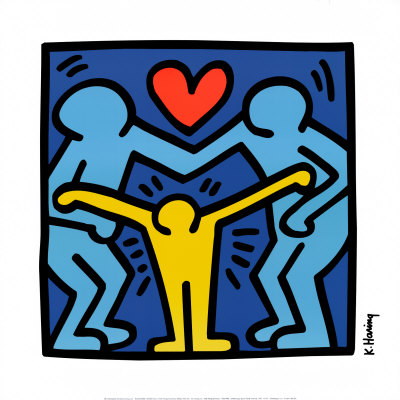
Family (Thoughts at Christmas)


In the end, the most important things in life are always personal, intimate, immediate. Though rulers may make fateful decisions involving the fates of millions, though corporation chiefs and bank bosses may play with the hard-earned pennies of us all, gambling the loss of our futures against their short-term selfish gains, the results of all this remain generally matters for news headlines – until we concretely, in our own lives, experience their consequences. While it may be wonderfully noble and represent an elevated level of moral development to engage ourselves for general principles and the rights and causes of those far away from us, usually our energy, attention and motivation are most readily and frequently activated by issues and events which impinge on us personally.

It has become an almost unquestioned mantra that modern developments in society have accelerated the breaking down of long-established, traditional forms of living; that one of the prices our swarming, highly technological, complex contemporary society demands of us is our abandonment of “natural” structures in favour of constantly changing “artificial” modes of existence. Traditional ways of living, based on the family and small communities, it is argued, are being undermined at all sorts of levels; from globalisation, urbanisation, reliance on technology, the internet and – of course (at least according to the conservative, frequently religious, right) – a concerted attack by the ideology of godless, secular, liberal thinking on the holiest of all holies; “family values.”

While (as anyone who reads this blog regularly will know) I would certainly regard myself as someone who is very critical of many of the trends – including the fundamental ones – which determine the shape of our contemporary societies and the direction they are taking, and while I see numerous sources of (to use an old sixties buzz-word) deep alienation in the way many of us choose or are forced to live our lives, I still wonder, at a more fundamental level, whether the basic structures in which we live are not much more resilient than many of the critics of modern life would have us believe.

Historical anthropology tells us that, for the greatest part of its history, humanity lived at the hunter-gatherer level, in so-called band societies, small kin groups of no more than thirty to fifty individuals. Only with the discovery of the first agricultural techniques (the Neolithic Revolution) around 10,000 years ago, was it possible for humans to gather into larger groups (frequently, though not always, settled). With these larger groups, other, larger, societal organisations appeared; villages, tribes, towns and nations. But all of these other groups were based on the original unit, the closely related kinship band – in its simplest form, the (extended) family group.

Today we tend to see the family in its very stripped-down, minimal nuclear form; father, mother and children, living together as a discrete unit. But, although this form has been common since the first larger groups of humans settled in one place, for most of human history the larger extended family was more the norm. In the end, I believe, it doesn’t really matter; the shapes families (groups of humans with close genetic relationships between their members) take are fluid and adaptable. Their basic coeval purpose is to deal with a problem evolution presented to big-brained, intelligent, versatile humans – their children take longer to learn, mature and become independent than any other animal, so an environment has to exist within which this can successfully take place. While in extreme circumstances this task can be managed by one adult, it is much easier and more successful when the job of rearing is shared by a coherent group.

Families, then, are fundamentally there for children – and this is what makes them so important for all of us, no matter how much society has changed or is changing. Family – in whatever form – is the place where we have all spent our most formative years, where we learned language, mobility, basic social competences, how to relate to others and our very identity.

Families evolve and change over the course of their existence. Originating from other families in a kind of organic development, they grow and take shape, becoming bigger, then smaller, their centres of gravity changing as new generations grow into adulthood and form budding new units, which become families in their own right, in new identities with other families and groups. They are wonderfully flexible things, continuingly changing, adapting, morphing – dynamic connections of people; constantly being shaped and amended by their own members according to the complex relationships of those within them and their reactions to all sorts of events and influences, both from within and without.

“Happy families are all alike; every unhappy family is unhappy in its own way.”

Tolstoy’s famous opening sentence from Anna Karenina expresses a truth, but it is too simple. For nearly every normal family is both a place of happiness and unhappiness simultaneously – how could it be otherwise, since they are the setting in which most of us live most of our lives? Certainly, as the fundamental units of our existence, and the places, above all, in which children grow up, seriously dysfunctional families are places of horror and nightmare – and many of those forced to spend their childhood in such environments are among the most wounded (and often violent) people in our societies. But – at a more normal level – tension, conflict and unhappiness are unavoidable parts of life and it is utopian to believe that families can be somehow magically excluded from this reality.

Consider, for example, the process of growing up and maturing. From our teenage years into early adulthood, a large part of our development has to do with our personal growth into independence, with testing and defining ourselves in contrast to others close to us, above all, those who were largely unquestioned role models and authorities during our childhood. This very necessary part of becoming an adult is inevitably accompanied by conflict and stress and, even if you have never had teenage children, all you need to do to realise the truth of this is to remember your own teenage years. In fact, one of the major function of families for those approaching adulthood is to betimes become tight, constraining, frustrating; in this way young people can develop their own personalities and obtain extra motivation to leave the familiar safeness of the family structure, explore their independence and, ultimately (most of them), enter into new relationships and unions which will form the kernels of new families. And the beauty of all this is that families are not exclusive; you can form a new one, enter into a familial relationship with the family of a partner without ever having to really leave your own original one.

I had reason to think about all this recently, when my original family came together from three different countries to be together during my brother’s last illness, to be there for him and for each other, before, during and after his death. Though we children are all middle-aged now and have new families and networks of loving relationships of our own, it was a time for us to come together, to find comfort and strength in each other, to throw ourselves onto the firm support of our shared relationships, experiences, history. One other positive aspect of this difficult experience was the solidarity and companionship we experienced from other, related families – cousins and their families in turn, all stemming from the original families of my parents. It was a wonderful realisation for me – that, when push comes to shove, family is there and it works, on that most important, personal, immediate, intimate level of living I referred to at the beginning of this essay.

And, with Christmas almost here, I find myself thinking about the unit at the core of that story; a father (even if the fatherhood is somewhat unclear in the account) and mother together, the mother giving birth, the beginning of a new family, the beginning of a story. Families are places of shared experiences, giving rise to shared stories, narratives which are an essential part of our identity. In the recent coming together of my family, our finding ourselves all together (even with the aching wound caused by the occasion for it all, the death of my brother) for the first extended period in years, we spent a lot of time remembering and retelling the stories of all those years we spent together. Many of the stories we told had to do with my brother, and in the telling we discovered some relief from the grief we were all suffering – even finding ourselves laughing at some of the memories, the common narratives of our own family history. At the same time, this sharing of memories and stories was a reaffirmation of our own identity, both individually and collectively; comfort gained from grounding ourselves once more in that original, secure, familiar familial reality.

I do not see family values as being under threat; they are too strong, deep and fundamental for that and such slogans and fears are no more than chimeras of the religious, so-called Christian right. There is no prescribed form for families, they can be nuclear, extended, single-parent, gay, patchwork, any form really, as long as they can be places of security for people and generations to be together to cherish, accept, annoy and love each other – to live together and out of that living create their own stories and traditions. Like Christmas – that time of families coming together in the midst of winter – so often called the family feast.

So, gentle reader, enjoy this Christmas – and celebrate your family, whatever form it may take.

 Some traditional Christmas music, in a somewhat different form


Pictures retrieved from

Friday, 24 December 2010

Christmas: The Star of Bethlehem

Given that I’ve already posted about Christmas, I hadn’t really planned to write about it again but sometimes my Muse has other ideas. I was lying in bed yesterday trying to sleep (I work a lot of nights at the moment and I don’t find sleeping during the day that easy) and I found myself thinking about the three wise camels men and the star (maybe it was just a side-effect of reading Allie Brosh’s hilarious blog about her childhood Christmas).

At the outset, let me first state my basic position on the whole Christmas story. As a trained historian and a former Christian who spent quite a few years studying theology, I don’t think any serious claims for the exact historicity of the Nativity accounts can be made. Our only sources for the Christmas story are the gospels of Matthew and Luke (Mark, the author of the earliest gospel, doesn’t seem to have known anything of it) and not even the most convinced Christian can argue that they are objective, unbiased sources. There are practically no independent sources which confirm with certainty any of the events describing the birth of Jesus of Nazareth (not Bethlehem!) in the gospels.

I will immediately add that I don’t think this discussion is important anyway. The idea of “objective truth” which we use, particularly with regard to history, was unknown 2,000 years ago and it’s not fair to judge the chroniclers of old by standards which developed long after they were born. Moreover, for Christian believers, it is the meaning and significance of the stories which is really the important thing. For non-Christians, or former Christians, the value of the Christmas stories are their use of deep symbols which may, perhaps, be seen as making statements about fundamental human truths (and you don’t even have to be a Jungian to find this way of thinking productive).

So, to come back to the Magi and the star of Bethlehem. For as long as people have been people, we’ve been fascinated by the night sky. The story of the wise men from the east brings the whole ancient tradition of astrology into the Christmas story. Fascinated by the movement of the stars, people have always supposed that the movement of the stars are intimately connected with events on earth. If the Son of God was born it was unthinkable that such an event would not be reflected in the heavens and astrologers would not notice it. So, for Matthew, obviously some did and acted on their knowledge. He has them coming from “the east,” as Persia was an area where, religiously, astrology had a long and respected tradition. Incidentally, less than an hour down the Autobahn from where I live, the bones of the Magi rest in Cologne Cathedral. They were discovered - along with hundreds of other sacred remains - by Helena, the mother of Constantine, who made a giant relic-hunting tour of what are now Israel and Palestine at the beginning of the fourth century. After her tour the children of thousands of con-men in the area went to bed well-fed for a long time, thanking God in their prayers, no doubt, for the largesse of the gullible Empress-Mother.

Unlike many people, I don’t believe in astrology (another thing I don’t believe in J). Its foundations are in terracentric views of the cosmos which we know today are simply not true. The patterns the stars make, and their movements – particularly in relation to each other – beautiful as they are, are purely coincidental, having only to do with the position of the Earth revolving around the sun, a star in the outer regions of one of the spiral arms of our galaxy. But – like our attitude to historical facts which I referred to earlier – this is knowledge which people two millennia ago simply didn’t have. As a result, it was just as logical for them to think that the movement of the stars reflected and foretold human events as that malaria was caused by bad air. The issue of why many people today still take astrology seriously rather than just regarding it as fun is a different one, but I won’t go into that here.

Still, there is something important in the meme of the wise men following their star; it says something to me about hope, about courage, about the willingness to accept the consequences of one’s convictions and act on them, wherever it may lead one – even if that is into uncertainty and danger.

And, having left astrology behind, I have another hope looking at the stars. Somehow, if we don’t succeed in wrecking our planet and destroying ourselves in the next century or so, we’re going to be out there too. Living in space, living on other planets, planets revolving around other stars. Moving on, moving out, following visions and dreams. Following new stars which are all really only the same star the Magi followed – the star of courage and hope, the star of Bethlehem.


All who believe in courage and hope …

All who believe that the small things in life, like the birth of a child, any child, can be the most important thing on earth …

All who believe in peace …

All who find their way to this blog over the holidays …

I wish you all a very happy Christmas.


(two hours after original posting: Ooops, nearly forgot the music. I probably shouldn't do this posting stuff after working the night before going to bed! Here's a Chris de Burgh early classic - with yet another "alien" take on Christmas ...)

Thursday, 16 December 2010

Why Non-Christians can celebrate Christmas

This year, as every year in December, you can read loads of opinions attacking Christmas and the way it is celebrated world-wide. They take a number of forms; firstly there are the committed Christians who denounce the secularisation and commercialisation of what they regard as a Christian feast, on the other hand there are the radical secularists who question whether a modern society should be celebrating a Christian feast at all. The irony here is, of course, that two groups, who are otherwise at loggerheads with each other, actually argue (at least partly) in the same direction. Maybe that’s the first effect of the season of goodwill! In my view, they’re both wrong; short-sighted religious killjoys and humourless over-pc humbuggers.

Let me deal with the Christians first. I will cheerfully agree that Christmas is a Christian festival – because, around the fourth century C.E., Christians started celebrating the birth of Jesus on December 25. There is no biblical evidence whatsoever for Jesus’ date of birth so they had a fairly free choice. There were a number of good reasons for choosing December 25 – the first being that it was based on an inaccuracy in the Roman calendar which put the winter solstice (actually December 21) on that day. The solstice is nine months after the spring equinox, which some regarded as the date of creation and thus a fitting day to celebrate the conception of Jesus. Moreover, the time at the end of December, and particularly the solstice was a general holiday time. The Romans celebrated the Saturnalia, a week-long holiday of feasting and giving gifts, starting on December 17, the solstice itself was the day to celebrate Sol Invictus (the undefeated sun), where the sun, having been almost defeated by darkness, triumphs and the days start to become longer again.

The winter solstice is, in fact, the core and kern of celebrations in the second half of December, particularly in Europe, prior to and independent of any Christian feast. It is, therefore, no surprise that many of the elements traditionally associated with Christmas have nothing to do with Christianity and are of pagan origin, mostly Germanic and Scandinavian. These include the giving of presents, the Christmas tree, Christmas stockings, holly, ivy and mistletoe, carol singing/wassailing and many elements incorporated in the modern Santa Claus myth. Five thousand years ago (five hundred years before the pyramid of Gizeh and a thousand years before Stonehenge), the Neolithic inhabitants of Ireland built the megalithic passage tomb mound of Newgrange. In a marvellous example of precise astronomical observation and exact engineering, once a year at the winter solstice the rising sun shines directly along a long passage to illuminate the inner chamber of the mound for around 17 minutes. The death and rising to new life of the sun at the winter solstice – a common theme in many religions – is practically celebrated in a deeply impressive fashion. In the middle of winter, when the days are so short, the weather so hostile and survival until spring so uncertain, people have for thousands of years celebrated hope and endurance by making holiday, feasting and giving each other gifts.

It is, then, completely understandable that Christians decided to celebrate the birth of the god-man at this time. The themes and memes surrounding the birth of Christ are complementary with the older themes in the cultures into which Christianity spread in Europe and this kind of religious syncretism is something quite common.

What is less easy to accept against this background, are the arguments of Christians that “their” festival has been hijacked or secularised (I could mutter something about those without sin and casting first stones, but I think I have made my point). Even the occasional attacks on the term Xmas and the campaigns to “put Christ back into Christmas” are profoundly unhistorical, given that the “X” in Xmas is really the Greek letter “Chi”, the first letter in the word “Christos” and a conventionally accepted abbreviation of the same.

I can, moreover, even sympathise with Christian criticisms of the unbridled consumerism involved in much of the celebration of Christmas nowadays – though not because it specifically offends against Christian teaching (and I would also observe in passing that a large number of Christians both propagate and participate in this orgy of consumption) but because it is unnecessary and in bad taste in a world where resources are limited and so many millions have neither the means nor the opportunity to participate in such excessive and superfluous gluttony.

But, leaving the lunatic exaggeration and frenzy of consumerism aside, there’s something basically positive about the idea of celebrating, feasting and giving mutual gifts in the middle of the hardest and most uncertain season of the year. It is an affirmation of the power of the human spirit, of the hope and assurance that spring will come, a refusal to succumb to pessimism and despair, a statement of faith in the best in our humanity. Of course we should be generous and loving to each other all year round, but this does not preclude expressing this in a special way on particular occasions – and what occasion is better than the period when the days are shortest and the cold nights longest?

The background behind all this is that Christmas is a festival of the Northern Hemisphere. I won’t go into this in detail again, as I have already written about it here, I will only comment that perhaps if I lived in Australia or South Africa – definitely if I lived in Southern Patagonia or on the Falkland/Malvinas Islands! – I would be thinking about the potential sense of celebrating Christmas in June.

Still, even if the claim to exclusive rights over Christmas made by some Christians can be shown to be seriously overstated, the Christian story is central to the way our cultural understanding of Christmas has historically developed and cannot be simply redacted away without losing much of what makes this holiday so special. Even for those of us who are not (or no longer regard ourselves as) Christians, the Nativity story contains wonderful elements, memes and insights, which fit in very well with the other themes of the midwinter festival. The one which strikes me above all is that of the preciousness of the fragile and the weak; birth in danger and under threat in inhospitable circumstances, the beauty of a baby unrecognised, even persecuted by the powerful but acclaimed by ordinary common witnesses (the shepherds), the royalty, divinity even, present in the wonder and innocence of helpless new life, the recognition and acceptance of which can bring peace on earth. There is very rich, deep human symbolism here, even if you don’t believe in the Christian man-god incarnation (or in God at all, come to that) and it’s well worth meditating somewhat on it – if such is your inclination – or just letting it work on you … atmospherically, subconsciously.

And so I will have no truck with those who want to banish the word “Christmas” and the Christian story from the midwinter festival, even if I don’t regard myself as a Christian. Personally I love the story, its deep echoing symbolism and its profound drama, and the questions regarding its historicity or theological implications don’t worry me so much any more. I will put up and decorate a Christmas tree, give and receive presents and sing carols – being moved by the old standards like Hark the Herald Angels Sing and Silent Night – cook a turkey and rejoice in the presence of my loved ones. I would even be prepared to make a Christmas pudding, only that my sometimes-much-too-German daughters regard it as an inedible abomination! This year, unless there is a major sustained rise in temperature (which the weather experts say is unlikely), we’ll probably even have a White Christmas. And I will continue to entertain and rejoice in that oldest and most wonderful of all Christmas wishes, “peace on earth and good will to all men.”


Christmas Eve: You may be interested in my other post on Christmas!

LinkWithin

Related Posts Plugin for WordPress, Blogger...