Ideas, philosophy, politics, current events and happenings, music, literature, art and simple incidents out of my everyday life; Reflections and observations which, I hope, might just get you thinking ...
“ … the only thing we have to fear is fear itself …”
Franklin D. Roosevelt,
Inaugural Address (1933)
"There is always
an easy solution to every human problem--neat, plausible, and wrong."
H. L. Menken, The
Divine Afflatus (1917)
Let me begin here with an admission: When I look at our
world today, at the end of 2015, I am afraid.
I am not afraid of terrorists, Islamic or otherwise. They
want me to be afraid – that’s what terrorists do, attempt to incite terror. I
know that there is an infinitesimal chance that I, or someone close to me, may
become their victim; we may be in the busy centre of a large European city, or
on an aeroplane – just a question of being in the wrong place at the wrong
time. I could also be driving along the motorway/highway/autobahn when some
confused or crazy fool comes shooting onto it through the exit ramp. Or I could
just be struck by lightning. But I repeat, I am not afraid of terrorists; I
refuse to grant them this power over me. They are attacking the values of the
open society in which I live. The vulnerability we have towards their attacks –
despite all the reasonable security measures in place – is the inevitable price
we pay for the values of openness and tolerance which are at the foundation of
any society which truly claims to be civilized.
I am not afraid of migrants, be they refugees fleeing from
war or persecution, or so-called “economic” migrants, those prepared to uproot
themselves, abandon their homes, families and friends, give up everything they
know in order to seek a better future for themselves and their children. I
realise that their arrival will challenge the country, culture and society in
which I live. But I believe that this challenge can be fruitful, creative and
positive if we face up to it with courage, honesty, openness, and generosity. I
accept that the arrival of larger groups of migrants will change the culture in
which I live; that there will be an inevitable interaction and mingling between
my (Western European) culture and the different life-experiences and traditions
that these migrants bring with them. But cultures are and have always been
dynamic and fluid realities, constantly shifting, and frothing, and mixing, and
growing. My grandfather wouldn’t have known what to do with a pizza, or a
vanilla latté, my grandmother would have been scandalised by Madonna and Lady
Gaga, or the use of the word “fuck” on prime-time TV.
I am not afraid of Islam. I don’t much like it, but then a
general attitude of scepticism and suspicion regarding all religions has been
growing continuously in me in the past decades. There are aspects of Islam,
particularly the ambivalence regarding violence towards non-believers in many
places in the Quran, which I find disturbing. (On the other hand, there are
passages of the Old Testament which aren’t particularly edifying in this sense
either.) I find the cultural misogyny of most Islamic determined traditions
deeply distasteful. But I am also aware that the Christian and other religious
traditions have anything but a pristine history when it comes to their
treatment of women – and that not all of these historic attitudes have been
left behind. I believe that secularism and the freedom to believe and practice
religion (in so far as this practice does not restrict the freedom of others)
are some more of those basic values I mentioned earlier, those foundational
values of civilized society. As long as its practitioners accept these basic
values, any religion, no matter how idiotic it may seem, can be practiced in a
free society. Ultimately, I believe, the basic values of the secular, open, and
free society will prevail over backward-looking, exclusivist, chauvinist and
fundamentalist versions of every religion, though it may take generations. And
that includes Islam.
As long, of course, as we hold fast to those values, born
in the Enlightenment and matured – with much struggle and suffering – primarily
in Europe and North America – in the 19th and 20th
Centuries; openness, tolerance, secularism, participation, democracy, civil
rights, the rule of law and an independent judiciary, freedom of thought and
expression, a critical press, the social securing of the basics necessary for
life.
But as I look around the world at the end of 2015, these are
the values which I see increasingly under threat. And not only that, they are
being challenged and scraped away bit by bit in their original heartlands;
Europe and North America.
It is this of which I am afraid. I take Roosevelt’s
observation seriously. For what I perceive increasingly in the past year is a
growth of uncertainty and fear in our society. I am becoming more afraid of
fear itself; more specifically of the exploitation of that fear and the
consequences of that exploitation.
Living in the centre of Europe I don’t have to look far to
see it. There’s Putin in Russia and Erdogan in Turkey. Closer to home, to the
east there are Viktor Orban in Hungary and Jarosław Kaczyński and his PiS party in Poland. Looking west, Gert Wilders
in the Netherlands, Marine Le Pen in France and UKIP in Great Britain. And all
the other populist right-wing demagogues in many other European countries. In
this context – despite the perennial tendency of US Americans to
perceive their culture as exceptional – Donald Trump is also just another
confirmation of a widespread trend in the developed democracies. Here in
Germany, where Angela Merkel has taken a courageous stand on the question of
migrants (and if you’d told me a year ago that I would find myself praising the
German chancellor I’d have replied with an expletive!) and where the country
has provided a safe haven for a million people this year, Pegida and the Alternative
für Deutschland have been gaining in popularity.
Despite all their
particularist agendas, all of these various obnoxious figures are pretty much
carbon copies of each other. All feed off and exploit the same fear that is
widely present in our societies. This fear has many sources, but basically it
is rooted in the apprehension many (particularly those who are less educated)
feel when faced with a world in which change is all prevailing, in which the
shape of the future appears to be less certain and more threatening. The
demagogues all put forward the same kind of analyses and strategies;
retrenchment, stigmatization and persecution of those who are obviously other, building walls and fences, narrow
nationalist pride, appeals to cultural (and often religious) chauvinism.
They are all
offering (to paraphrase Menken) simple and easy solutions for complex problems.
These solutions are not only wrong, they are dangerous. For, playing to and
exploiting the inchoate fears widely present in our societies, they deny the enlightenment
values which are the fundament of our societies, appealing instead to emotional
irrationalities. To anyone with any sense of the sorry history of the 20th
Century it should be obvious where this leads. Make no mistake, my friends,
even if these people are democratically elected, even if they keep the forms of
democracy in the countries they control, regularly having themselves
re-elected, they are proponents of an evil the world has already seen too much
of. Putin, Trump, Le Pen, Orban, Kaczyński, Farage, Erdogan and all the others
are proponents of what might best be described as fascism lite. And they are quite prepared to use many of the
techniques perfected by their predecessors. To give but one example, all of
them are prepared to publicly trumpet untruths and continue to do so, even when
these statements have been repeatedly rationally proved to be untrue. Both
Hitler and Goebbels described this strategy as “the big lie.”
So, faced with
this resurgence of irrational, dangerous, fascist demagoguery, what can we do?
How should we, in our ordinary little lives, react to this exploitation of fear
which will, if it continues to grow, destroy the fundamental values of the
societies in which we live?
"All that is necessary for evil to
triumph is for good men to do nothing," is a quotation usually attributed
to Edmund Burke, though in this form it goes back to Tolstoy. No matter, it
gives us a strategy for responding to these attempts (far more dangerous than
anything ISIS can do) to destroy the character of our societies. We must
respond immediately to the facile, dangerous lies put about by these fear
mongers wherever we encounter them; from friends, family members, work
colleagues, acquaintances; at home, at work, in the bus, in the pub, on
Facebook. Many of us are just too polite, or too apprehensive of conflict, or
just too lazy (I know that all these reasons frequently apply to me) to engage
here, to get involved. But, I am becoming increasingly convinced, the failure
to contradict the nasty simplistic views, grown in fear and cultivated in
ignorance by neo-fascist ideologues, only leads to their growth and spread. If
they are not countered, they will lead us into a new Dark Age.
Do you know the feeling, that feeling of anger and disgust
at the amount of fucked-up stupidity, evil and hopelessness in the world?
Today a couple of (almost certainly) Islamicist fanatic
terrorists attacked the offices of the French satirical paper Charlie Hebdo, killing twelve people.
There is video coverage online of two gunmen shooting a policeman down in the
street and then finishing the execution with a headshot, even as the man on the
ground raises a hand, possibly in a last plea for mercy. It’s horrific in its
brutality so I’m not going to post a link to the video itself here. The photo shows enough.
Charlie Hebdo is
not a particularly pleasant newspaper; but that’s not what its makers want it
to be. It is relentlessly satirical, regards nothing as sacred, and is prepared
to lampoon anyone and anything in the news, be they pope, prophet or president,
moron, mullah, or messiah. That’s their job as they see it. And it’s their
right in a free, pluralistic, secular society. If you don’t like what they
publish you don’t have to buy it or read it. If you feel personally damaged by
something they publish you can sue them. That’s the way a civilized society
works, particularly a civil society which sees freedom of expression and the
press as a basic value.
One result of this barbaric event will certainly be calls
from the populist (partly proto-fascist) right in France (led, no doubt, by Marine Le Pen and the Front National) and
worldwide for clampdowns on Islam, and Islamic foreigners, and foreigners
generally; migrants, refugees and asylum seekers. The usual cacophony of
ignorance, fear- and hate-mongering. Indeed, this may have been one of the
perverted, calculated aims of the mad, evil bastards who planned and carried
out the attack.
Here in Germany in the past number of weeks we’ve been
treated to the dubious spectacle of thousands of ignoramuses marching every
Monday night in the streets of Dresden under the banner of a strange
organisation calling itself PEGIDA[Patriotic
Europeans Against the Islamization of the West]. According to the Saxon
Interior Ministry in 2010 0.1% (around 4,000) of the population of Saxony (of
which Dresden is the capital) describe themselves as Muslims [Source: Spiegel Online]. Biiiiig threat.
Last Monday night, as a sign of some hope for sanity in my adopted
home-country, thousands of people marched in Cologne, just a few miles down the
road from me, in favour of tolerance and an open society. Cologne has 120,000
Muslims out of a population of around a million. For those who can’t do the
math, that’s 12%. Around a hundred times higher than in Saxony.
Personally, I’m not a great fan of Islam. But then, I’m not
a great fan of evangelical Protestantism, traditionalist Catholicism,
neo-liberal free-market capitalism, or Justin Biber either. This nevertheless
doesn’t mean that I would ever contemplate or tolerate any calls for or moves to
forbid people their right to believe whatever they want to and to freely
profess and express those beliefs, however idiotic I may consider them to be.
This freedom is one of the constituting principles of a humane civil society.
It goes further; even people who profess beliefs abhorrent to these
constituting principles – like, I am forced to conclude, quite a number of
those marching in Dresden – have a guaranteed right to do so, as long as they
don’t resort to violence, or incitement to violence, against others. That’s
what a humane civil society has to be able to tolerate and, I have no doubt,
any healthy civil society is well able to withstand the irritation caused by
such misguided fools.
Of course, that does imply that those of us (the vast
majority, I like to think) who value these basic principles of humane civility
sometimes have to speak out for them and defend them.
A journalist friend just told me the story of an initial
interview she did this afternoon. It was with a young man who’s been in Germany
for four years now. He was born in one of those war-torn countries we
frequently hear of in the news but his family fled terror and conflict when he
was a child, finishing up in Iran. He spent seventeen years there and managed
to obtain a degree in computer-programming before realising that, as a
stateless person with no official identity-papers, he had no future in the
mullah-dominated Islamic Republic. His mother sold the last of her jewels to
provide the necessary money and he (alone of his family) made a long,
dangerous, illegal journey, culminating in a frightening boat-trip across the
Aegean from Turkey to Greece before finally ending up here in Germany four
years ago.
In Germany he has the status of a tolerated (but not recognised) asylum seeker. He still has
no legal papers, so that his “official” status, such as it is, can be described
as stateless. Inquiries at the embassy
of his native country have resulted in no practical prospects of ever getting a
passport. He is given enough to live on – barely – in Germany. He is not
allowed to work, although he has good training in a field where his skills are
demanded everywhere. His freedom of movement here in the country is extremely
uncertain, since he has no official papers. Without them he cannot open a bank
account or make a contract for telephone and internet access with a
telecommunications provider. He spends his life in fear of police controls, of
suddenly being thrown out of the country. He has little hope for the future and
has been suffering – increasingly – from depression.
No wonder.
This is one of those people the fools in Dresden seem to be
protesting about. This is one of those people who will be regarded with
increased suspicion and even hatred as a result of the brutality of the terrorists
in Paris today.
This is someone who only wants to live an ordinary life,
someone with the skills and potential to offer a positive contribution to any
society which would welcome him.
The way our world is so screwed up, it doesn’t look like
he’ll be welcomed anywhere.
That humane civil society I was defending earlier in this
essay still has a long way to go.
“Narrative” has become one of those buzz-words or
buzz-concepts which one cannot avoid nowadays. At its most basic, it simply
means “story”; in the more precise cultural context in which it is generally
used, it is a story told or shared
within a group as an instrument to define a common reality, or at least
perception of reality (whether in fact there is any difference between these
two is a more complex philosophical question I have no intention of going into
here). The following is an attempt to analyse the current situation in and
around the Ukraine with the help of this concept.
The Conventional Wisdom Narrative
This is the one that that is prevalent in the West – in the
US and (maybe somewhat less stridently) Europe. The Ukraine is a democratic
post-Soviet country where the majority of the population wants more distance
from an aggressive, powerful neighbour, which used to be its imperial master,
and therefore wants to orientate itself more towards the West. In this, the
Ukrainians are simply following the course already taken by other former parts
of the Soviet Empire in the past twenty five years. All the former Warsaw pact
countries, as well as the three Baltic republics, are now members of both the
EU and NATO. They have been able to take advantage of the freedom they
(re)gained following the collapse of the USSR at the beginning of the nineties
to reposition themselves as part of the “free” world, developing and deepening
their democratic, economic, political and social structures to integrate
themselves into the new European model which has brought such prosperity,
stability, and democratic standards to those countries which have embraced it
since WWII.
All the majority of Ukrainians want is to follow the same
course. But Russia won’t let them. It has been consistently trying to
destabilise (with varying degrees of success and failure) every attempt the
Ukraine has made in the past twenty years to position itself in the western
camp. Putin sees the Ukraine as an essential part of the Russian sphere of
influence and is not prepared to accept, under any circumstances, a reorientation
of the Ukraine towards the Western block.
During the chaos following the fall of the pro-Russian
Yanukovych government at the beginning of this year, Putin judged the situation
favourable for more direct action and, basically, annexed the Crimea. Though
the West condemned this, there seems to have been a fair deal of international
understanding for this move. The majority in the Crimea is pro-Russian,
Russian-speaking and ethnic Russian. The Crimea is of major strategic
importance for Russia – particularly with regard to naval emplacement in the
Black Sea – and there had been special status agreements regarding Russian
military interests there ever since Ukrainian independence.
Encouraged by the Crimean experience (which, he judges, he
had basically got away with), Putin has now decided to repeat this process for
the whole of the Eastern Ukraine, where there is much stronger (possibly even
majority) support among the population for a pro-Russian course. As a result,
he has been covertly – and increasingly overtly – supporting separatists in
this area, who have declared the independence of the region from the Ukraine.
This support has included weapons and weapons-systems, (almost certainly)
military advisors, and (probably) troops. This is the kind of stuff that’s
difficult to control tightly. On July 17 a group of separatists almost
certainly used a military-grade anti-aircraft system to shoot down a Malaysia
Airline jet, killing 298 innocent people, probably because they thought it was
a Ukrainian Air Force fighter. Put bluntly, they fucked up, probably because
they weren’t sufficiently trained, weren’t patched into the intelligence
air-traffic control systems which would have told them that the plane they were
aiming at was a civilian one, and/or were possibly even drunk.
This put Putin in the position of the sorcerer’s apprentice;
he never wanted this. Damage control
swung into place, the Buk anti-aircraft
battery used to shoot down the plane was swiftly disappeared back into Russia,
jubilant posts on the web were quickly deleted (though not quickly enough), and
a whole plethora of smoke-screening diplomatic, media, and PR-spin measures
have been put into place.
Following the conventional wisdom narrative, my take on Putin’s
tactics is this: The Crimea is essential to Russian interests, he wanted it, he
got it, and he’s going to keep it. I also feel that the West (and even the
Ukraine) has generally been prepared to accept this. As far as the Eastern
Ukraine is concerned, my suspicion is that, while he might like to have it, he’s not set on it. Keeping some low-level
conflict going there, stirring the pot, keeping the general chaos level up, is
probably sufficient for him. It keeps the whole Ukraine unstable, blocks any
real movement to cement the country into the Western alliance and means the levels
of tension with the West won’t rise above a controllable volume. The US and EU
will scream and complain and will do some little PR-spin economic sanctions
(which will hurt Russia a bit, but they’re worth it from his point of view).
The situation remains fluid, so he still has some freedom to act and react,
depending on the way the situation develops. The downing of Flight MH17
disturbs this strategy, it ups the ante for him to a level which is
uncomfortable. So I would expect the Russian position in the wake of this
murderous disaster in the next weeks and months to be a mixture of obfuscation,
half-assed cooperation, talking things up, playing things down, introducing red
herrings and pink elephants; generally muddying the waters and judiciously
stirring the shit until things simmer down.
Of course, all of this is set within the Conventional Wisdom
Narrative. It’s even all true. But it’s only one narrative.
The Russian Counter-Narrative
There was a Cold War and Russia (in its Soviet iteration)
lost. The whole of the Eastern European buffer-zone (aka Warsaw pact) and the
Baltic Republics, which the Soviet Union occupied to protect the Rodina [the “Motherland”, a Russian
expression of identity, almost mystical in its cultural and nationalist
meaning], are now all firmly part of the Western sphere of influence. Russia
has historically suffered on an almost unimaginable scale as a result of
aggressive invasion from the West. Tens of millions of Russians have been
killed and huge destruction has been wrought on them, from Napoleon to Hitler.
The basic Western attitude to Russia historically has been to regard them as
sub-human, Asiatic barbarians, who don’t really belong in what Gorbachev (in
his boundless naïveté) called the “Common European House”.
The West simply cannot be trusted. Its leaders speak in fulsome
tones about values such as freedom, democracy, and self-determination and then
aggressively proceed, under cover of these phrases, to follow their deeper
instinct to keep Russia weak, perhaps even destroy it completely.
In the negotiations about German reunification, following
the fall of the Berlin Wall, the West made solemn promises to the Soviets. "The Americans promised that Nato wouldn't
move beyond the boundaries of Germany after the Cold War but now half of
central and eastern Europe are members, so what happened to their promises? It
shows they cannot be trusted." (Michael
Gorbachev, 2008).
But the losses following the end of the Cold War go far
deeper. Not only were the strategically necessary Soviet conquests in Eastern
Europe gone, the losses were even greater. From Peter the Great onwards, Russia
had followed a consistent path to push Christian civilization and values
eastwards, in the Caucasus, Central Asia and further. Georgia, Armenia,
Azerbaijan, Kazakhstan, Turkmenistan, Kyrgyzstan, Tajikistan, Uzbekistan and
Siberia were all conquered, settled and civilized by the Tsarist Empire. What
the United States had seen and realised as Manifest Destiny to the west, Russia
had done eastwards. Only (unlike the US), this had never been accepted by the
rest of the residents of the Common European House. Russia was not seen as expanding
European values eastwards, rather as building up a dangerous barbarian
Asian-infested imperium to threaten the real Europe from the East. All these 18th
and 19th Century Russian conquests, with the exception of Siberia,
are now lost. The scale of the secession of all these former Soviet Republics
from Russian hegemony has only one modern historical parallel; the attempted
secession of the Confederate States of America from the Union in 1861 (and we
all know what that led to).
And that’s not all. The original heartland of Russia is not
just Moscow-based Russia, but rather, from the very beginning, a kind of
federation of three closely-related proto-nations; Russia, Belarus, and the
Ukraine. The origin of later Muscovy and subsequent Russia, is, historically, Kievan Rus’ (9th
Century). In an exercise of (from the Russian point of view) desperate damage
limitation after the collapse of the Soviet Union, Belarus could ultimately be
stabilised under the firmly pro-Russian dictatorship of Lukashenko (1994).
Despite continuous Russian attempts, a similar stabilisation of the Ukraine
within the Russian orbit has not been possible.
From a Russian point of view, the role of the West in all
this has been deeply suspect. At best, the West has been cheering on all the
centrifugal tendencies within the former Soviet/Russian Unity from the side-lines.
There is a widespread – indeed almost general – perception among Russians that
the West has actually been actively encouraging and fomenting every possible
movement towards fragmentation, when and wherever they occur. This is not
simply paranoia; the involvement of a plethora of Western groups (with clear
pro-Western agendas) within the former Soviet hegemony, and particularly the
Ukraine, is generally accepted and well documented.
To this has to be added the enthusiastic involvement of all sorts of Western
business (and state-supported) interests in the massive garage-sale/robbery of
practically all the national resources of the former Union of Soviet Socialist
Republics in the chaos of the Yeltsin years, which led to a transformation from
a state-owned to an oligarchy-owned economy in less than a decade, the
consequences of which Russia is still attempting to deal with – or just live
with.
This is the background to the Putin era and is essential to
any understanding of where Russians are today. It explains a lot about how
Putin understands himself and the goals he sets for the country he rules. It
explains why Russians tend to perceive anything
coming from the West (apart from consumer goods which you can buy and own) with the deepest suspicion and
cynicism. It also explains Putin’s enduring popularity with the great majority
of Russians. Faced with a collective psyche deeply traumatised by what his
people experience as defeat, humiliation, and betrayal by the West, he’s giving
them back their dignity; a sense of strength. And worth. Balm for a badly
wounded soul.
Is it then any surprise that ordinary Russians are willing
to believe the spin/propaganda put out by the overwhelmingly state-controlled
media in their country since the current Ukrainian crisis gathered momentum?
That they accept the official line that the present regime in Kiev is fascist?
That dark, abstruse conspiracy theories about sinister US-agency involvement in
the downing of flight MH17 are given widespread credence?
Such narratives of cultural identification are immensely
powerful. For those who identify with them they supply a coherent world-view, they
provide a conceptual framework which allows both individuals and groups to define themselves
and relate to the chaotic, complex wider world in which they find themselves.
We all have our narratives, for the simplest and most fundamental of all is the
individual personal biography, merging into family narratives, the stories
which express the experiences of particular communities, moving into all sorts
of larger-scale instruments of group identity such as religions and nations.
They bind stories of the past, value systems and questions of the present,
shared vocabularies, dialects and languages, common ways of seeing the world
and interpreting individual and shared experiences to provide those contextual structures
of meaning which we all need at a basic level to define our very identity.
Narratives are also
wonderfully and necessarily flexible. They are not monolithic. We all identify
with and buy into multiple narratives, which – and this is centrally important –
need not be consistent with each other. So, to give just one example, there are
many people who manage to combine a particular fundamentalist Christian
world-view with a scientific one, so that they can simultaneously work, say, as
molecular biologists while denying evolution.
This particular example also offers a good illustration of
how important and powerful narratives can seem to be completely resistant to
what others, who do not subscribe to them, regard as self-evident “facts”. No
matter how much “evidence” you bring, you will not be able to bring a
creationist, whose world-view is based on a particular religious narrative
which is a central element in that person’s self-identification, to abandon his
position in favour of an understanding of the world based on evolutionary processes
going back for billions of years. And such considerations also help to explain
just how difficult it would be to persuade the majority of Russians that their
perception of the “realities” of the current Ukrainian conflict, and
particularly the destruction of MH17, is “wrong”.
The Realpolitik Narrative
This is the starting point and context for those who regard
themselves as illusionless realists. They are adherents of a narrative
encapsulated by such expressions as, “Politics is the art of the possible” (Bismarck),
“France has no friends, only interests” (de Gaulle, paraphrasing Lord Palmerston
on England), or “Those who have visions should go to the doctor” (Helmut
Schmidt). It tells the story of a world where the ultimate reality is a social-Darwinist
one, going all the way back to Thucydides’ famous description of the Athenian
position in the History of the Peloponnesian
War, “the strong do as they can and the weak suffer as they must”.
Certainly this narrative is one of those which inspires
Vladimir Putin. Following its premises, the most likely future scenario looks
much better for the Russian position than the Ukrainian one. For all the
platitudes being spouted in the EU about the primacy of international law, its
members will do nothing serious to change the current status quo, one in which
Russia has grabbed the Crimea and may even possibly go on to occupy additional
territory in the Eastern Ukraine, or at least control it by proxy through a
Russian-supported separatist regime.
There are already some indications of this. Despite economic
sanctions being talked-up at the moment, France is still going ahead with the
delivery of Mistral
amphibious assault ships to the Russian navy. But the real test of principles
against interests will develop in the coming months, particularly if Russia
maintains its current aggressive position. At the moment, the EU imports around
a third of its natural gas and oil from Russia. Germany’s dependence is even
greater (36%
of natural gas and 39% of oil). Expanding sanctions to cover this area –
something that would genuinely hurt
Russia – would mean the EU would have to put its money where its mouth is.
Higher prices at filling stations would certainly be one result. Literally hundreds
of millions of EU citizens heat their homes and power their workplaces with
natural gas, a significant amount of which is imported directly by pipelines
from Russia. (Just to make the situation even more complicated, the most
important pipeline runs through the Ukraine.) Would anyone like to bet what
would happen to Angela Merkel’s currently high popularity ratings in Germany if
home heating prices rise sharply this winter or (worst-case scenario) the
situation so deteriorates that no gas flowsfrom Russia, the winter is particularly long and cold, the gas reserves are
used up, and rationing has to be introduced? And this doesn’t even address the
question of what consequences real economic sanctions on Russia (and Russia’s reactions
to these) would have on a world economy still in a state of precarious, fragile
recovery from the disaster of the Crash of 2008.
Are the leaders of the western democracies, compelled as
they are to win elections at regular intervals, prepared to gamble their
popularity and positions for the sake of principles? How important are the
international rights of a former Soviet republic to the citizens of the West,
compared with their economic well-being and comforts? How long will the shock
and indignation at the killing of a few hundred plane passengers last before
our short attention spans are diverted to the next crisis or scandal, driven as
we are by a continuous, ubiquitous media frenzy for the next new big story?
The Realpolitik
narrative teaches that interests always trump principles, that bread and
circuses are always more important to the masses, and that public opinion is
always infinitely malleable. The reality of the world is that it spins, and the only thing you really
have to do is to make sure that your spin
works.
And, anyway, nearly all the real power in the world belongs
to a tiny elite of the super-rich who use their wealth to consolidate, maintain
and increase their position and privileges. This is also part of the defining
reality of human existence; it has always, basically, been this way and there
are no good reasons to assume that it will ever substantially be different.
Revolutions and upheavals may sporadically occur, but such wobbles in the basic
spin of the world correct themselves relatively quickly and everything reverts
to business-as-usual.
Awareness of multiple narratives
The narratives I have outlined here are not the only ones
relevant to the current crisis in and about the Ukraine; I have not, for example,
delineated the Ukrainian Narrative, a central one for any complete
understanding of the situation there. There is also a Polish Narrative which
has some significance. I have especially
avoided the Moral Narrative (which is
related to but not identical with the International Law Narrative) since the complexity
of that particular story would at
least double the length of an essay which already threatens to be too long.
The important point is that in every complex human situation,
particularly where differences and conflicts are involved, there are multiple
narratives and that these narratives can be (and usually are) simultaneously
contradictory and true. A realisation of this is essential for any attempt at
conflict resolution. It also moves the work of conflict resolution beyond the
search for simple compromise on the level of a lowest common denominator
towards a search for some kind of metanarrative which can encompass the most
important elements of all the narratives involved.
Writing this as I do in the summer of 2014, my thoughts inevitably
turn back a hundred years, to the summer of 1914. Anyone reading Christopher
Clark’s The
Sleepwalkers, a magnificent account of the beginning of World War I,
cannot fail to be struck by the parallels between the aftermath of the
assassination of Franz Ferdinand and his wife Sophie in Sarajevo, and the
aftermath of the downing of Flight MH17. Very few people, particularly those
who were responsible for making the crucial decisions, really wanted war in
1914. They all thought that they could manage a situation of brinkmanship. That
the world stumbled into a cataclysmic conflict was in no small part due to the
inability of the major responsible actors to realise the strength of all the
other narratives which were not their own.
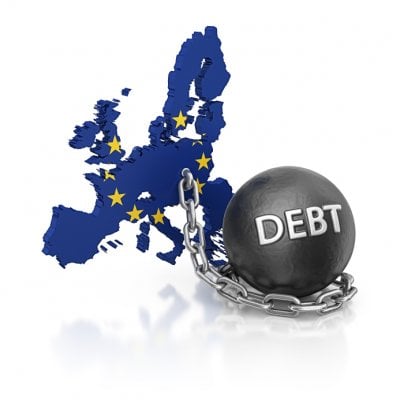
If there is
one issue more than any other which has been exercising the public
consciousness for the past four years, it has to be the question of debt.
From the
bursting of the US property bubble, the collapse of Lehman Brothers, and the
systemic threat of a global banking failure in 2008, through the first measures
taken by many governments, individually and collectively, to try to head of
that danger, to the current, deep-seated crisis in the Euro-zone, the theme of
debt – public and private – has dominated world thinking, doings and commenting
constantly, obsessively.
With
serious consequences for millions; whether dispossessed hopeless home-owners in
the USA, pensioners in Greece, or the more than half of the Spanish population
between 18 and 30 who are currently unemployed. The “markets” are uneasy and, apparently, when “markets” are uneasy, the
little people worldwide suffer.
I am
reminded of nothing so much as the stereotypes of fearful, primitive,
superstitious civilisations in bad adventure novels, where the natives,
threatened with the outbreak of catastrophe, are convinced that they have
become victims of the anger of the gods. Indeed, the analogy can be developed
farther, for the general reaction of the natives in such pot-boilers is to offer
ever more and ever more costly sacrifices to these angry gods, to try to
propitiate them, before finally reaching the inevitable ghastly conclusion that
nothing less than the sacrifice of their own children will serve to (possibly)
appease the divine anger.
Substitute markets for gods in the previous paragraph and you get a description of the
world of 2012.
In the past
couple of months, I have intended many times to write something about this
theme here. The reason I have not, up to now, is that I have a deep suspicion
that most of the discussions being carried out on the subject are based on
misrepresentations, subterfuges, and downright cynical lies. I am prepared to
accept that many of those involved are sincere and genuinely believe the
arguments they are making – but I am becoming more and more certain that most
of those who really matter know that much of what they are saying is no more
than platitudinous window-dressing and that they well recognise, at a deeper
level, what it is really about … the retention, protection, and even expansion
of power and wealth in the hands of those who have it, whatever the cost to
those who do not have it.
Writing
over 2,400 years ago, the famous Greek historian, Thucydides, records how the
more powerful Athenians expressed their view of the world to the weaker Melians on demanding their surrender, “the
strong do what they can and the weak suffer what they must.” Since then, despite
all kinds of declarations of rights and facades of agreements and legality, very
little has changed.
There is a
conventional view of the current ongoing global crisis and, on the basis of
this view, it’s fairly easy to describe what’s going on. For various reasons –
to which nobody pays much attention now – speculative trading of finance
products got out of control. The result was a bubble which burst, the crash of
a few financial institutions and the threat of a crash in the whole banking
sector in 2008. To avert this, most sovereign states intervened, providing
billions of tax-payers’ money to prop up the banks and keep the whole system
going (or at least limping). The new atmosphere of sobriety and financial
rectitude focussed increased attention on the deficits and borrowing debts of
those sovereign states – deficits which had had to be drastically increased to
provide the money to prevent the banks from failing. The “markets” became
increasingly nervous about the dependability of those sovereign debts, with the
result that costs of servicing such debt rose steeply for a number of countries,
thus putting ever more pressure on their “real” economies, which weakened their
position even further in the eyes of the markets. A vicious circle.
This
problem became particularly acute in Europe,
where a large number of countries within the EU had adopted a common currency,
the Euro, over a decade ago. The euro had brought considerable prosperity for its
members – particularly those with strong export-based economies – by significantly
simplifying trade, both between its members and with the wider world. But it
also created a one-size-fits-all monetary situation for the member countries
and the pressures caused by the financial crisis exacerbated hidden fault-lines
enormously. Countries like Greece
and Ireland could
conceivably have eased their situation somewhat by currency devaluation, but
such devaluation was not in the interest of other countries such as Finland, Luxemburg,
Austria and, above all, Germany. Ireland,
for example, could have let some of its banks fail and default, but, as these
debts were practically all held in Wall Street, the City of London and
Frankfurt thus potentially putting the powerful economies of the US, UK and
Germany under pressure, this wasn’t allowed either. The Irish were told to unconditionally
guarantee the debts of their – private – banks and the then Irish government,
terrified at the prospect of being otherwise abandoned by its international “friends,”
meekly complied.
For nearly
three years now, the Euro-zone has been trying to deal with a situation in
which the debt problems (which have different causes in each country) in
Greece, Portugal, Ireland, Spain and Italy are putting the common currency
under continual pressures of all kinds on the markets, thus exposing all the
other member countries to major risk. All sorts of imagery is used to describe
what’s going on, the most popular one being that taken from the language of
illness – the threat of “contagion.” Or
the other hoary old image, beloved of proponents of the Vietnam War nearly
fifty years ago, the “domino theory.” A full-scale collapse in Greece, or
Spain, or Italy, would serve to knock down the economies of all the other
Euro-members, even the strongest, and rapidly lead to world-wide economic recession
and ultimate collapse, the scale of which would make 2008 look like an
insignificant blip on the line of global progress. Europe
and the world are under threat of economic Armageddon and the only way to stave
this off is to get the rampant sovereign debt problem somehow “under control.”
So there
has been an ongoing series of frantic conferences, and bail-out measures, and
stability mechanisms, and fiscal pacts, and injections of billions by the European
Central Bank, etc., etc., etc. Three countries (Greece, Portugal and Ireland)
have been put into a kind of international receivership and the domestic
measures their partners (and the world in general, as represented by the IMF,
which is one of the “receivers”) are demanding as conditions for their
continual financial support, mean that their citizens – particularly their
poorest citizens – are suffering badly. And the generally touted fear is that Spain or Italy could be next; in contrast to
the three already hospitalised patients, economies “too large to fail.”
And still,
despite all the measures taken so far, the mighty markets are still not
impressed and the Euro members are divided on the question of what sacrificial
offering might suffice to appease these gods and make them mild and
gentle-mannered; even more austerity, measures to stimulate growth, Euro-bonds,
the expulsion of Greece from the common currency …?
I am
becoming increasingly convinced that all of this is just … pardon my French …
bullshit.
I do not
believe that it will be possible to solve the various problems besetting the
global economy in any kind of enduring fashion using any of the various tools
or mechanisms suggested, because the system is fundamentally broken. It has, in
fact, been basically flawed all along, because it is based on axioms and
assumptions which have no foundations, which have never applied, and which are nonetheless
generally presented and accepted as being unquestionably true and self-evident.
Markets are
natural and, in general, self-regulating.
The price
of something is its value.
The basis
of relations between people is one of exchange, with each party primarily
pursuing his/her own (material) advantage.
Exchange
usually makes everyone happy; everyone wins, nobody loses.
The
fundamental principle of morality is that one should always pay one’s debts.
Our basic
nature is one of lonely autonomy and our social relations and networks are
secondary, conditional and ephemeral.
Everything
is quantifiable.
Money “works”
and can thus, somehow, increase itself.
Continuous
growth is perpetually possible – even on a finite planet with, ultimately,
limited resources.
These are
the basic premises on which the so-called science of “economics” is based. They
are all statements which can legitimately be challenged and, indeed, would be
denied by most of us with respect to the way we live our everyday lives with
families, loved ones, friends, neighbours, colleagues and communities.
How do you
pay your debt to your parents, who gave you life and cared for you – not only
materially – until you were able to stand on your own feet? How do you quantify
kindness, or love, or beauty, or joy? Can you change your friends the way you
change your socks? Is not a sincere “Thank You,” frequently a more than
adequate payment for a favour/debt? Is monetary wealth really a measure of
respect and regard? Do you always (or even usually) weigh up your own advantage
before helping someone?
Yet, if
economics – particularly the conventional economics upon which we seem to base
our communal lives, as in my description of the current international debt
crisis above – is an unquestionable science, then why does it not seem so
easily applicable to our ordinary, real lives?
It seems to me that there is a deep sort of schizophrenia present in the way we
understand ourselves. If we really want to find solutions for the deep problems
besetting our current global societies, I suspect this will only be possible if
we find ways of surmounting this strange bifocal way of seeing things.
I am no
utopian, no starry-eyed optimist. The current situation is the result of long,
complicated processes, and concrete decisions will have very real effects on
millions of people. Much as it might seem attractive, I don’t think we can just
simply push some kind of “Reset” button. But I do see possibilities and
potential for us, if we reflect on the way we see and understand things and are
prepared to consider alternative ways of seeing and understanding them.
To admit,
for example, that our various models of economic analysis may be deeply flawed
and don’t provide us with an awful lot of good answers. To accept that
economics, even as far as it goes, has very little basis in any of the basic
moral principles which govern nearly everything we regard as important in our
lives. To give this basic morality and decency the weight it deserves in our
dealings, including our political and “business” dealings with each other, a
weight far superior to simplistic “economic” considerations. To chose to do
things, in the words of John F. Kennedy, “not because they are easy, but
because they are hard.” But because they are truly worthwhile.
The
questions I have been asking here crystallised, in part, for me after reading
David Graeber’s Debt: The First Five Thousand Years. You don’t have to agree with all
the author’s basic arguments to find this book compelling reading, but his
analysis and the questions he asks will certainly open your mind to seeing
things differently, above all, hopefully, to question the basic assumptions of
the all-pervasive standard economics way of seeing things.
One final
thought. The “Debt Crisis” can just as easily be called the “Credit Crisis.” The
roots of the word credit are in the
Latin word, credire, to believe. Credit
is a basic fact of life, one of the fundamental things which keeps life going,
on all sorts of levels. We believe each other, have faith in each other, trust
each other, extend each other credit, in thousands of ways every day. Even on the level of conventional
economics, trade, exchange, banking can only function at all on the basis of
trust and faith. Yet, the whole world of the “markets” has abandoned this
principle completely, and all those engaged in it seem to be operating on the
principle that they are living in a vastly dangerous jungle, with every man’s
hand raised against the other and where values like faith and trust are an
immediate invitation to self-destruction. How sick is that?
It is no
wonder, then, that the system is – possibly irrevocably – breaking down. Perhaps
the first step forward would be to change our attitudes to all those involved
in working in this area. Instead of admiring them as Masters of the Universe,
or fearing them as powerful Priests in the Temple of the Gods of the Market, we
should regard them with disdain and faint contempt; as sad and pitiable people,
unfortunately condemned to work in an area where it is almost impossible for
someone to work without losing their honour, their decency, and, ultimately,
their basic humanity.
[To all bloggers: Friends, you may have noticed an absence of comments from me recently on your sites. I have some kind of glitch in my Blogger account at the moment, which is making it impossible for me to leave comments. I actually can't even leave comments on my own site! Believe me, please, I'm not snubbing you. I hope to get around to doing something about it soon. Sorry!]
-No, Frankie, it’s not on. We made a
deal. If you must use me to spew your filth, then I’ll publish your stuff over
on Obnoxious. The style over there is a little more … robust.
-Pseudo-bourgeois hypocrite! All this
is nothing more than a literary fiction; when you get right down to it, I’m
nothing more than a figment of your imagination anyway.
-Maybe, but you’re not a very pleasant figment of my imagination.
-Pleasant, schmeasant, you’re just
chicken, that’s all. What a fucking schizo wimp!
-If … and this is a hypothetical question
… if I published you this time on “Attempted
Essays,” would you leave me in peace – completely in peace – for, say, two
months at least?
-A month?
-Six weeks.
-O.k.
-Oh, and Frankie …
-Yeah?
-No explicit, graphic descriptions of
what santorum really is.
-Oh … all right!
[So, here you have it, gentle reader, Frankie
in all his nasty glory. Read on at your own risk …]
They like
to call themselves the greatest democracy in the world – the USA. Christ, if this were really
the case, then democracy in the world is in a very bad way indeed. If this is
the best democracy can do, then there can still be quite a case made for
absolute monarchy.
On the one
hand there’s the incumbent. Free at last, thank God Almighty, we are free at
last! … Yes, we can!, and all that other good (bull)shit. And what did America and the
world get? When you come right down to it, an old-style Chicago Democrat – a man
whose prime instinct is to make any deal as long as it will keep him on top. To
be fair to him – not that I have any great urge to do so, fairness is
overrated, something for that wimp in whose head I’m condemned to silently rage
most of the time – much of the past three years have been spent dealing with
the various messes that his idiot predecessor left to him. But really, Obama
has proved to be so ready to make compromises, has been so flexible that he’s
shown himself to be capable of kissing his own ass. Yes, we can, folks! We can withdraw from Iraq – though we
leave the country completely wrecked and tens of thousands of US “military
advisors” and “defence contractors” still in place. We can close Gitmo, only, er, no, we can’t, not really. We can get Bin Laden – in the middle of a
country we still call our most important regional ally, which has been
sheltering him for years. We can deal
with Wall Street and the banks – by letting them more or less carry on the way
they were going before they wrecked everything in the first place. We can deal with national and private debt …
well, we could … maybe … but Congress
won’t let us.
Ah, people,
but the crazy thing is, the way it looks right now, he’s going to be re-elected
next November. And you know what makes this craziness down-right bizarre? That
this is probably the best thing that could happen to the USA and the world
because, when you look at what the opposition is offering as alternatives, any
rational being is forced to the conclusion that a wishy-washy, infinitely
flexible Chicago Democrat boss is better than any of the various varieties of lunatic
the Republicans are likely to nominate.
Let’s be thankful for small mercies. Some of
the wackiest have already bowed out; Donald Trump, Sarah Palin, Michele Bachmann
(because Jesus told her to). Herman Cain is gone too and as I’m writing this
reports are coming in that Jon Huntsman has given up – showing, at least, that
the guy seems to actually be basically reasonable and in possession of some
intelligence. Of course, that’s probably what gave him the kiss of death; I’ve
a feeling that the Republican party just doesn’t do reasonable at the moment.
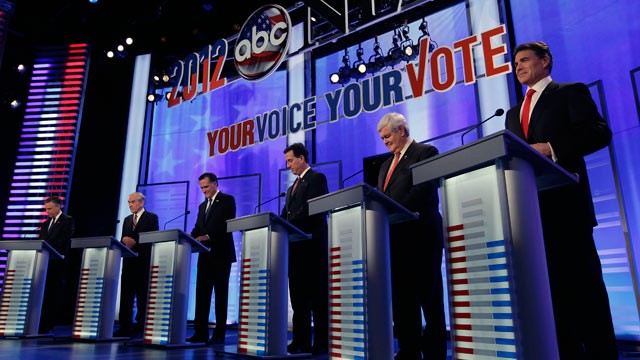
Let’s look at some of the more interesting
fruit and nut cases who are still in there and running. They’re all rich, of
course, because you have to be rich to run for the presidency in the USA; proof, should
proof be needed, that the country isn’t so much a democracy as a plutocratic
oligarchy. And they’re all as mad as hatters.
Take Rick Perry. This is the man who wants to abolish
government agencies whose names and functions he can’t remember. The guy has
been governor of Texas ever since Dubya gave
up that job to move on to wrecking the US and the world. Let’s face it,
anyone who thinks that America
is ready to elect another Texan governor just has to be a little crazy. But
then, Rick is another one of those who believe that Jesus has told him to be
president. Personally, watching this circus is making me think that Jesus must
be more than a little confused at the moment.
Then there’s the other Rick, Rick Santorum. Jesus
seems to like Ricks. Maybe that’s what’s happening; Jesus has got drunk in
heaven and started roaring out, Rick for
President, as a joke and every Tom, Dick and Harry who’s called Rick thinks
that Jesus means him. (Apart from
Michele Bachman, but her husband, Markus, has probably been taking his
inspiration from the priestly caste snob in The
Life of Brian who claims during the crucifixion, “I’m Rick and so is my
wife!”)
... considers entering the race as a
compromise candidate ...
In the special private funny-farm they’ve got
for Republican presidential candidates, Santorum has a whole suite reserved (he
thinks it’s the Presidential Suite). He’s given his name to a rather icky by-product
of anal sex (and if you don’t believe me, just google santorum). [I’ve promised the wimp not to go into any more detail
about this, much as I’d like to; let no one say I’m not a man of my word.] This
guy’s Catholicism is so conservative that he’s been endorsed by the
evangelicals, including the wonderful Mike Huckabee (just be thankful he isn’t running to, though maybe if
Santorum gets the nomination he’ll put him on the ticket as VP). Santorum is so
“pro-life,” he’s not just against abortion – he believes that sex is wrong if
it doesn’t lead to children. Believe me, people, this guy makes Pope Ratzinger
look like a dangerously radical liberation theologian. Santorum can best be
described as the American equivalent of Ahmadinejad.
What about Newt Gingrich? Newt by name, Newt by
nature, I say – the man has many similarities with a resentful lizard suffering
from halitosis. This is the guy who, as House Speaker, gridlocked American
politics back in the nineties because he didn’t like Bill Clinton (or because
he thought Bill Clinton didn’t like him). He wants to build a fence between the
USA and Mexico; should he be elected and
succeed in this, he’s going to piss off an awful lot of rich Americans who
would then have to pay decent wages for legal gardeners and household helps.
Ron Paul is a bit of a maverick. One of his
basic problems is that he’s in the wrong party. Paul’s views make him a natural
leader of the Libertarians but, since they don’t have any national clout, he
has to settle for being a Republican. The guy has the advantage of being pretty
consistent and faithful to his principles; the problem is that these principles
often tend to put him outside the real world. I think he’d feel happier in an America where
the South had won the Civil War – then he wouldn’t have to feel continually
oppressed by big Federal Government. He’s winning a lot of support from
liberal-minded people, who like his positions on (non-)intervention in world
affairs with things like foreign wars, his personal abhorrence of capital
punishment and his opposition to the War on Drugs. They’re fooling themselves –
all Paul really stands for is asserting the rights of the individual over those
of communal society and of individual states at the expense of Washington. What this
would mean in practice is that in Massachusetts,
Oregon and California
you could get legally stoned, in Texas and South Carolina you’d
probably be hanged for possessing a joint. Liberal thinking people who tend to
admire Paul should not forget that one of his heroes and major philosophical
influences is Ayn Rand.
It could also be argued that his age might mean
that America
would finish up with a president suffering from dementia. I don’t see any
problem in this; Ronald (it’s morning in America) Reagan proved that this can
be done without seriously disrupting daily business and the press could once
more ask the interesting questions, What did the president forget and when did
he forget it?
In the end, it doesn’t really matter – the way
things look at the moment, Mitt Romney is going to get the GOP nomination. What
a prospect! This is a man who believes that some of the lost tribes of Israel
settled in America, were visited there by Jesus after his resurrection and left
divinely inspired records, written on golden plates in a language called “Reformed
Egyptian,” to be discovered by Joseph Smith (guided by angels) nearly eighteen
hundred years later. He also believes that God doesn’t want you to drink
coffee.
The man became a multi-millionaire, running
companies which specialised in asset stripping and hedge funds. His business
background is firmly among the people who caused the financial crisis of 2008,
the consequences of which are still reverberating around the globe.
He has the advantage of being more flexible
than Obama. Having introduced a package for universal health care as Governor
of Massachusetts in that state, he now claims to be against “Obamacare,” though
the basic differences between the two measures are minimal. Watching him
throughout the campaign for the Republican nomination, he seems to be a
chameleon, one capable of taking on whatever opinions necessary to attract the
majority of Republican voters in order to achieve the nomination. His basic
claim for suitability for the job is his long experience in business – if elected
he would then, logically, run the USA as a successful CEO runs a
company. One wonders how he will deal with employees – oops, sorry, citizens –
who don’t live up to agreed targets and reach agreed goals.
In the end, it probably won’t make all that
much difference whether Obama or Romney rule the USA for the next four years. The
best you can say for them both is that most of the alternatives are a lot
worse. Isn’t modern US
democracy wonderful?
The wimp usually
finishes up his posts with some music. I’d like to dedicate this little number
to Rick Santorum.
It being a
new year and all, I’ve decided to try a little experiment here on this blog.
Although I’ve lived in Germany
for over a quarter of a century, German is not my first language. Apart from a
few years at school, many years before I moved here, it is a language I have
only learned to speak and write as an adult – and I still feel nervous about
writing and publishing in it. But there is a bit of a political scandal brewing
here at the moment which I feel like commenting on. Only Germans, with a few exceptions,
will really have been following the story and will know all the background, so
it seemed more sensible to put the first argument I want to present in German –
apart from anything else, it saves me the trouble of having to explain all the
tedious background to non-Germans.
For those
of you who do not read German, do not despair! Following the next section in
German, I will return to English, not to offer a direct translation, but to
offer a few more thoughts, inspired by the current difficulties of the German
president, Christian Wulff.
Wir hätten Joachim
Gauck haben können …
Erinnern
Sie sich noch? Es ist kaum mehr als anderthalb Jahre her, dass Horst Köhler
überraschend die Brocken hinschmiss und Deutschland sich einen neuen
Bundespräsidenten suchen musste.
Damals
haben die SPD und die Grünen Joachim Gauck nominiert. Dieser Vorschlag war der
Bundeskanzlerin und ihre Koalition nicht genehm … warum eigentlich nicht? Im
Rückblick hauptsächlich, weil Gaucks Name von der Opposition ins Spiel gebracht
wurde und eine Vollblutregierung nie und nimmer eine Idee der Opposition gutheißen
darf. Dann und heute habe ich geglaubt, dass dies der eigentliche Grund war.
Aber in jenen fernen Tagen, als Westerwelle noch Chef der FDP war, und
Karl-Theodor zu Guttenberg sich im Verteidigungsministerium profilierte, gab es
auch von der Regierungsseite eine (angeblich) sachliche Argumentation.
Das
Problem mit Horst Köhler, hieß es, war, dass er kein Profipolitiker war. Er
verstand nicht, wie Sachen auf der politischen Ebene liefen, deshalb nahm er
manches viel zu ernst, manch anderes nicht ernst genug. So großartig Joachim
Gaucks Persönlichkeit auch sei, er wäre auch ein politischer Fremdling, in
manchen Situationen eine ungesicherte Kugel. Köhler hatte gezeigt, wo so etwas
hinführe, deshalb müsse jetzt ein richtiger Politiker dran. Jemand wie
Christian Wulff eben …
Nun
haben wir den Schlamassel. Abgesehen von eventuellen Fragen bezüglich der
Finanzierung seines Hauses – und seien wir ehrlich: ist irgendjemand im
Mindesten überrascht über kleinere Verflechtungen zwischen Geschäftsleuten und
Politikern? – ausgerechnet ein Berufspolitiker müsste wissen, dass Drohungen
gegen Journalisten und Redakteure, um zu verhindern, dass Geschichten über ihn
geschrieben werden, gar nicht gehen.
Es
gäbe für Frau Merkel eine Lösung für das jetzige Problem. Sie sollte Herrn
Wulff den Rücktritt nahe legen und dann Herr Gauck der Bundesversammlung als
Präsidentschaftskandidat der Regierung vorschlagen. Dabei könnte sie sich auf
Herrn Wulff berufen und die Bereitschaft, aus eigenen Fehlern zu lernen, als
positive Eigenschaft darstellen …
Let me
quickly point out that the office of Federal President in Germany – in political terms – is
not very important. It is almost exclusively a formal, representative office
and the incumbent is not directly elected by the people but, rather, by a
peculiar institution known as the Federal
Assembly (composed of all the members of both houses of parliaments as well
as an equal number of delegates, nominated by the provincial parliaments). Throughout
the history of the FederalRepublic, it has generally
been used as an honorary parking lot for a senior politician, whose basic job is
to spend five years looking worthy, shaking hands, and giving inspiring speeches.
It’s not
all that long ago that Germany
had trouble with its Federal President. In June 2010, Wulff’s predecessor,
Horst Köhler resigned, basically, in a huff – an event which inspired me to
write an early post hereon this blog. Wulff, a professional
politician who, up till then, had been Prime Minister of Lower Saxony, was
chosen by the government coalition to succeed him.
In recent
weeks there have been a number of reports circulating in the German media about
how Wulff financed a private house purchase before he became president – it’s a
complicated story involving a private loan from a wealthy businessman (or
rather his wife) and a subsequent bank mortgage with interest rates which were,
to say the least, generous. Questions were asked about the propriety of a
political office holder being accorded this kind of friendly help. It was all
stuff in that seedy grey area where elected politicians and other people of
wealth, influence and power meet and move; cloudy moral areas often, where
friendship and mutual advantage overlap – you scratch my back and I’ll scratch
yours.
As all this
was coming before the public eye, the German president phoned the chief editor
of the Bild newspaper and tried to
have a story killed (Wulff claims that he was only trying to have the story
postponed and has since admitted that the phone-call was a “mistake”). He also
apparently made some other calls, including one to the owner of Bild. The language he used and the
threats he made in the call to the mailbox of the editor are claimed to have
been pretty strong. What exactly was said is not officially known, since –
although Wulff has done the whole public apology and repentance thing – he has
refused the paper permission to publish the content of the message he left.
Leaving the
question of the house financing to one side, it was his attempt to suppress reporting
on the subject which, in my view, makes Wulff’s continuance in his office
impossible. And expressing this opinion makes me immediately uncomfortable, not
because I really have any sympathy for Wulff, but because it puts me into a
situation where I find myself championing the cause of the Bild Zeitung.
Bild, the flagship of the Axel Springerpublishing group, is no
shrinking violet. It is a sensationalist, dumbed-down, frequently hysterical,
exploitative rag, which would find itself completely at home in the grubbier
corner of Rupert Murdoch’s media empire. It is also Germany’s
(and Europe’s) biggest circulating daily
newspaper. In its chequered history it has not been loath to use its not
inconsiderable power to influence the course of German politics; championing
some politicians, dissing others to the extent that it has practically
destroyed their careers, pushing questionable causes and occasionally fomenting
public opinion in very unsavoury directions. It certainly does not need me to
defend it.
Bild has also enjoyed a mutually parasitic profitable
relationship with Christian Wulff for many years; this was probably why he
thought he could come on so heavy in his attempt to have their story on his
house financing quashed. In any case, it didn’t work; Bild not only published the piece, it also gleefully reported the
president’s attempt to stop it.
He who sups
with the devil should have a long spoon …
But behind
all the Schadenfreude I feel watching
this comedy of fools, the serious issue remains. For a head of state to try to
personally muzzle any organ of the Fourth Estate is not on – even an organ as
disreputable as Bild. If the
president felt that the newspaper was behaving incorrectly, there were enough
legal avenues open to him to have the publication of the article in question
stopped; Germany’s privacy and reputation protection laws are generally a lot
stricter than those in force in, for example, the UK. But Wulff, who is himself
a lawyer, probably knew that he didn’t have a legal leg to stand on.
Will Wulff
remain in office? The one who will ultimately answer this question is, of
course, the real boss in Germany,
Angela Merkel. Wulff was a member of her Christian Democrat Union up to his
election (as president he is not allowed to be a member of a political party)
and her nominee. Normally, I would tend to the view that she (and her
president) will follow her usual tendency and sit the whole thing out. But I
thought that too about the plagiarising Minister of Defence, Karl-Theodor zuGuttenberg, last year and, in the end, the public indignation at his conduct
finally forced her to let him go (even if, ironically, one of his most stalwart supporters right up to
the end was Bild).
As with zu
Guttenberg, if Christian Wulff is forced to resign, it will be a result of
widespread public opinion that his behaviour has been unworthy of a president. Should
this happen, the Germans will have proved that they deserve a better president.
At the moment he still seems determined to hang on to his post. But I suspect
that the next weeks may well show that the most serious mistake Wulff has made
was that phone-call to Kai Diekmann, the editor-in-chief of Bild. Not even because it was because it
was a massive abuse of his position – but because the last enemy any mainstream
politician in Germany
wants is Bild.


.jpg)

