Seiten

Showing posts with label Irish history. Show all posts

Saturday, 17 March 2012

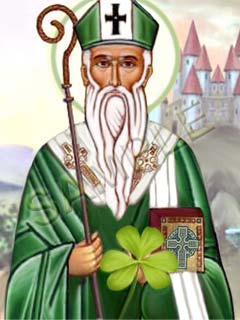
Hail Glorious Saint Paddy


The top o’ the mornin’ to ye! Begorrah, bedad, an’ bejaysus, sure isn’t it a grand day and all for us to be celebratin’ the feast of our own glorious Saint Patrick, it bein’ fifteen hundred and eighty years since he arrived on the misty green shamrock shores of the dear auld emerald isle, wavin’ his bishop’s crozier to banish the snakes and bring the benighted pagan Oirish into the bosom of God’s holy church?

Is that enough stage-Irishness for you? Enough Paddywhackerry? Will you wear the green today, go off to watch or even march in the parade and get all tipsy and lachrymose on green beer, Guinness or whiskey (always to be spelled with an “e”)?

In Germany, where I live, St. Patrick’s Day barely causes a blip on the radar screen, apart from parties organised in the Irish Pubs, one of Ireland’s most successful modern cultural exports, which can be found in nearly every middle-sized town. There’s a street in the Altstadt of Düsseldorf which has three of them, one being a gay pub. And speaking of gays, as far as I know, the Ancient Order of Hibernians, organisers of the New York parade, still don’t allow openly LGBT organisations to take part. They would do better to recall the great Irish bisexual, Oscar Wilde, and honour his memory.

Contradictions. Insofar as national stereotypes are valid at all, the Irish are nearly as full of them as the stereotype neurotic New York Jew. There is a kind of deep insecurity at the heart of the Irish character, born of an unholy conjunction of colonial oppression and Catholic guilt. And even these further stereotypes are themselves contradictory. For while there is no doubt that the “native Irish” were exploited, oppressed, discriminated against, killed and starved in their millions by the more powerful English between the 17th and the 19th Centuries, at the same time there was much of what was Irish which contributed to the growing identity of Britishness during that period, and – particularly in the 19th Century – there were many Irish people who were as comfortable with the dual identity of Irish and British as most Scots and Welsh are today (and, indeed, in the 20th Century, hundreds of thousands of Irish immigrants in Britain who have adopted a British identity, while retaining, to various degrees, a sense of their original Irishness).

Then there’s Catholicism. Similar to the Poles, religious separateness developed in Ireland as a defining national characteristic in reaction to English acceptance of the Reformation. Because the English became Protestant, it became a part of Irish self-definition to be Catholic and, the more being Catholic became a criterion for discrimination and persecution, the more stubbornly the Irish clung to it. Yet parallel to all this, most serious Irish nationalist thinkers retained a strong sense that being Catholic was not synonymous with being Irish and a large number of those who developed and espoused ideas of Irish separatism were Protestant, from Jonathan Swift to Wolfe Tone, Charles Stewart Parnell to Oscar Wilde, W.B. Yeats to Douglas Hyde (independent Ireland’s first president).

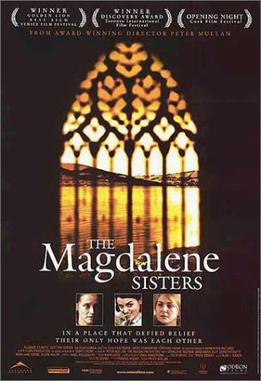
But Catholicism remained a major part of the Irish identity, for many the defining component. The decades of national trauma following the disaster of the great potato famine in the middle of the 19th Century coincided with a restructuring of the Catholic Church worldwide along strict, all-encompassing, highly-structured lines, defining itself sharply in contrast to the ever more pervasive ideas of the Enlightenment, politically expressed in the American and French Revolutions. The result, in Ireland, was a particularist Nationalist culture, whose religious component offered an extra reason to reject everything British as being a product of obdurate heretic Protestantism, whose adherents were, basically, damned by God to eternal hellfire. And it was a variety of often joyless Catholicism which defined much of modern life and what it had to offer as “occasions of sin” (most particularly in relation to anything to do with sexuality) and stoked the subconscious Freudian fires of guilt with rigorous efficiency, while at the same time allowing for frequent, ghastly violence, abuse and hypocrisy. To anyone who would dispute this interpretation, I simply recommend watching Peter Mullen’s 2002 film, The Magdalen Sisters, the basic accuracy of which, as far as I know, nobody has been able to call into question.

Hail, glorious St. Patrick, thy words were once strong
Against Satan's wiles and a heretic throng;
Not less is thy might where in Heaven thou art;
Oh, come to our aid, in our battle take part!”

According to my researches, the words of this most popular of hymns to St. Patrick – and one which I learned in my earliest schooldays – were penned by a Sister Agnes in 1920. The “heretic throng” she refers to was, for the Irish Catholics of the time, clearly Protestant. Historically, of course, the Patrick who spread the Christian message in Ireland in the fifth Century (whichever one of them you take, most historians believe there were at least two of them!) had nothing to do with heretics, as those against whom his words were strong were pagans, but that wasn’t important. As a child I was certain – for so I was taught – that Patrick was a Catholic. The fact that the Protestant Church of Ireland also reveres St. Patrick as its founder and that one of its two major cathedrals in Dublin is named after him didn’t matter. As far as we were concerned, those cathedrals were rightfully Catholic anyway, and had been robbed from us by the Protestants during the Reformation. The fact that Patrick was most probably an Englishman, bringing a foreign religion whose basic goal was to extirpate the cultural uniqueness of the native Irish druidal religion, was never presented in these terms and much was made of the remote possibility that the young Romanised Patrick, who had been captured as a slave by Irish pirates and brought to Ireland to herd pigs, in fact came from a settlement on the northern coast of Gaul.

When the Irish Free State became independent in 1922, the predominant ethos became that narrow Catholic definition of Irish identity – a development accelerated by the fact that the great majority of the Protestants on the island lived in the province of Ulster, most of which remained British as Northern Ireland. The new state was over 90% Catholic and for the rest of the 20th Century, the small Protestant minority declined ever further. And that narrow exclusivist understanding of national identity contributed to a withdrawal on many levels from the wider world, contributing even to a declaration of neutrality during World War II. In that atmosphere of righteous isolation, it was possible to cultivate further the national neurotic mythology of persecuted specialness, doomed to suffering, mediocrity and failure by centuries of foreign political, economic and religious oppression.

Even during my childhood it was showing cracks, under assault from (far too slowly) growing prosperity, rock and roll, television and the insistent spiritual “pollution” from a more open, exciting wider world. The Church itself was undergoing its own revolution as a result of Vatican II. From the beginning of the nineties up to a couple of years ago, the roaring of the Celtic Tiger seemed to have been systematically banishing the last vestiges of the old, limited, outdated, claustrophobic national identity to the scrapheap of history.

The Celtic Tiger was so enthusiastically, exaggeratedly embraced by the Irish, perhaps, because it offered a new possibility for self-definition. It certainly ultimately led to a kind of collective unreal hubris, and the throwing out of a number of babies with large amounts of undoubtedly filthy bathwater. All this made the crash, when it inevitably came a few years ago, all the more bitter.

But for all the flaws in the current rescue strategies, and all the suffering the Irish people are currently going through – much of it unnecessarily demanded by a corrupt, twisted, global finance mafia – there is no going back to the old, narrow, neurotic nationalism. That mould, at least, has been broken forever. The Irish who celebrate their national holiday today are undoubtedly more sombre, thoughtful, self-questioning than those of a decade ago. But they are also more mature.

The (Protestant) Irish rebel leader, Robert Emmet, executed in 1803, made a famous last speech, which became part of the sacred scriptures of Irish nationalist republicanism. He finished by saying

“Let no man write my epitaph; for as no man who knows my motives dare now vindicate them, let not prejudice or ignorance, asperse them. Let them and me rest in obscurity and peace, and my tomb remain uninscribed, and my memory in oblivion, until other times and other men can do justice to my character. When my country takes her place among the nations of the earth, then and not till then, let my epitaph be written. I have done.”

Today, I would argue, his country has indeed taken her place among the nations of the earth – no better, but certainly no worse, than most of the others. His epitaph can be written, has, indeed, been written in the course of Irish history since his death, and particularly in the past fifty years, long after notional political independence was achieved.

Happy Saint Patrick’s Day! Be proud to be Irish, because today is the day we allow everyone worldwide to share our identity – with all its flaws and glories J.


Pictures retrieved from:

Monday, 23 May 2011

Irish Rivals: Garret FitzGerald and Charles Haughey


The history of Irish politics in the 1980s is dominated by the rivalry of two men, Charles Haughey and Garret FitzGerald, who succeeded each other as Taoiseach (Prime Minister) of the Irish Republic on four occasions between 1979 and 1992.

The two had first met when they attended University College Dublin during the forties. They came from very different backgrounds. FitzGerald was a son of parents who had both been involved in the iconic moment of Irish nationalism which ultimately led to independence, the Easter Rising of 1916, and his father – who was also a poet – became the first Irish minister for external affairs. His mother had a Northern Irish protestant background, though she herself was a fervent nationalist. The young Garret had spent summers in France just before the war, giving him a fluent command of the language. As such, his background was very much that of the political and intellectual elite in the country.

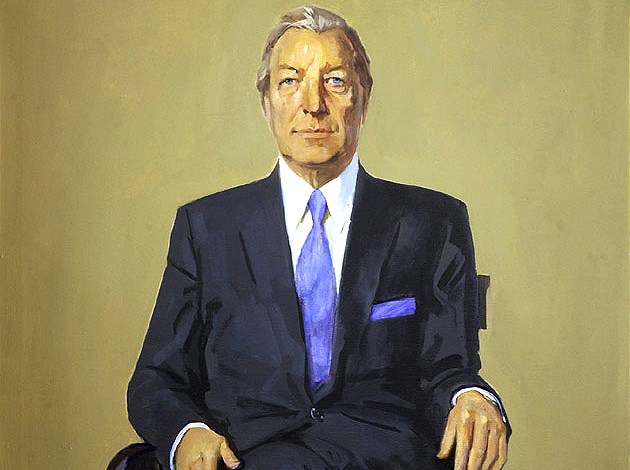
Charles Haughey
Haughey had more humble origins, his father being an army officer who became an invalid relatively early in life. He studied commerce (achieving a first class degree) while FitzGerald majored in history and French. While they were students they both courted a fellow student, Joan O’Farrell, who quickly showed her preference for FitzGerald. They married in 1947 and their love for each other was legendary until she died fifty two years later. Haughey went on to marry Maureen Lemass, the daughter of the government minister and future Taoiseach, Sean Lemass, whom he had also got to know at college, in 1951.

Haughey quickly began to build a career in politics, joining the ruling Fianna Fáil party and becoming Minister for Justice in his father-in-law’s cabinet in 1961. He made a name for himself as a young, dynamic minister – though even at this stage many of his actions were characterised by a ruthless promotion of his own image. He also achieved a reputation as a man-about-town and bon vivant and a friend of businessmen and people with commercial interests.

FitzGerald was also politically interested but used the fifties and early sixties to establish himself as an economist, first at Aer Lingus and later as a lecturer in his own alma mater, ultimately achieving a PhD in Economics in 1968. He also built an international reputation as a free-lance journalist, commentator and consultant. Though courted by Fianna Fáil, including Haughey, he joined the old party of his father, Fine Gael, entering the Irish upper house in 1967 and being elected to the Dáil (the Irish House of Commons) in 1969.

To understand the background to the stories of the two it is necessary to briefly explain the distinctions between the two major Irish political parties. Fianna Fáil, the party founded by the doyen of the Irish struggle for independence, Eamonn de Valera, understood itself as more than simply a political party – it was a national movement, the soul and guarantor of true Irish republicanism. Fine Gael had its origins among the more pragmatic revolutionaries who had accepted the original Treaty leading to Irish independence in 1921 (which de Valera had opposed as not going far enough). Largely under the influence of FitzGerald and other likeminded younger members it moved from a quite conservative position to a social centrist one, in the character of a classic European Christian Democrat party, from the late sixties onwards.

The outbreak of the troubles in Northern Ireland led to Haughey’s first major political scandal. Implicated, as Finance Minister, in the use of Irish government funds to buy arms for the IRA, he was fired from the government and stood trial. The court failed to convict because of contradictory claims by Haughey and other government ministers, the judge ruling that he could not conclude who was telling the truth. Haughey remained a Fianna Fáil member of parliament and worked hard within the party over many years to prepare a challenge for the leadership – a challenge which finally succeeded in 1979.

On the day Haughey was nominated for Taoiseach in the Dáil, FitzGerald – who, having been Foreign Minister during the 70s, was now Fine Gael and opposition leader – made a speech in which he referred to Haughey as having a “flawed predigree.” It was a phrase which he later claimed he regretted, explaining that what he meant was a “flawed political pedigree.” Personally, I (and I think most of those who heard it and were not looking for gratuitous offence) never understood it any other way. I still believe he was right.

The following decade saw the two of them alternating frequently as leaders of the country against a background of economic problems, ongoing violence in Northern Ireland and a battle for the soul and future identity of Ireland in social issues between those supporting a secular, liberal, pluralist agenda and an aggressive right-wing Catholic movement. FitzGerald tried to institute a “constitutional crusade” for a “genuine republic” free of sectarian laws. He had little success with it, a referendum to introduce divorce being rejected and a revanchist right-wing “pro-life” amendment to the constitution being pushed through, despite his misgivings. Haughey, as was to be expected, opportunistically embraced the various positions pushed by the Catholic right. By 1987, he seemed to have triumphed. Back in power, though with an uncertain majority, he had ridden out various scandals, internal party challenges to his leadership – and Garret FitzGerald, who resigned the leadership of his party having failed to be re-elected as Taoiseach.

Haughey, having in opposition opposed FitzGerald’s attempts to further the peace process in Northern Ireland and the reforms necessary to put Ireland in its economic feet, now embraced these policies. It can be argued that much of the groundwork which led to the Celtic Tiger phenomenon was done between 1987 and 1992. In more ways than one.

But his hold on power, the lodestone of his life, was weakening. The inconsistencies, the questionable deals, the shafting of rivals and opponents, the casual misuse of privilege were mounting up and seeping into the open. In 1992 he chose to resign rather than be finally, ignominiously hounded out of power.

It didn’t really help him. The years of his retirement were filled with revelations and investigations of his abuses. Party funds and donations pilfered. Pressure on and threats to banks and public servants. Bribes taken, among others for Irish passports for Saudi businessmen. Over IR£ 8 million accepted from benefactors in Irish business between 1978 and 1986 alone. An affair with a society lady through all the years where he had supported the causes of the Catholic right. The means by which he financed his lavish life-style, including his own private island and yacht, became clear and he avoided formal prosecution only because of sophisticated legal filibustering, illness and, finally, death.

Garret FitzGerald
Following his retirement, FitzGerald remained a respected figure in Irish public life, publishing his autobiography, resuming his work as a journalist and commentator, becoming Chancellor of the National University of Ireland. The nineties saw many of his visions for which he had struggled so passionately come true; Irish society became increasingly pluralist and liberal and the Good Friday Agreement brought peace to Northern Ireland, much along the lines he had been suggesting for over twenty years.

I must admit at this point to personal bias. I never liked Haughey. Growing up in Ireland in the seventies and as a young man in the eighties, he never managed to draw me into that aura of fascination and admiration which he seemed to be able to inspire in so many. There were enough questions about him, his integrity and his wealth which I felt were not being answered at all and I abhorred the image of charismatic roguish aristocratic competence he cultivated – I regarded him as a dangerous, power-hungry crook, without any principles worth mentioning apart from his own overweening ego. In Dublin in the early eighties there were enough rumours about him, but his followers, and indeed frequently the majority in the country, seemed uninterested. Nearly twenty years before it finally became public, for example, I would have been able to tell you the name of his mistress. Not that a politician having an extra-marital affair bothered me particularly (that is part of his private life), but the hypocrisy with which he, at the same time, courted the ultra-conservative Catholic vote sickened me.

And I admired FitzGerald – his intelligence, his honesty, his vision of a genuinely pluralist republic. He was not perfect; his very strengths could become weaknesses. His government from 1982 to 1987 was characterised by gridlock within his coalition and I can well sympathise with members of his cabinet who despaired of eternal, fruitless discussions because Garret frequently insisted on trying to convince others of the correctness of his opinion rather than pound his fist on the table and, as Taoiseach [Prime Minister], simply lay down the law.

A typical intellectual, his grasp of so many issues was so deep and his mind so quick that he failed to see that others could not always follow his reasoning and that he needed to bring them with him to where he had long since conceptually arrived. He was, in many ways, the typically absent-minded professor, once going out to campaign for votes with two different shoes on. A famous comment attributed to him went, “That’s all right in practice, but how does it work in theory?”

He was always supremely approachable and always ready to discuss and explain. I remember coming into the Arts Building in UCD one evening sometime in the early eighties when I was studying there and seeing a group of students, some of whom I knew, gathered around a bank in front of one of the lecture theatres. There sat Garret (he would have been leader of the Opposition at the time) chatting with those who came by, answering and asking questions. And there are thousands of other Irish people who can tell similar stories.

His opponents, most of whom were firmly in the Haughey camp, derisively gave him the nickname, “Garret the Good.” Reading the many tributes published about him following his death last Thursday, it struck me that he had, in the course of his life, genuinely lived up to it. And I found myself reflecting again on his epic struggles with Haughey during the eighties, on the contrasts between the two and what they show about Ireland then and in the years since.

I mentioned earlier that the measures taken by Haughey’s last government at the end of the eighties to reform and sanitise Irish public finances laid some of the foundations of what became the Celtic Tiger. Other less sanitary foundations were also laid; an admiration for sharp dealing, a culture of political hubris, a dedication to the notion of individual advancement above any consideration of the public good, a fundamental lack of any sense of public morality – particularly in relation to business – and, finally, the loss of any connection to sane reality. This was the legacy Haughey left to his party, Fianna Fáil, and they followed it through from 1997 onwards when they were continually in government. Despite a few warnings (among others from FitzGerald in his weekly column in The Irish Times) they overheated the economy, mismanaged the boom and bungled the bust.

And the Irish people bought into it all, as they bought into the glamorous promises made by Haughey in the eighties. They are now paying the price. (As are Fianna Fáil, finally thrown out of power and decimated as a political force in the general election three months ago.)

Garret FitzGerald’s lasting legacy can be seen in other areas. His vision of a pluralist secular republic has largely been realised. The current front-runner in the campaign for the next president of Ireland, the election of whom will take place later this year, is the openly gay protestant, David Norris. And, as many have commented in the past few days, there was something symbolic about the fact that he died while Queen Elizabeth was making the first visit of a British monarch to the Republic of Ireland since independence. Without peace in Northern Ireland – a peace founded on the principles of tolerance and respect for different cultural traditions for which FitzGerald worked all his life – that visit would not have been conceivable.


Pictures retrieved from:

LinkWithin

Related Posts Plugin for WordPress, Blogger...