Seiten

Showing posts with label weather. Show all posts

Sunday, 6 February 2011

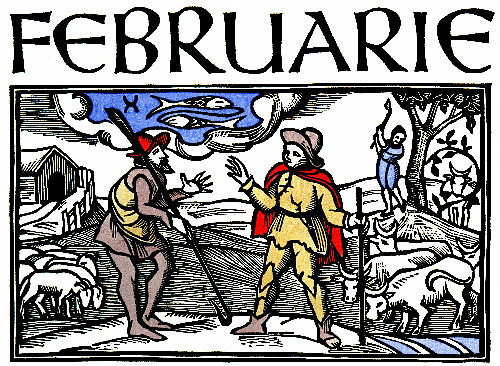
That February Feeling

According to the calendar followed by my Celtic ancestors, spring has begun. Traditionally, the feast of Imbolc (one of the four great days, along with Beltane, Lughnasa and Samhain) was celebrated on February 1 or 2 as the beginning of spring, and so I learned it in school. In Ireland the Church had succeeded pretty well in christianising it under the feast of St. Bridget or Bríd. On the surface anyway.

St. Brigid's Cross
Bridget is a fascinating and amorphous character. Historically, the Christian tradition describes her as a woman of noble birth, possibly a direct convert of St. Patrick, who founded a double monastery (one for men, one for women) in Kildare. A woman of evidently strong character, she seems to have had the local bishop, Conleth, well under control. Veneration of her spread rapidly so that she is considered as the second patron of Ireland (after St. Patrick) and was often called “the Mary of the Gael.”

As is common with saints, and given the Irish love of stories, all sorts of legends grew up about her, many of which found their way into various hagiographies (Lives of the Saints) so beloved of medieval Christians.

But that’s only half of the story. There was also a Celtic goddess called Brigid (the spellings are interchangeable) and it has long been assumed that many of the legends associated with the Christian saint are simply baptised versions of the older pagan myths. Scholars argue happily about Brigid/Bríd and the whole Celtic pantheon; while there are many medieval sources (particularly Irish ones), there are practically none from the original believers. And, of course, it is not even easy to talk of “the Celts” as such, as there were hundreds of different groups, tribes and nations who are generally described under this category all over Western Europe – all of whom had their own traditions, legends, languages (even if related) and varieties of religions. There is a probable relationship between Brigid and the Britanic/Gallic/Iberoceltic Brigantia.

Behind all this, however, there seems to be a common nexus of themes involving the goddess, the coming of spring and the return of fertility to the earth. The Feast of Brigid (Imbolc) is associated in many parts of Ireland and Scotland with the Cailleach, the Hag, who is an important figure in folklore and possibly originally depicted one of the aspects of the goddess. This idea is taken up by modern neo-pagan groups, particularly the Wiccans with their depiction of the Triple Goddess, Maiden/Mother/Crone. A common theme is that February 1 is the day the Cailleach gathers her firewood for the rest of the winter. If she intends the winter to last for a while yet she makes the day fine and sunny so that she can gather plenty. If the day is rainy and foul, this means that the Cailleach has preferred to sleep rather than collect more sticks and that therefore winter will soon be over.

When Europeans emigrated to American they seem to have brought elements of such legends with them, so that the traditional Candlemas Day, February 2, became Groundhog Day. Punxsutawney Phil, spotting his shadow on a fine day and bolting back into his hole for another six weeks sleep, could well audition for a job as the Cailleach’s pet.

All of this shows that the old Celts (or Scotii as the Romans called them) of Ireland and Western Scotland were keen observers of nature and larger weather patterns. From a more scientific meteorological perspective, the length of winter and beginning of spring in the British Isles and Northwest Europe have a lot to do with the strength and position of the masses of chilly arctic air positioned over Scandinavia and their interplay with milder, wetter low-pressure cyclones sweeping in from the Atlantic with the Gulf Stream. If the Scandinavian high pressure area is still strong, winter still reigns and the chances of cold, clear days at the beginning of February are higher. If, on the other hand, the Atlantic storms are stronger, the cold air is pushed back north-eastwards and the (relatively) mild, wet windy spring is at hand.

All of this was unknown to me when I was a boy. What I remember is a feeling of incredulity on being told that spring began on February 1. Having to go to school on dark mornings through cold, pelting rain, I inclined to the opinion that February was the very epitome of winter; dark, dreary and somehow hopeless. In November and December there was at least Christmas to look forward to. By the time February came, you had the feeling that winter had been there forever and would never end, the evidence of snowdrops and crocuses notwithstanding. The old Saxon name for the month is Solmonath, which means Mud Month, and it sums up well, I suspect, what most of us feel about it.

It is the month when our energy levels are probably at their lowest, which probably also explains why so many of us succumb to colds and ‘flu around this time. Our immune systems have been worn down by cold and damp and lack of sunshine, we are more inclined to depression and just being fed up.

Of course, in the developed world, we still have it a lot better than most of our ancestors. February was formerly that month where it finally became clear just how much of the previous harvest was left and whether it would last until the first spring crops would become available. Cows were no longer giving milk and the chickens weren’t laying. It was the time when portions finally became smaller, when bellies became leaner and when the fasting season of Lent for most people was as much a product of the exigencies of existence as the privation of piety.

But basic human optimism is hard to keep down completely, and people made a festival out of necessity by throwing aside all thoughts of prudence, survival and decorum and celebrating Carnival before the Great Fast of Lent began. Carnival usually takes place in February unless, as is the case this year, Easter falls so exceptionally late that Ash Wednesday won’t be upon us until March 9. And, perhaps reflecting the slowly stirring fecundity and randiness of nature (or as Tennyson more delicately and eloquently put it; “In the Spring a young man's fancy lightly turns to thoughts of love,” [Loksley Hall]), our medieval ancestors, starting with Chaucer, decided without any historical reason whatsoever that henceforth a minor Roman martyr called Valentine should be the patron of romantic love. More probably because they were so pissed off with February that they decided they had to do something to cheer things up a bit. The economic existence of card-makers, florists and chocolatiers was thus eternally secured.

A note on the “Brigid’s Cross”, pictured at the beginning of this essay: While Christians naturally claim its form and there is an appropriate legend regarding St. Brigid and this cross traditionally woven from rushes, many Wiccans also use the cross in their rituals and as decoration and claim that it precedes Christianity and that the Christian cruciform symbolism is coincidental.


Pictures retrieved from:

Wednesday, 22 December 2010

Zenning Snow

It’s been snowing on and off (more on than off) in most of Europe north of the Alps since the beginning of December. This is quite unusual so early in winter although all the experts assure us that this allows us to say nothing one way or another about the theme of global warming; what this is has nothing to do with climate, it’s just weather.

I live on the north-western edge of the so-called Mittelgebirge, the connecting chain of low mountains which run from west to east across central Europe from the Ardennes in Belgium to the Carpathians in Slovakia and Romania. This geographical fact means that any moist air coming in from the west, the north-west and the north is forced upwards in the atmosphere and the meteorological-physical result of this phenomenon is cooling which gives rise to precipitation. In layman’s language, rain. Quite a bit of it; the Duchy of Berg, east of Düsseldorf and Cologne and south of the Ruhr area, where I live, is one of the wettest in Germany. If the air is cold enough – as it is this year – this rain comes down as snow. On us.

Just weather, like I said. And, to be fair, all of northern Europe has got its fill of snow this December; on Sunday thousands of travellers were stranded at airports in London, Paris, Burssels, Düsseldorf, Frankfurt, etc. and as I write, they’re still not all back to normal. But we have been particularly “blessed,” and in the past three weeks we’ve had nearly a metre of it all told – two or three heavy storms and a lot more falls of 2 to 5 cm. in between, and as the temperature has hardly risen much above the freezing point in all this time, very little of it has thawed away.

We get snow almost every year for a couple of weeks, so – unlike France, Britain and Ireland – we’re basically equipped to deal with it; the towns and counties have snow-ploughs and salt and grit spreaders and motorists are legally required to have extra winter tires for their cars. But being used to it and able to deal with it does not mean that it isn’t inconvenient in all sorts of ways.

One of the major issues from my point of view has to do with driving or, more particularly, parking. I live in a nice flat in an old building directly on the street and I don’t have my own parking space. It’s not usually a problem because there is enough room on the street and I seldom have to walk more than a couple of metres to my front door. Unless it snows. All that snow which the ploughs push off to one side to clear the street, all the snow which has fallen on the cars, all the snow on the sidewalk, it all has to go somewhere. So the more snow there is, the more snow is “parked” in metre and a half high piles on the side of the street and the less room there is for cars. And if there’s been a heavy fall of snow this means that you invest quite an amount of time and energy digging your car out of its parking space, clearing the space so that you get out of it easily and safely, drive away to do whatever it is you have to do and return … to find someone else has parked his or her car in the space you spent so much time and effort clearing. But it’s a public street, which means you don’t have the right to reserve a parking space, even if you’re the one who cleared it.

So, late Sunday morning, having had a long struggle with my lazy side which was insisting that it was weekend, that I’d been working a hell of a lot recently and that this was my first free weekend for quite a while, that it would be much nicer to potter around, surf the internet, read a book, etc., etc., I manfully pulled on winter gear and went out to dig the cars free. Cars, because my daughter, who lives with me, has had her own now for a couple of months too. I shut my lazy side up with the argument that it was better to do this now, without any pressure or stress, than to have to do it early the next morning. Lazy side reluctantly accepted this argument but continued muttering in my subconscious with the effect that my enthusiasm for the whole business was less than optimal.

It had snowed fairly heavily on Saturday night and, to make matters worse, my daughter hadn’t used her car for a couple of days so that it was hardly recognisable under a lot of snow. As an extra flavouring for the whole situation, the snow-plough had been through the street and shoved a half metre ridge of dirty, partly compacted snow to the side – between the cars and the road, in other words. Oh joy, I thought, this is really going to be fun! I took the snow shovel and started to move masses of snow.

And then, somehow, I can’t say after how much time, it happened … I was there, completely immersed in the simple job of physical work I was doing. The resentment at having to spend my precious free time shovelling snow in the cold was gone, the consciousness of the time it was taking had disappeared, all the other things which had been occupying my mind were absent. Just me and the job to be done, the work I was doing, were left and I was united with it; acting in the moment, thought gone, feeling gone – just the observation of the next shovelful, the judgement of how to take it and where to throw it, the doing of it and on to the next one. Time was suspended, the world was suspended, there was just me and the snow until there wasn’t even me and the snow any more, just the doing.

This phenomenon, the state of becoming one with the task you are doing so that the task and yourself and the goal of the work all disappear until only the doing remains was described as karma yoga in the Bhagavad Gita, at least two thousand years ago. It is the basic thrust of such activities as archery or pottery or flower arrangement (or motor-cycle maintenance!) which are taught by the Zen school of Buddhism. The same kind of insight is also at the basis of most serious martial art techniques. It is, at least to an extent, something which one can practice.

But it is also a kind of blessing which can come unbidden and is beautiful when it does so. After more than an hour I came out of the work-trance and both cars were cleared with enough snow removed and space made to drive them without a problem onto the street. My muscles were aching and I was drawing breath hard but I felt good and at peace. Part of it, no doubt, was the simple satisfaction of a job well done, but more was a lightness, a feeling of having let go of a lot of negative rubbish (just the ordinary, everyday stuff) which had been accumulating, a sense of being cleansed, an intimation of serenity and wholeness. Contented and in balance I put the shovel away and returned to my flat.

* * * * * * *

Two hours later it started to snow again …


The photos in this post were taken by Chiara Meier and are used with her permission

Instead of the usual rock music, here's a beautiful video of the northern lights, originally posted by Susan on her blog phantsythat. Watching it in the full.screen version can really be recommended!

Aurora Borealis timelapse HD - Tromsø 2010 from Tor Even Mathisen on Vimeo.

Saturday, 13 November 2010

November Rain

Samhain, the old Irish Celtic festival of the beginning of winter (the remains of which we still celebrate in Halloween) is behind us and the past week here has proved the truth of it. Grey is the prevalent colour and rain has become the default weather condition. A storm blew through last night and swept away most of the remaining leaves from the trees, leaving stark bare branches silhouetted before scudding clouds and drifts and blankets of fallen foliage everywhere, turning into slippery mush on many of the wet roads. And punctually many of my friends and family and acquaintances have already succumbed to the first of the inevitable winter colds and infections.

Despite all the comforts of civilised 21st Century life, despite the fact that I am a city-dweller, despite the reality of my daily routine which leaves me almost completely independent of the weather conditions, I am continually reminded of how aware I am of the seasons and the weather, how much they, in a very visceral fashion, can affect me – and not just me but the whole human societal environment in which I live. In the case of November, this is actually something quite positive, for, the more the month progresses and the shorter and more unpleasant the days become, the more the glittering, tacky tinselly, warm and welcoming anticipation of Christmas and New Year grows in power.

This is all, of course, only the case for those of us who live in the Northern Hemisphere, those south of the equator, in countries like Australia and Argentina, South Africa and Paraguay, New Zealand and Chile are now heading into early summer (the lucky bastards!). And for those who live closer to the equator, like my friends in Trinidad, the Philippines or Indonesia, the length of the days does not vary so much anyway and the seasons are quite different. But even in India, Diwali, the most important Hindu “New Year” festival is celebrated around the beginning of November – and I wonder, despite quite differing legends concerning their origins, whether there is not a long-forgotten common Indo-Aryan-European root for Samhain and Diwali.

I digress, however. It remains an historical fact – determined in the end by global geography – that the greatest part of human history has unfolded in the Northern Hemisphere. While Africa (probably the savannah area around the Rift Valley) is the original cradle of modern humanity, its basic spread has been northwards since then, with the last areas of the Southern Hemisphere, South America and (above all) New Zealand settled only comparatively recently, after the end of the last Ice Age. (See map, sourced from http://en.wikipedia.org/wiki/File:Spreading_homo_sapiens.svg). Not only this, but for four fifths of modern humanity’s history (from 50,000 to 10,000 B.C.E) almost all our ancestors lived in the Northern Hemisphere during an ice-age. For much longer than the recorded history of all of civilization, our forebears struggled to wrestle a precarious existence from a harsh world in which the greatest threat was the icy cold of winter.


More than this, up to around two hundred years ago, the vast majority of humanity lived in direct dependence on what they could obtain from nature, either by killing, gathering, husbanding or cultivating it. In marked contrast to the life-style hundreds of millions of us (and practically all of those technologically empowered enough to read this blog) today follow, the overwhelming majority of humanity for practically its whole chronological history has needed a deep and immediate sense of weather and the seasons just in order to survive. While I am generally sceptical about imputing various human characteristics to nebulous notions like “racial memory,” I do not at all rule out the hypothesis that there are aspects of our feelings about the seasons which may sit very deep in our genes. It would provide, at least, some depth to our undoubted inclination to be very suspicious of winter and do everything possible to psychologically divide it up in a manner to help us get through it sanely.

My pre-Christian Gaelic ancestors had, at any rate, an intelligent, sophisticated and deeply season-based method of dividing up the year and organising their lives in accordance with it. There were eight major high festival days; the equinoxes and solstices (21st of March, September, June and December) and four high feasts half way between them respectively, marking the beginning of the four seasons. Spring begins on February 1, the feast of the goddess Bríd (Imbolc), Summer on May 1 (Beltane), Autumn on August 1 (Lughnasadh) and Winter, as already mentioned, on November 1 (Samhain).[i]

With November winter begins – and things get serious. What hasn’t been harvested up to now (with some small exceptions) will not survive the rain and cold (or the animals) in a useful condition for much longer. Nature is winding down its energy expenditure, most plants and many animals going into hibernation and those who can get out, like the migratory birds, heading off for warmer, more comfortable regions. The next six weeks are so are the last chance to batten down the hatches, get everything collected and tidied up to survive the really cold and hard weeks which come after mid-winter and the shortest day of the year on December 21.

In a world of globalised trade and commerce, where we can buy almost every kind of fresh fruit and vegetable all year round, it’s easy to forget that only a couple of generations ago, even the residents of the richest countries were largely dependant on what could seasonably be produced or locally stored. The capability of the human body to store surplus energy as fat has become a source of concern to most of us and a serious health-threat for many, far removed from its original evolutionary purpose of providing us with resources to help us survive through the lean winter months. In a society in which feeling cold evokes the easy response of turning the thermostat up a couple of degrees, we no longer remember how much effort was involved in just keeping the ambient temperature at a level which kept people from shivering – splitting wood and hauling coal, building fires and keeping them going, long woollen underwear and multiple layers of clothing, despite all of which chilblains were an ever-present menace. In all the wonderful historical stories we see on film and television one of the basic facts of life in the past is seldom shown, for most of the winter most people were cold most of the time; even the rich, since their castles and mansions were generally draughty, badly insulated and inefficiently heated, even with roaring fires. To simply keep warm enough to feel comfortable, people in the past had to consume more calories (all the more so because brutally hard physical work was the order of the day), which explains many of the accounts of the incredible amounts eaten (by those who could afford it). Historically, hypothermia was a constant – and deadly – threat.

So, when we shudder with unwillingness and resentment at having to expose our pampered selves briefly to the cold November rain, maybe there is a little more to it than just a reluctance to face discomfort. Somewhere in the background, lurking in our hindbrains, perhaps there is a certain genetic memory inherited from hundreds of generations of ancestors, huddled close together to preserve a common warmth around fragile fires, thankfully gnawing on fat for energy, looking out of poor shelters at the grey wet November weather and knowing that it is only a precursor of much worse to come. Life has indeed, for very many of us, become a lot better.


[i] This paragraph contains necessarily a large amount of simplification and there is much scholarly dispute about the details of everything I have stated here – one example being the relationship (if any) between various Celtic godesses known as Briganta/Bríd/Brigid and the Irish Saint Brigid. Many neo-Pagans today celebrate the Celtic feasts, the Wiccans seeing all eight of them as forming the Wheel of the Year.


The photo at the beginning of this post is reproduced from http://tetrapilotomie.blogspot.com/2010/11/friday-is-skyday.html , a blog well worth a visit.

LinkWithin

Related Posts Plugin for WordPress, Blogger...