Seiten

Showing posts with label music. Show all posts

Wednesday, 11 January 2012

Keith Jarrett’s Rio


As regular readers of this blog will have noticed, music is an aspect of life which is very important to me and one which regularly inspires me to posts here; anything from Bob Dylan to G.F. Handel. My taste is wide-ranging and catholic – while the core of it is certainly popular music, more particularly what is called rock music, in the second half of the last century, it also spreads out in many other directions.

For some reason recently, something in me had started to whisper … Jazz. Now I would not regard myself as any kind of expert in this wonderful area of music. I have had phases where I have concerned myself more with the genre and I am not ignorant of the major movements and currents which have taken place in this fascinating form of musical expression. I will readily admit my profound respect and admiration for the genius of many of the great figures of jazz: from Louis Armstrong to Charlie Parker, Thelonious Monk and Duke Ellington, John McLoughlin, Gil Evans and Charlie Mingus and, of course, the incomparable, the divine Miles Davis.

At any rate, I had the feeling that I needed to listen to some good jazz. And, as it happened, Christmas had brought a gift token and I had had occasion to read a review somewhere of what aficionados were describing as the jazz event of 2011 – a new recording of a live concert at the Teatro Municipal in Rio de Janeiro on April 9 by Keith Jarrett. So I ordered the double CD and was fortunate that, on the day it arrived, I had the evening free and the flat to myself. Making myself comfortable, I put the CD on the sound system and listened to what all the jazz critics had been making so much fuss about.

And was transfixed, awestruck, amazed …


Keith Jarrett will be 67 this year and he’s been on the scene for a long time. He was a bit of a Wunderkind, possessing that blessing (and often curse) of many really good musicians, absolute or perfect pitch. Why curse? Let me explain. While I would in no way describe myself as a good musician, I do have, not perfect pitch, but a pretty good sense of pitch. This means, among other things, that I can hear if an instrument or a singer is out of tune – even to a small degree – and that it can quite annoy me. Pitch is a difficult thing; there are styles of singing, for example, which rely on shading it. Bing Crosby’s crooning is one good example, where he often intentionally starts slightly flat of the note –and this is all right, because he will then hit the pitch perfectly. But a singer who tends to consistently sing flat (think of Marc Almond of Soft Cell singing Tainted Love) or an out-of-tune guitar can be genuinely painful. And Keith Jarrett has a reputation as a perfectionist, which must make things (or people) only slightly out of tune particularly unbearable for him.

Jarrett’s musicality was recognised and fostered early and as a teenager his interests gravitated more and more in the jazz direction (one of his early inspirations was Dave Brubeck). In 1969 Miles Davis basically head-hunted him for his group; Jarrett played keyboards (along with Chick Corea) on the legendary Miles Davis at the Fillmore recordings, as well as at the Isle of Wight Festival in 1970. But despite his reverence for Miles, Jarrett was developing an antipathy to electronic instruments (particularly keyboards) which gradually moved him out of the rock-driven fusion style which Davis was following.

Jarrett’s done most of the things great jazz players do; he’s recorded and performed with smaller and bigger groups, trios and quartets and quintets and bands and orchestras (his work with bassist Gary Peacock and drummer Jack DeJohnette providing a defining expression of many jazz Standards); he’s explored different musical directions in that crowded family of jazz styles; he’s composed and covered the compositions of others. He’s crossed-over (like nearly everyone who was hip in the sixties and seventies into rock), more particularly, in his case, into classical music – including composition but also wonderful performances, particularly of Bach. Yet this kind of description only skirts around the circumference of what really defines the man. To get closer to the centre, to the reality, I’ve got to pare it down, cut it back to the essentials. Because this is also a central part of the reality which is Keith Jarrett – the pursuit of the logical simplification of things, their rendering to the essentials; there to let a new, stripped, simple, wonderfully complex artistic beauty come through.

Jarrett is a pianist.

Jarrett is a perfectionist.

Jarrett is gifted with a sublime musicality.

Jarrett follows his own particular dedication to one of the central, perhaps the central truth of jazz – improvisation.

And so, Keith Jarrett regularly takes to the road on tour with the most daunting, vaunting personal project any musician can take on; just a piano, an audience and his own, very particular musical genius.

Improvisation is an essential part of jazz – it’s what you can hear every time you are part of the audience for any half-decent combo playing live, the musicians merging, melding, grooving; tossing a theme from one to another, letting each of them work it a bit, sharing it. Hell, you don’t even need to go as far as a jazz combo; in my own youthful, amateur adventures in playing rock music, jamming was one of the things which was most fun when my friends and I gathered to make music. And even I have experienced that sublime feeling when it clicks, when you finally get into that wonderful gift of space beyond space, of timeless time which only making live music can give you.


And it is this same timeless time, space beyond space that Jarrett is looking for when he goes on his solo tours. It is one of the most wonderful democratic things about music that it can provide so much pleasure for anyone who really is engaged in honestly making music; whether it’s a young enthusiast struggling to get clean chord sounds out of an electric guitar in a garage band or Daniel Barenboim playing a Tchaikovsky piano concerto with a symphony orchestra.

But Jarrett is taking all this one step – one vast step – farther on; he’s making the music, the completely extemporaneous improvised music, all on his own. It is what Miles Davis described in wondering bewilderment as Jarrett’s ability to “play from nothing.” Himself, a Steinway, the audience, and his own genius, his feeling for music. It is, simultaneously, an amazing exercise in hubris and a completely humble act of total trust in and adoration of the goddess of music (and, though the Greeks named Apollo the god of music, take it from me, my friends, the deity of music is definitely feminine – and she can be a real bitch sometimes too).

Given the incredibly high standards he demands of himself, and the breadth of his genius, these performances can be nothing less than stupendously strenuous occasions for him. This is, in my view, the reason why Jarrett has the (deserved) reputation of being so critical and demanding of his audiences, so … narky. He’s been known to stop playing, for example, and demand that coughers in the audience either quit coughing or risk being thrown out. Talk about the horror of the writer before the virgin, empty page; Jarrett sits there evening after evening, just him and his piano, waiting for the initial inspiration, the ignition to come. One story tells of the opening of a concert, of minutes going by in silence – the maestro can’t find a beginning. Finally, someone in the audience, blessed by some kind of divine intuition, calls out, “D sharp!” “Thank you,” replies Jarrett and launches into a sublime improvisation. It is no wonder that this man has made the ghastly acquaintance of nervous breakdowns, and chronic fatigue syndrome. As he himself describes it, “No matter what people think, no matter how many hundreds of times I've done it, it doesn't get easier. It gets harder, because my whole goal is not to repeat myself, and in some way bring something else into the world that wasn't there before in quite that way.”

The man is talented enough, and professional enough, to always give his audiences more than value for their money. He engages completely with his work, moving constantly on the piano stool, humming and groaning in dialogue with the emerging music. But sometimes … very occasionally … it goes beyond that and Keith Jarrett reaches a pinnacle which goes beyond any descriptions which could be reached with mere words. It happened at the Köln Concert (1975) and the Vienna Concert (1991). And it happened in Rio last April.

“I really had no idea what I meant, but this concert is it. Everything I played in Rio was improvised, and there is no way that I could have gotten to this particular musical place a second time, or in a different country: not even in a different hall or with a different audience, or on a different night.”

Luckily, the evening was recorded. I’m not going to give a long description of it here, if you want this, read some of the links I’ve put at the end of this piece. But, more importantly, listen to the music. I’ve put some YouTube links into this essay* but they don’t really do the master justice. This is music which needs the full wav. format, compromised audio forms like downloaded mp3 files just don’t hack it. Nor do headphones – if you want to do this music, this performance (and yourself) justice, listen to it on a decent sound-system. Go out and buy the CD and listen to it properly. It doesn’t matter if you’re not into jazz, this music goes far beyond categories. You won’t regret it.


*The links I originally placed in this essay have since been blocked on YouTube. Those now there are replacements - that ongoing internet theme of intellectual copyright, the rights of record companies, freedom of the web, etc.!

Keith Jarrett didn’t pay me to write this, it was entirely a labour of love! J If you want to read more about the album, try some of the following links


Photo retrieved from:

Friday, 5 August 2011

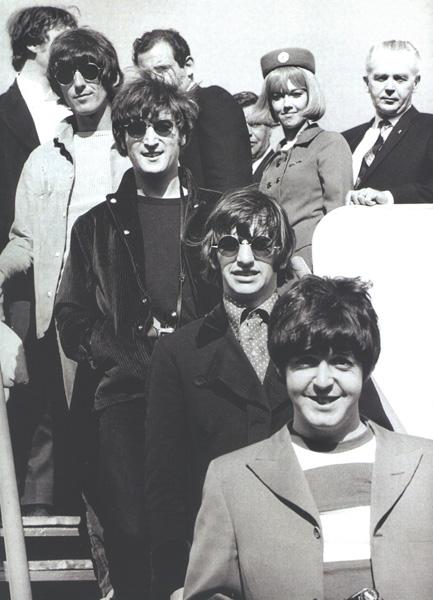
The Beatles: Revolver


Forty five years ago (August 5, 1966) today, the Beatles released the album Revolver. It was their sixth studio album, eagerly awaited by millions of fans, and topped, inevitably, the album charts in both the UK and the USA.

There is a convention in rock history to regard the musical history of the Beatles as falling into two periods; the first from 1962 to 1966, from their first album, Please Please Me to Revolver; and the second from Sgt. Pepper to the break-up of the group in 1970. This division has much to do with the release of the two compilation double albums in 1973; 1962-1966 (The “Red” Album) and 1967-1970 (The "Blue" Album). For my generation, those who were children in the sixties and only really registered the Fab Four in their last years, or after their break-up, these were frequently among the first albums we bought – a chance to get the best of the greatest rock group ever and to spend long teenage afternoons listening to the songs again and again, mourning over the group’s breakup, apportioning blame for the same (with Yoko usually occupying the role of prime villainess) and speculating about the chances of a reunion.

The convention is strengthened by the accepted wisdom which acclaims Sgt Pepper as the greatest Beatles album, with everything before leading up to it and everything following as part of the long disintegration period leading to the ultimate break-up of the group. And there is certainly some validity in this view. Sgt Pepper is a magnificent album and encapsulates the Zeitgeist of the Summer of Love better than anything else which happened in 1967. 1966 saw the Beatles do their last live tour and their guiding mentor and manager, Brian Epstein (the “fifth Beatle”), died in August 1967. Looking back, John Lennon saw this event as the beginning of the end of the group, "I knew that we were in trouble then. ... I thought, we've fuckin' had it now."

But in August 1966, when Revolver was released, this was all still in the future and – despite all the growing pressure the group was under, particularly through touring – they were at their creative best. Lennon and McCartney were expanding in their musical maturity and sophistication, still working easily together, each taking the other’s ideas and mutually adding touches of refinement and genius, interacting instinctively with their producer, George Martin. The rivalry, which was always part of their relationship, had not yet reached the stage where it had started to poison things between them. Harrison was growing into his self-confidence as a musician and composer in his own right and Ringo was … well, Ringo was happy.

With all this in mind, I would like to suggest a different model for viewing the work and history of the Beatles between 1962 and 1970 (leaving aside the earlier Quarrymen and Hamburg period), divided into three periods; the Boy Group period, from Love Me Do to the film and album Help!, their harmonic peak of creativity and genius, where everything came together, Rubber Soul, Revolver and Sgt Pepper, and the long period of increasing rancour and break-up from 1968 to 1970[*].

Against this background, then, Revolver becomes part of a triptych of albums. Following this artistic image, I would see Sgt Pepper as the central part of the picture with Rubber Soul (characterised by folk-rock influences) and Revolver (a stronger emphasis on electric-rock) forming the two framing elements.

However you want to see Revolver in the overall context of the musical history of the Beatles, you cannot deny that it is a wonderful album which stands the test of forty five years very well. From the opening sarcastic Taxman to the psychedelic final Tomorrow Never Knows it is a creative tour de force, which becomes even more evident when compared with an album like A Hard Day’s Night, released only two years earlier. This is not to knock AHDN, which is a fine pop album with many very good songs – nevertheless, the albums are musically light-years apart and the contrast shows just how much the group has grown in this period.

The Beatles were controversial in the latter half of the sixties because of their drug use – Lucy in the Sky with Diamonds often being given as an example of a description of an LSD trip. While I have never really accepted the rather disingenuous denials of various members of the group regarding this, publicly they have been much more open about the effects of drugs on the creation of the songs on Revolver. Doctor Robert is about a fantasy doctor who cures his patients with drugs, McCartney has described Got To Get You Into My Life as “actually an ode to pot”, and confirms that Tomorrow Never Knows is about LSD trip. Shortly before his death, Lennon told how She Said She Said originated

“That was written after an acid trip in L.A. during a break in the Beatles tour where we were having fun with the Byrds and lots of girls. Peter Fonda came in when we were on acid and he kept coming up to me and sitting next to me and whispering, 'I know what it's like to be dead.' He was describing an acid trip he'd been on. We didn't 'want' to hear about that. We were on an acid trip and the sun was shining and the girls were dancing, and the whole thing was beautiful and Sixties, and this guy-- who I really didn't know-- he hadn't made 'Easy Rider' or anything... kept coming over, wearing shades, saying, 'I know what it's like to be dead,' and we kept leaving him because he was so boring! And I used it for the song, but I changed it to 'she' instead of 'he.' It was scary... I don't want to know what it's like to be dead!”

I would like to say that I remember the release of Revolver as a significant event but I was only six years old and Bonanza, F Troop and, above all, Batman, were much more important to me at the time. But Revolver even had something for kids too and, certainly not later than 1967, if my memory serves me correctly, I remember singing Yellow Submarine with my friends. I certainly didn’t know it was from the album Revolver, I may not even have known it was by the Beatles, but one thing I did know … it was a cool song!


[*] In terms of albums, I would see the first clear signs of a lack of coherence as a group in The White Album. For Beatles purist fans, Magical Mystery Tour then becomes a possible subject of controversy as to which period it should be categorised under. Personally, I’ve always been inclined to see MMT as a sort of seamless continuation of Sgt Pepper – a coda, if you will, still following and utilising the wave of creativity which that album generated.


Pictures retrieved from:


Tuesday, 24 May 2011

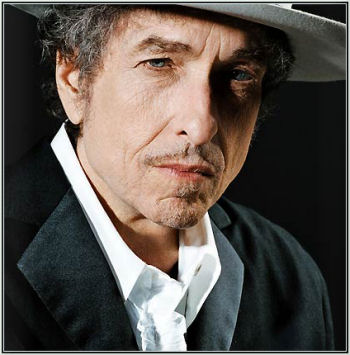
Dylan on my Mind ...


When a blog gets old enough, things that you wrote ages ago sometimes start to force their way back into your consciousness again. There’s a small voice in the back of my head whispering that reposting is a kind of cheating but there are times when it does seem to be the appropriate thing to do.

Like today, for instance. It’s Bob Dylan’s 70th birthday. A year ago, back when Attempted Essays was still very young and still had very few readers, I wrote a little piece to congratulate him on his 69th. So today being the day that’s in it, I’ve decided to put up a link to it. Once more …


And, while I’m at it, here’s a link to another little piece I wrote about him, a bit more recently:


Obviously, this dude seems to have had quite an influence on me … J

Picture retrieved from:

Wednesday, 13 April 2011

Handel’s Messiah

Two hundred and sixty nine years ago today, on April 13, 1742, the cultural event of the year took place in Mr. Neal’s new Music Hall in Fishamble Street in Dublin. The interest was so great that a newspaper announcement requested “as a Favour, that the Ladies … would be pleased to come without Hoops” and that “The Gentlemen are requested to come without their swords.” As a result, a hall which could normally seat 600 visitors was able to accommodate 700, and around 400 pounds sterling was raised to allow 142 inmates to be released from Dublin’s Debtor Prison. The event in question was described in Faulkner’s Dublin Journal in a review a few days later as “… the most finished piece of Musick … The Sublime, the Grand, and the Tender, adapted to the most elegant, majestick and moving Words, conspired to transport and charm the ravaged Heart and Ear.” It was, of course, the premiere performance of Messiah by George Frederic Handel.

Handel was born in Halle (Saale) in present day Saxony-Anhalt in 1685 and became one of the most admired and celebrated composers in his lifetime throughout the whole of Europe. As a young man he quickly made a name for himself as a talented opera composer in Hamburg and moved from there to Italy where he spent five years. Handel’s story is an excellent example of the cosmopolitan and tolerant nature of the European elite in the eighteenth century. Although he was a German protestant, the cardinals in Rome had no problem patronising and commissioning works from him, and he himself was apparently quite happy to compose sacred music for the clergy in Rome.

In 1710 he returned to Germany to take up the position of Kapellmeister to the German prince George, elector of Hanover. However, he quickly moved on to London to enjoy the patronage of Queen Anne and various members of the British aristocracy. There is an oft-repeated legend that Handel left his job in Hanover without leave of the Elector because the offers he had in London were better. He found himself, therefore, in a position of some embarrassment when the Elector George became King of England in 1714. Handel set down to write something of such beauty that it would win him the king’s forgiveness. At an evening entertainment on the Thames, the new regent was so enamoured by the music played that he asked for the composer and when Handel appeared the two were reconciled. The music in question was the Water Music. While it is a nice story, it doesn’t seem to have any basis in fact; when Handel went to England, it was clear that the Elector would succeed Queen Anne to the throne and the composer seems to have left with his blessing.

With a number of short interruptions, Handel spent the rest of his life in England, though he never learned the language perfectly and always spoke it with a thick German accent. Charles Burney, a young chorister who observed a number of rehearsals for Messiah in Chester in 1741 describes a scene where Handel lost his temper at a singer who claimed to be able to read music at sight but did not come up to the composer’s standards. “You shcauntrel! Tit not you dell me dat you could at soite?”

When they are inspired, great composers seem to be able to work at prodigious speed and Messiah, a full performance of which lasts nearly two and a half hours, was written in twenty four days. Although he composed great amounts of sacred music, Handel himself was not regarded as being personally particularly devout – he was, in that sense, very much an urbane, educated man of his time, part of a culture which regarded itself as civilized, enlightened and abhorring any kind of wild, naïve enthusiasm. Still, there is a story told that his assistant came into his room to find the master in tears. Asked if anything was wrong, the composer answered, “I thought I saw the face of God.” He had just finished composing the “Hallelujah” chorus.

The “Hallelujah” chorus. I knew I would have to come to it sooner or later. While it is undoubtedly majestic, it has become such an acoustic cliché (surpassed perhaps only by the opening bars of Beethoven’s 5th) that it is often very difficult to take it seriously today. For those who only know the Messiah from Christmas sing-along events, where only the first part of the work is sung, the chorus is used as a conclusion, but in the full version of Messiah it occurs half way through the work. There is an old tradition, dating back to the first performance in London, that the audience rises to its feet for the “Hallelujah.” This is because King George II did so, though whether it was out of tribute to the composer, as an acknowledgement from an earthly king that he too must stand before the “King of Kings and Lord of Lords,” or simply because he wanted to stretch his legs is not known. Apparently nobody trusted themselves to ask him why.

One thing I think anyone who has ever been lucky enough to be part of a choral group singing Messiah will agree, the “Hallelujah” chorus is simply great fun to sing – you can really let it rip, all the stops pulled out, especially if you have an orchestra accompanying!

A Georgian street in Dublin, built around the time of the
Messiah premiere 
I have mentioned the prevailing cultural ethos of the 18th Century already here, that urbane world of sophisticated, (frequently self-satisfied and superior), civilized rationality. This is reflected in the form and composition of the Messiah. Although its subject is nothing less than Jesus Christ himself, the amount of the oratorio devoted to the central events surrounding the suffering and death of the Messiah is relatively small; following an extensive first part, involving the prophesies of Jesus’ birth and the nativity story, the passion story is told in only nine arias and choruses and accompagnatos, lasting less than half an hour, before going on to the resurrection, the last judgement and the grandeur and majesty of the Saviour. This fits perfectly with the cultured gentility so strived for in Handel’s time – the nasty, the bloody and the brutal are given as little attention as possible before leaving the unpleasantness behind and moving on to triumphalist beauty. In that sense, many of the cultural themes of the eighteenth century can be seen as a reaction to the horrors of fanaticism and religious warfare which had gutted Europe from the Reformation to the end of the Thirty Years War and beyond. With the societal and ideological explosions initiated by the American and French Revolutions and the subsequent birth of Romanticism, this world of conservative, civilized rationality would be swept away.

Messiah is a wonderful example of what such a culture could achieve; genius expressed in ordered beauty. The music of Bach, Handel and Vivaldi is usually described as “Baroque,” though in my view it has little to do with what is known in, for example, art or architecture by the term. It can be ornate, with many flourishes, as the architecture is, but for me its basic characteristic is that of an ordered stateliness; a clear recognition that both reality and beauty are the working out of natural law – a musical expression of the vision of Newton rather than Bernini’s St. Theresa in Ecstasy.

Messiah is full of sublimely beautiful arias and choruses. The best known of them occur in the first part of the oratorio which is the part, as I mentioned earlier, most commonly performed. But the later parts of the work also contain many gems, including the beautiful “I know that my Redeemer liveth” and the marvellous “The Trumpet shall sound,” which, appropriately, involves a repeating trumpet solo part, magnificent in its understated sweetness.

Usually a couple of times a year, but at least once during Advent (as tradition demands J), I treat myself to a quiet evening at home and listen to the whole of Messiah. The recording I have was made in 1966 by the London Symphony Orchestra and Choir under the direction of Sir Colin Davis, which Wikipedia describes “as revelatory at the time of its issue for its departure from the large-scale Victorian-style performances that had been customary before then.” As such, it more accurately reflects the performances Handel himself would have conducted. Though, to be honest, when I bought it I was not aware that I was purchasing something regarded as a recording classic.

It was February 1999, and I had just been released from hospital after quite a long stay there following a pretty comprehensive nervous breakdown. It was a very dark period of my life, but that day I had a sense of some sort of new beginning. On a cold, rainy evening, I found my way into a large record shop in the town in which I then lived, driven by an instinct that I should buy something to mark that feeling of starting life once more. I came out with my two CD box set of Messiah. Though in retrospect I can now see that it would take almost two years more to really get my life back on the rails (when I finally stopped drinking for good), every time I take those CDs in my hands to put them in the player I still get a hint of the sense of lightness I felt on the evening I bought them and am once more thankful. For life. And for Handel.

There are, of course, numerous versions of all sorts of different parts of Messiah available on YouTube. I have chosen the aria and chorus, “O thou that tellest good tidings to Zion,” one of my personal favourites. I have a childhood memory of my mother, who is a trained classical mezzo-soprano (and who, at an age I won’t embarrass her here by mentioning, still has singing students coming to learn with her!), singing this at the piano at home.
This is a lovely version from a very fine – if somewhat unconventional – performance at the Theater an der Wien in Vienna two years ago. The choir is the Arnold Schönberg Chor and the orchestra the Ensemble Mattheus. The director is Jean-Christophe Spinosi and the countertenor soloist is Bejun Mehta. Describing the unusual production, one comment of YouTube observes, “The staging profoundly communicates the reality of the human condition and redemption - what “Messiah” is all about: easy to miss, I should say, when we're caught up in the usual concert versions.”


A note on orthography: In his native German, the name is written Georg-Friedrich Händel and the pronunciation is Hend-el. But from the time he came to England, his name was commonly written without the “Umlaut” [the two dots over the “a”] and the pronunciation changed accordingly. In this piece I have followed the traditional English convention.

Pictures retrieved from:

Wednesday, 30 March 2011

The Freewheelin' Minstrel

Once upon a time, in a land where sadness and tedium reigned, there was a young man who wanted more than anything else to become a minstrel. From the first moment when he had heard a minstrel singing in the small, dull town where he grew up, he was entranced by the beauty of the music and the power it had to work magic in the souls of some of those who heard it – above all in his own soul. From that day onwards he showed little interest in the business of the small shop his father had, nor in the games of his comrades; instead he could be found singing to himself, or playing the guitar or harmonica.

People paid him little notice. His singing voice was not sweet and his control of the instruments he tried to play was clumsy. But this had little effect on him; he continued to find life in the town where he lived dreary and meaningless and spent much of his time seeking out the few minstrels who could be found in the area, listening to and learning the songs they sang and asking them many questions.

One day one of the old minstrels took pity on him, or perhaps he saw something the others did not see, or perhaps he was even touched by some of the magic which will soon become part of this story, as you will shortly hear.

“You must search for the great old bard, Woody,” said the minstrel. “For he is the author of many of the greatest songs we sing and he can teach you more than any of us ever could.”

So the young man strapped his guitar on his back and taking the few coins he had in his possession, set off to find the bard, Woody, as the old minstrel had suggested. After some searching, on a day in the middle of winter, he found him in a small town near the greatest city in the land. But Woody was old, and ill with the shaking sickness and could teach him nothing. Instead the bard asked the young man to play for him and after he had hesitantly played a few of the songs he had learned, put his hand on his head and blessed him.

The young man left the house where he had found Woody and went out into the winter night. Downcast and desolate, he walked through the snow and wondered how he could become a great minstrel, now that Woody was too ill to teach him anything. Then a light suddenly shone around him and he stopped in wonderment. Though he could see nothing in the light a deep, melodic voice spoke.

“So you want to be a minstrel?”

“Who are you?” asked the young man.

“I am the angel Tambour Ine,” replied the voice, “and I find myself in need of your services.”

“And what’s in it for me?”

“I will make you into the greatest minstrel in the land,” replied the voice. “You will sing the messages I will send you throughout the land, the songs of justice. You will be a bell of freedom for the young and some of those no longer young. But you must promise to serve me and give voice to my tidings, to work faithfully for me and be my avatar for change, for the land is thirsting for change.”

“Now hang on just a minute,” said the young man. “I’ve been around minstrels for a while and have heard the songs of Johnny and his fiddle and his deal with the devil …”

Tambour Ine laughed and said, “Fear not. I am a hard master but I am not the devil. You will have to make sacrifices but I will leave you your soul. Go now to the great city, to the quarter where the minstrels dwell. And I will guide your heart, and your thoughts, and your voice. I will send songs to you which you shall sing throughout the land. And we shall see what we shall see …”

The young man agreed to the bargain and, as a token of the compact they had made, the angel gave him a new name – though it was an old name, a name taken from a great poet. And the young minstrel went to the quarter of the great city where the musicians and the poets dwelled. He listened to all the music and the poetry there and he learned a great deal. And, true to his word, the angel sent him songs; songs about changing times and hard rain, and justice and injustice, and love and freedom. He started to sing these songs and the people listened to them and found them good. Nobody worried that his voice still croaked and whined for they could hear the truth and beauty of the message of the angel in all that he sang.

Among the minstrels was a princess, whose passion was justice and freedom. She had dark eyes and dark hair and a voice that was pure as a bell and clear as a mountain stream. And she heard the songs too and loved the minstrel for them. She sang his songs with him as they travelled the land and thousands came to hear them and to sing along with his anthem about the wind. The minstrel rejoiced, even writing a song of praise to Tambour Ine which, the people said in wonderment, even the birds sang.

But although the people called him “the voice of a generation” and gave him awards and money and honours, the minstrel started to feel discontented. His songs were inspiring people to fight for change and to express their freedom but more and more expected him to lead them, to immerse himself in their causes and struggles. Hearing the songs the angel had sent him, he started to feel that they thought him to be the angel himself. “It ain’t me,” he sang, “It ain’t me you’re looking for.” But they did not seem to hear him. He began to realise the price of the bargain he had made.

The talent the angel had awakened in him was growing on its own now, giving birth to new songs and ways of singing them which had less to do with the message of the angel the people had been waiting to hear. Defiantly, he wrote these new songs and sang them with some other minstrels who made other kinds of music. But the multitudes who came to hear the expected message were confused, because this was not what they wanted to hear.

“How does it feel?” he cried at them. “Tell me, how does it feel to be on your own with no direction home?” But they did not like the way he was singing now, did not hear the message of the angel in the new, throbbing, harder beat he was using. Even the princess fought with him, for she wanted him to carry on struggling with her, to commit his energy and talent and passion to the causes so close to her heart. But he would not join her. "It ain't no use to sit and wonder why, babe. Don't think twice, it's all right," he told her and went on his way.

Still he kept singing, for it was all he could do. Until, back in the place he had chosen for his home after a long period on the road, feeling worn out and driven beyond his strength, he called out one summer’s evening to Tambour Ine. And the angel came.

“I want out,” he said. “They all expect too much of me and it ain’t me. Well, I try my best to be just like I am but everybody wants you to be just like them. They sing while you slave and I just get bored. I ain’t gonna work on your farm no more.”

There was a pause. The angel sighed and then said, “Very well. I suppose you’ve done enough. The old moulds are broken and there’s freedom and creativity bubbling up everywhere now. I don’t really need you any more.

“There will be a price, though. There’s always a price. You will no longer be their hero.”

“I don’t care about that. It’s not all it’s cracked up to be anyway. I could use some time for myself. To be on my own. Like a complete unknown. Like a rollin’ stone.”

“Ok,” mused the angel. “Let’s see about the best way to do this. It’s going to hurt a bit …”

The jingle-jangle sound of the crash still ringing in his ears, Dylan picked himself up from the street, his back on fire, cast a glance at the wrecked motorbike and limped off down the road, his boot heels throwing up small puffs of dust into the upstate New York summer evening.

- It's all right, man, I'm only bleedin', he thought. Not such a bad deal after all,


Oh God said to Abraham, "Kill me a son"
Abe says, "Man, you must be puttin' me on"
God say, "No." Abe say, "What?"
God say, "You can do what you want Abe, but
The next time you see me comin' you better run"
Well Abe says, "Where do you want this killin' done?"
God says, "Out on Highway 61."
(Bob Dylan, Highway 61 Revisited)

* * * * *


Following a motorcycle accident near his home Woodstock, New York, on July 29, 1966, Bob Dylan didn’t tour again for eight years. If anyone is interested in more comprehensive background to this tale, I cannot recommend Martin Scorsese’s wonderful musical documentary film, No Direction Home, highly enough.

Dylan's music is locked up pretty tight by Sony/BMG, which means I can't access most of it from YouTube in Germany. But they didn't manage to block this 1985 live performance of "Maggie's Farm"!


Picture retrieved from:

Monday, 3 January 2011

Songwriters and Poets

Every time I tried to tell you,
The words just came out wrong.
So I had to say I love you
In a song
Jim Croce                              

Those involved in creatively making pop and rock music can be divided into a number of categories. There are the classical bands, whose members (or some of them at least) generally write their own songs, record and perform them – bands like the Beatles, the Stones, Pink Floyd, REM, U2, Coldplay, etc. There are bands, often put together for commercial purposes, who don’t produce original material and often don’t have much to do with playing it either, a lot of boy and girl groups for example, like New Kids on the Block or The Spice Girls. There are also many solo artists who fall more or less into this category, like Brittney Spears or Justin Timberlake. These need the support of professional songwriters, session musicians and – above all – producers. Producers can indeed be seen as an almost separate category and some of them are of legendary genius; like Phil Spector, George Martin, Brian Eno, Alan Parsons or Quincy Jones.

Alanis Morissette
And then there are the singer-songwriters, in many ways a crossover group into modern music from a much more ancient tradition, the bards and the minstrels. The Germans have a lovely term for them; Liedermacher, songmakers. They are the original man or woman with a guitar (or often a piano – though pianos have the disadvantage of not being particularly portable), the successors of the men with a lute or harp. There’s something pure and honest about them, their whole art being predicated on their original individual ability to create a song and personally reach out to enthral and delight others with their performance of it. Firmly rooted as they are today (well, most of them anyway) within popular music, they form an unbroken tradition going back to Orpheus and Oisín, Homer and David. And what a roll of honour they present to us in the past fifty years!; Billy Joel and Sheryl Crow, John Denver and Joan Armatrading, Donovan and Melissa Etheridge, Don McLean and Kate Bush, Gilbert O’Sullivan and Enya and Elton John. A disproportionate number of the very best are, for some reason, Canadian (and I would be very grateful if anyone could offer a good explanation for this phenomenon); Avril Lavigne, Gordon Lightfoot, Bryan Adams, k.d. lang, Neil Young, Alanis Morissette.

Ah, but you are certainly thinking, he has left most of the very greatest out! This is because, in my opinion, there is only a small group of true royalty among the musical aristocracy of singer-songwriters who can also be truly regarded as poets.

Spontaneously one might tend to regard every songwriter as a poet, yet good poetry and songs do not necessarily go easily together. Of course, at a very basic level, the lyrics of every song are a kind of poetry, dependent as they generally are on very strict adherence to rhythm and, usually, rhyme. But the poetic possibilities of songs are limited by the very form of the song itself and the poetry becomes just one element among many in the synergy of factors which makes a song “work.” This is even more the case in modern pop or rock where the character of the performers, the interplay of the instruments and all the digital possibilities of the sound-studio come into play – not to mention issues like video or the theatrical planning and execution of live shows. And sometimes, working too hard on the poetic possibilities of a text is just pretentious and silly. Consider

Sweet Loretta modern thought she was a woman,
But she was another man.
All the girls around her say she’s got it comin’
But she gets it while she can.
Get back, get back, get back to where you once belonged;
Get back, get back, get back to where you started from.”

It’s stupid, pretty devoid of any deeper sense and certainly not the most poetic of Lennon and McCartney’s efforts. But it’s not important because, in the whole musical context of the song, it does its job. (As an aside, Lennon – the better poet of the two – jokingly suggested the alternative, “Sweet Loretta modern thought she was a woman, but she was a frying pan.”)

But the greatest of the singer-songwriters are possessed of the genius to be able to marry good poetry with arresting images and language, metaphors and expressions which pull you up, leave you amazed, wondering, awestruck, wanting to weep, with the music so that the whole becomes something very special indeed.

Looking at a few of these true creative giants, I suppose you have to start with Dylan. The only problem with His Bobness is that some may regard it as a little charitable to describe him as a singer-songwriter, since his singing prowess is … limited (I’ve written on this before here). But as to his poetic qualities – when he is at his best – there can be no doubt. Out of dozens of songs which I could take to illustrate that, let’s just revel in one verse of Mr. Tambourine Man – though if you really want a good jingle jangle version of the song, listen to the cover by The Byrds

Take me on a trip upon your magic swirlin' ship
My senses have been stripped, my hands can't feel to grip
My toes too numb to step, wait only for my boot heels
To be wanderin'
I'm ready to go anywhere, I'm ready for to fade
Into my own parade, cast your dancing spell my way
I promise to go under it.

Hey ! Mr Tambourine Man, play a song for me
I'm not sleepy and there is no place I'm going to
Hey ! Mr Tambourine Man, play a song for me
In the jingle jangle morning I'll come followin' you.

The next musical poet I want to take a glance at is Paul Simon. Simon has a beautiful sense for language and themes and a genius for mixing them with an unerring sense of melody and subtle and refined musical arrangements. One could take half a dozen examples from his time with Art Garfunkel – I am a Rock immediately comes to mind – but the opening line of his solo hit Graceland stands alone as sufficient witness to great poetic skill

The Mississippi Delta was shining like a national guitar …

These nine words have so many resonances they just leave you dizzy.

Suzanne Vega
Although she’s not as famous as the others I’m looking at here, Suzanne Vega is one of my favourites. She too is a poet-singer-songwriter with a great feeling for themes and the language and music to give them deep expression. Luka is a heart-wrenching treatment of the theme of child-battering and the wonderful voyeur image of the woman hitching up her skirt to straighten her stockings in Tom’s Diner gives the picture-poem a realistic immediacy which is unsurpassed. As a small example of her poetic prowess I’ve chosen an extract from one of her less well-known songs, playing with an arresting image which leaves you savouring it for a long time afterwards

Today I am
A small blue thing
Like a marble
Or an eye

With my knees against my mouth
I am perfectly round
I am watching you

I am cold against your skin
You are perfectly reflected
I am lost inside your pocket
I am lost against
Your fingers

But at the summit of this musical Olympus, playing the roles of Hera and Zeus are – inevitably perhaps – two more Canadians, Joni Mitchell and Leonard Cohen.

Joni’s music is exciting, challenging and, for someone who sings and plays a modest bit of guitar himself, often quite difficult to cover. This is because, like every singer-songwriter, Mitchell writes primarily for herself and her own voice and style and her music, with various influences, is multi-layered. She is also renowned for using numerous strange open tunings on her guitar, a phenomenon she herself calls “Joni’s weird chords.” But she has also written beautiful more accessible songs and Both Sides, Now belongs for me to that select number of songs the singing of which have helped me win a way to a girl’s heart. The example I’ve chosen here is an excerpt from Chelsea Morning, a sensuous celebration of spontaneous unworried love

Woke up, it was a Chelsea morning, and
the first thing that I knew
There was milk and toast and honey
and a bowl of oranges, too
And the sun poured in like butterscotch
and stuck to all my senses
Oh, won't you stay
We'll put on the day
And we'll talk in present tenses

When the curtain closes and the rainbow runs away
I will bring you incense owls by night
By candlelight
By jewel-light
If only you will stay
Pretty baby, won't you
Wake up, it's a Chelsea morning

And the greatest of them all, at least for me, is Leonard Cohen. He’s been back on the road for the past couple of years and his concerts are reported to be something very special. Cohen has always been a poet and writer, as well as a songwriter and performer. It’s over thirty years since I came across his novel Beautiful Losers in a second-hand bookshop and I remember being deeply impressed at the beauty of his literary style. But even before that I had been deeply impressed by his music.

Leonard Cohen
I started teaching myself guitar at the age of sixteen and some of Cohen’s songs were among the earliest I attempted. They were good, not too difficult to play – rudimentarily at least – and offered the additional hopeful prospect (never far from the male 16-year-old mind) of helping win the way to girls’ hearts – and other interesting parts of their anatomies. What I did not know then – how could I? – is that while it’s quite easy to play and sing Cohen, it is another matter to play and sing Cohen well, not because the songs are so musically difficult in themselves (they aren’t) but because the depth and beauty of his songs demand respect, practice, hard work and a certain degree of self-knowledge and honesty to begin to interpret them adequately. You’ve had to have some experience of love, and women, and the world before you can even begin to understand what songs like So long, Marianne, Hey, that’s no Way to say Goodbye, or Suzanne are really about.

Some can write and sing beautifully and frankly about sex (arguably Cohen’s most famous musical description is that of his affair with Janis Joplin in Chelsea Hotel: “You were talking so brave and so sweet, giving me head on the unmade bed, while the limousines wait in the street.”) Some can write beautifully and frankly about God. Only Cohen can do both in three short lines (maybe you have to be Jewish to be able to do this!)

And remember when I moved in you
The holy dove was moving too
And every breath we drew was Hallelujah

Hallelujah is an amazing song, written by Cohen in the 80s, long after he had composed most of his other classics, and at the foot of this post I’m putting a sublime live cover of it by k.d. lang. I have one friend who never tires of quoting

There's a blaze of light
In every word
It doesn't matter which you heard
The holy or the broken Hallelujah

And there’s depth enough of meaning in that to meditate on for quite a while.

But I’ll finish this with the last verse of Suzanne, another marvellous word-picture in a song-poem full of beautiful images. They don’t get better than this

Now Suzanne takes your hand
And she leads you to the river
She is wearing rags and feathers
From Salvation Army counters
And the sun pours down like honey
On our lady of the harbour
And she shows you where to look
Among the garbage and the flowers
There are heroes in the seaweed
There are children in the morning
They are leaning out for love
And they will lean that way forever
While Suzanne holds the mirror
And you want to travel with her
And you want to travel blind
And you know that you can trust her
For she's touched your perfect body with her mind.


If you really want to pig-out on music, there’s a song behind every link - though because Sony won't let me access stuff they have title to in Germany, I wasn't always able to get the YouTube version I wanted -  (just click on the words in purple, but do it with a right-mouse click and open a new tab, otherwise you’ll have to keep reloading here). If you don’t have the time or inclination for that, do take the time at least for k.d.’s Halleluja. Believe me, it’s worth it.

Monday, 24 May 2010

Happy Birthday, Bob!

Don’t think twice, it’s all right …

I just heard on the radio that Robert Allen Zimmerman is 69 years old today and was hit with one of those uncomfortable reminders of entropy and mortality which, I have started to realise, become more frequent the older you get. Dylan an old man? Aw come on!

But the planet inevitably rolls on around the sun and cutting actuality fades into the warm glow of fuzzy do-you-remember nostalgia. Checking up, I’ve discovered that 47 years ago this week, Dylan’s seminal second album, The Freewheelin’ Bob Dylan was released; containing such songs as “A Hard Rain’s a-Gonna Fall,” “Don’t Think Twice, It’s All Right,” and, of course, “Blowin’ in the Wind.” The voice and the anthem of a generation had arrived and the themes and issues of the sixties were musically defined.

Dylan’s importance for cultural history in the past half century cannot be overestimated. He articulated the growing voice of the “baby-boomers,” that new generation for whom the Second World War was no longer the defining experience for life and attitudes, a conscious, provocative rejection the patriotic, petit-bourgeois, war-shocked values of their parents.

Come mothers and fathers
Throughout the land
And don’t criticize
What you can’t understand
Your sons and your daughters
Are beyond your command
Your old road is rapidly agin’
Please get out of the new one if you can’t lend your hand
For the times they are a-changin’
(The Times, They Are A-Changin’, 1963/64)

More than just his songs (although they remain central), Robert Zimmerman’s whole history encapsulated many of the defining themes of his generation. Spending his teenage years in small-town middle-America, he initially discovered black music as a liberation from the perceived narrowness of his own life, went on to discover folk-music, above all in his hero Woodie Guthrie, as a source of inspiration, reinvented himself, changing his name in homage to Dylan Thomas, and went off to the big city to make his fortune.

Hustling for a musical living in Greenwich Village, Dylan soaked up all kinds of influences like a sponge, unconcernedly plagiarising when it suited him (With God on our Side is an obvious reworking of Dominic Behan’s Patriot Game and even Blowing in the Wind owes more than a little to the Negro Spiritual No more Auction Block). But one of Dylan’s great strengths was his determination not to let himself be pigeonholed into a category, ironically, perhaps, following another sixties admonition by “doing his own thing.” Feeling increasingly hemmed in by his iconic folk status, he alienated many of his purist folk fans, and won millions of new ones when, at the Newport Folk Festival in 1965 he performed an electric set, including Like a Rolling Stone (listed by Rolling Stone magazine in 2004 as number one in the 500 greatest songs of all time). There are many stories about that legendary performance, some of the best – including the one about Pete Seeger threatening to cut the sound cables with an axe – being apocryphal, or at least having more to do with lousy sound quality than with the switch to rock and roll, but the core of the protest had to do with Dylan refusing to do – to be – what was expected of him. For anyone who wants to really understand (or remember) Dylan’s early life and career, I recommend Martin Scorsese’s marvellous film documentary No Direction Home (2005).

There’s much too much to Dylan and his music to deal with most of it here. As someone who occasionally picks up a guitar and sings, I’ve always had reasons to be thankful to him. Covering a Dylan song is great (even if you often have to mercilessly cut out verses because many of his songs are just too long to perform unless your audience is really with you all the way), because you don’t have to be a particularly good singer to sound better than Bob. You can love him as much as you like (and I do) but you can’t argue that he’s an immensely talented vocalist. Maybe that’s one of the reasons why so many of his songs were most popular through their covers by other artists; the Byrds, Peter, Paul and Mary, Manfred Mann or Brian Ferry, to mention just a few. And, of course, there’s his muse for many years during the sixties, Joan Baez, whose sublime, crystal clear voice singing his songs can still make my hair stand on end. Indeed, in this context, I have to mention one of her very few self-authored songs, Diamonds and Rust (1975), where she powerfully reviews her relationship with him.

So, happy birthday, Bob. The best wish I can give you today is one from one of your own songs,

“May your heart always be joyful,
May your song always be sung,
And may you stay
Forever young.”

I wanted to put a Youtube link to the legendary "Subterranean Homesick Blues" here, but *@"%#$! Sony/BMG won't let me post anything decent by Dylan from here in Germany. Here's Joan instead :-)

LinkWithin

Related Posts Plugin for WordPress, Blogger...