Ideas, philosophy, politics, current events and happenings, music, literature, art and simple incidents out of my everyday life; Reflections and observations which, I hope, might just get you thinking ...
If there is
one issue more than any other which has been exercising the public
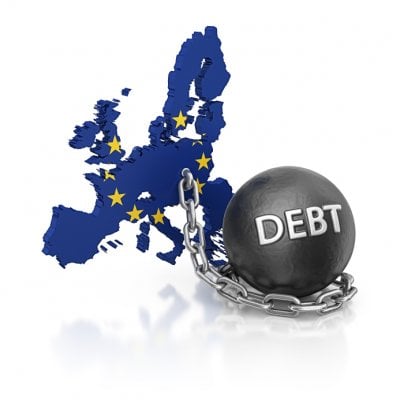
consciousness for the past four years, it has to be the question of debt.
From the
bursting of the US property bubble, the collapse of Lehman Brothers, and the
systemic threat of a global banking failure in 2008, through the first measures
taken by many governments, individually and collectively, to try to head of
that danger, to the current, deep-seated crisis in the Euro-zone, the theme of
debt – public and private – has dominated world thinking, doings and commenting
constantly, obsessively.
With
serious consequences for millions; whether dispossessed hopeless home-owners in
the USA, pensioners in Greece, or the more than half of the Spanish population
between 18 and 30 who are currently unemployed. The “markets” are uneasy and, apparently, when “markets” are uneasy, the
little people worldwide suffer.
I am
reminded of nothing so much as the stereotypes of fearful, primitive,
superstitious civilisations in bad adventure novels, where the natives,
threatened with the outbreak of catastrophe, are convinced that they have
become victims of the anger of the gods. Indeed, the analogy can be developed
farther, for the general reaction of the natives in such pot-boilers is to offer
ever more and ever more costly sacrifices to these angry gods, to try to
propitiate them, before finally reaching the inevitable ghastly conclusion that
nothing less than the sacrifice of their own children will serve to (possibly)
appease the divine anger.
Substitute markets for gods in the previous paragraph and you get a description of the
world of 2012.
In the past
couple of months, I have intended many times to write something about this
theme here. The reason I have not, up to now, is that I have a deep suspicion
that most of the discussions being carried out on the subject are based on
misrepresentations, subterfuges, and downright cynical lies. I am prepared to
accept that many of those involved are sincere and genuinely believe the
arguments they are making – but I am becoming more and more certain that most
of those who really matter know that much of what they are saying is no more
than platitudinous window-dressing and that they well recognise, at a deeper
level, what it is really about … the retention, protection, and even expansion
of power and wealth in the hands of those who have it, whatever the cost to
those who do not have it.
Writing
over 2,400 years ago, the famous Greek historian, Thucydides, records how the
more powerful Athenians expressed their view of the world to the weaker Melians on demanding their surrender, “the
strong do what they can and the weak suffer what they must.” Since then, despite
all kinds of declarations of rights and facades of agreements and legality, very
little has changed.
There is a
conventional view of the current ongoing global crisis and, on the basis of
this view, it’s fairly easy to describe what’s going on. For various reasons –
to which nobody pays much attention now – speculative trading of finance
products got out of control. The result was a bubble which burst, the crash of
a few financial institutions and the threat of a crash in the whole banking
sector in 2008. To avert this, most sovereign states intervened, providing
billions of tax-payers’ money to prop up the banks and keep the whole system
going (or at least limping). The new atmosphere of sobriety and financial
rectitude focussed increased attention on the deficits and borrowing debts of
those sovereign states – deficits which had had to be drastically increased to
provide the money to prevent the banks from failing. The “markets” became
increasingly nervous about the dependability of those sovereign debts, with the
result that costs of servicing such debt rose steeply for a number of countries,
thus putting ever more pressure on their “real” economies, which weakened their
position even further in the eyes of the markets. A vicious circle.
This
problem became particularly acute in Europe,
where a large number of countries within the EU had adopted a common currency,
the Euro, over a decade ago. The euro had brought considerable prosperity for its
members – particularly those with strong export-based economies – by significantly
simplifying trade, both between its members and with the wider world. But it
also created a one-size-fits-all monetary situation for the member countries
and the pressures caused by the financial crisis exacerbated hidden fault-lines
enormously. Countries like Greece
and Ireland could
conceivably have eased their situation somewhat by currency devaluation, but
such devaluation was not in the interest of other countries such as Finland, Luxemburg,
Austria and, above all, Germany. Ireland,
for example, could have let some of its banks fail and default, but, as these
debts were practically all held in Wall Street, the City of London and
Frankfurt thus potentially putting the powerful economies of the US, UK and
Germany under pressure, this wasn’t allowed either. The Irish were told to unconditionally
guarantee the debts of their – private – banks and the then Irish government,
terrified at the prospect of being otherwise abandoned by its international “friends,”
meekly complied.
For nearly
three years now, the Euro-zone has been trying to deal with a situation in
which the debt problems (which have different causes in each country) in
Greece, Portugal, Ireland, Spain and Italy are putting the common currency
under continual pressures of all kinds on the markets, thus exposing all the
other member countries to major risk. All sorts of imagery is used to describe
what’s going on, the most popular one being that taken from the language of
illness – the threat of “contagion.” Or
the other hoary old image, beloved of proponents of the Vietnam War nearly
fifty years ago, the “domino theory.” A full-scale collapse in Greece, or
Spain, or Italy, would serve to knock down the economies of all the other
Euro-members, even the strongest, and rapidly lead to world-wide economic recession
and ultimate collapse, the scale of which would make 2008 look like an
insignificant blip on the line of global progress. Europe
and the world are under threat of economic Armageddon and the only way to stave
this off is to get the rampant sovereign debt problem somehow “under control.”
So there
has been an ongoing series of frantic conferences, and bail-out measures, and
stability mechanisms, and fiscal pacts, and injections of billions by the European
Central Bank, etc., etc., etc. Three countries (Greece, Portugal and Ireland)
have been put into a kind of international receivership and the domestic
measures their partners (and the world in general, as represented by the IMF,
which is one of the “receivers”) are demanding as conditions for their
continual financial support, mean that their citizens – particularly their
poorest citizens – are suffering badly. And the generally touted fear is that Spain or Italy could be next; in contrast to
the three already hospitalised patients, economies “too large to fail.”
And still,
despite all the measures taken so far, the mighty markets are still not
impressed and the Euro members are divided on the question of what sacrificial
offering might suffice to appease these gods and make them mild and
gentle-mannered; even more austerity, measures to stimulate growth, Euro-bonds,
the expulsion of Greece from the common currency …?
I am
becoming increasingly convinced that all of this is just … pardon my French …
bullshit.
I do not
believe that it will be possible to solve the various problems besetting the
global economy in any kind of enduring fashion using any of the various tools
or mechanisms suggested, because the system is fundamentally broken. It has, in
fact, been basically flawed all along, because it is based on axioms and
assumptions which have no foundations, which have never applied, and which are nonetheless
generally presented and accepted as being unquestionably true and self-evident.
Markets are
natural and, in general, self-regulating.
The price
of something is its value.
The basis
of relations between people is one of exchange, with each party primarily
pursuing his/her own (material) advantage.
Exchange
usually makes everyone happy; everyone wins, nobody loses.
The
fundamental principle of morality is that one should always pay one’s debts.
Our basic
nature is one of lonely autonomy and our social relations and networks are
secondary, conditional and ephemeral.
Everything
is quantifiable.
Money “works”
and can thus, somehow, increase itself.
Continuous
growth is perpetually possible – even on a finite planet with, ultimately,
limited resources.
These are
the basic premises on which the so-called science of “economics” is based. They
are all statements which can legitimately be challenged and, indeed, would be
denied by most of us with respect to the way we live our everyday lives with
families, loved ones, friends, neighbours, colleagues and communities.
How do you
pay your debt to your parents, who gave you life and cared for you – not only
materially – until you were able to stand on your own feet? How do you quantify
kindness, or love, or beauty, or joy? Can you change your friends the way you
change your socks? Is not a sincere “Thank You,” frequently a more than
adequate payment for a favour/debt? Is monetary wealth really a measure of
respect and regard? Do you always (or even usually) weigh up your own advantage
before helping someone?
Yet, if
economics – particularly the conventional economics upon which we seem to base
our communal lives, as in my description of the current international debt
crisis above – is an unquestionable science, then why does it not seem so
easily applicable to our ordinary, real lives?
It seems to me that there is a deep sort of schizophrenia present in the way we
understand ourselves. If we really want to find solutions for the deep problems
besetting our current global societies, I suspect this will only be possible if
we find ways of surmounting this strange bifocal way of seeing things.
I am no
utopian, no starry-eyed optimist. The current situation is the result of long,
complicated processes, and concrete decisions will have very real effects on
millions of people. Much as it might seem attractive, I don’t think we can just
simply push some kind of “Reset” button. But I do see possibilities and
potential for us, if we reflect on the way we see and understand things and are
prepared to consider alternative ways of seeing and understanding them.
To admit,
for example, that our various models of economic analysis may be deeply flawed
and don’t provide us with an awful lot of good answers. To accept that
economics, even as far as it goes, has very little basis in any of the basic
moral principles which govern nearly everything we regard as important in our
lives. To give this basic morality and decency the weight it deserves in our
dealings, including our political and “business” dealings with each other, a
weight far superior to simplistic “economic” considerations. To chose to do
things, in the words of John F. Kennedy, “not because they are easy, but
because they are hard.” But because they are truly worthwhile.
The
questions I have been asking here crystallised, in part, for me after reading
David Graeber’s Debt: The First Five Thousand Years. You don’t have to agree with all
the author’s basic arguments to find this book compelling reading, but his
analysis and the questions he asks will certainly open your mind to seeing
things differently, above all, hopefully, to question the basic assumptions of
the all-pervasive standard economics way of seeing things.
One final
thought. The “Debt Crisis” can just as easily be called the “Credit Crisis.” The
roots of the word credit are in the
Latin word, credire, to believe. Credit
is a basic fact of life, one of the fundamental things which keeps life going,
on all sorts of levels. We believe each other, have faith in each other, trust
each other, extend each other credit, in thousands of ways every day. Even on the level of conventional
economics, trade, exchange, banking can only function at all on the basis of
trust and faith. Yet, the whole world of the “markets” has abandoned this
principle completely, and all those engaged in it seem to be operating on the
principle that they are living in a vastly dangerous jungle, with every man’s
hand raised against the other and where values like faith and trust are an
immediate invitation to self-destruction. How sick is that?
It is no
wonder, then, that the system is – possibly irrevocably – breaking down. Perhaps
the first step forward would be to change our attitudes to all those involved
in working in this area. Instead of admiring them as Masters of the Universe,
or fearing them as powerful Priests in the Temple of the Gods of the Market, we
should regard them with disdain and faint contempt; as sad and pitiable people,
unfortunately condemned to work in an area where it is almost impossible for
someone to work without losing their honour, their decency, and, ultimately,
their basic humanity.
[To all bloggers: Friends, you may have noticed an absence of comments from me recently on your sites. I have some kind of glitch in my Blogger account at the moment, which is making it impossible for me to leave comments. I actually can't even leave comments on my own site! Believe me, please, I'm not snubbing you. I hope to get around to doing something about it soon. Sorry!]
Dealing with depression, as I am at the moment, one can question how much the way one perceives the wider world is influenced by the basic note of melancholy which overshadows one’s personal self-perception. When hope and joy become categories of intellectual certainty rather than lived experience their ability to colour the way we see things is weakened. This is something I feel I should take into account when I attempt to comment on the wider world, on events and trends beyond my own little world of direct experience.
Moreover, given my training as an historian, I am well aware of a fundamental human tendency to see the times in which one finds oneself as hopelessly corrupt and degenerate in comparison to the “good old days;” usually the times of one’s innocent youth when the sap was rising strongly and one was invulnerable and immortal in a world which was opening itself in a wonderful cornucopia of love, ideas, passions and possibilities.
And yet, even taking all this into account, I cannot discount my feeling that our world – particularly the western culture and society into which I was born and in which I have always lived – is in a bad way. I am not alone in this. In a comment on my last post, Susansaid: “I'm depressed much of the time but I've come to see it as a natural byproduct of the unfairness we're expected to swallow without complaint every day. If instead of protesting at government buildings about particular wars, cutbacks, and financial improprieties, millions of people just gathered because they're bummed out, that would be at last a common truth.” Neil also commented: “I suspect depression is sometimes the strain of the struggle to retain sanity in a mad world.”
Our world is complex and one of the major problems it suffers from is a surfeit of idiots offering easy simplistic answers for the problems bedevilling it; one need only to look at the circus of potential candidates vying for the Republican nomination for next year’s presidential race in the USA. But sometimes it can help to look at history in broad sweeps, to see the movement of great waves, the birth, growth and death of paradigms which transcend borders and develop over decades.
The Second World War was a deeply traumatic experience for the generation around the world which experienced it, fought it and made the decisions which led to its ultimate conclusion. The new world order which the victors instituted contained many flaws, among them the acceptance of the division of the world between two rival systems. But one of the major motivations driving the western powers, under US leadership, was to try to create a system in which peace and economic prosperity would reinforce each other, within a democratic, free-market context. The United Nations, the Bretton Woods system, the Marshall Plan, the founding of the various organisations which evolved into the European Union and the roll-back of colonialism are all examples of impulses resulting from the experience of the war and the determination that the conditions which led to its outbreak should not be allowed to repeat themselves.
A second motivation for ordering (western) society following the war was the conceptual competition with Marxist and Soviet ideology. The promise the Marxist model offered for the masses was that its analysis and organisation of society were logically preferable for most people, as well as being historically inevitable. This provided a concrete incentive for those in power in the so-called “free world” to show that this was not the case; to demonstrate in practice that the Marxist claim that capitalism led to the exploitation, impoverishment and imprisonment in misery of the mass of ordinary people was untrue and that the free-market model led to increased prosperity and contentment for all – without the limitations on individual freedom which the centrally-planned, collective communist systems imposed.
Systems are always dynamic and change is unavoidable. But the eighties saw two major developments which led to a hollowing out of the post-war consensus. The first of these was the growing influence of a group of economic thinkers who rejected the Keynesian-inspired foundations of the prevailing economic order, particularly Friedrich von Hayek and Milton Friedman. The enthusiasm with which their ideas were taken up by Margaret Thatcher and Ronald Reagan dovetailed into a very different view of the individual and society, in which the individual was seen as completely paramount, with society being only the coincidental forum within which individuals interacted. Mrs Thatcher saidin 1987, “They're casting their problem on society. And, you know, there is no such thing as society. There are individual men and women, and there are families. And no government can do anything except through people, and people must look to themselves first.”
The result of this was to push any idea of the greater good firmly into the background, as well as to denigrate any thinking which inclined in the direction that specific economic policy could be used to forward particular societal goals. Markets were the context within which all human interaction took place. Any attempt to control and regulate them would only have negative consequences; left to themselves, markets were automatically self-regulating.
The second development which occurred was, of course, the collapse of the Soviet system and empire at the end of the decade. The competition between the two systems had been resolved; capitalism won, communism lost and disappeared (with a few paltry, stunted exceptions like Cuba and North Korea) into the midden heap of history.
And with it disappeared a continual, effective corrective to the extremes of capitalism. For as long as the socialist alternative existed, the societies of the west had an incentive to show that they were capable of providing a decent life for all their citizens without the totalitarianism and ideological control which guaranteed social security within the communist system entailed. Too much existential insecurity in western societies would lead to a growth of popularity of extreme leftist thinking among the masses and increasing attractiveness of the alternative on the other side of the Iron Curtain. So, particularly in Western Europe, which was the front line in the ideological struggle known as the Cold War, the social market system had developed, with continual efforts to ensure employment for the great majority of the population, universal access to relatively good quality education, public health care, decent, affordable housing, social welfare, pensions and enough disposable income to ensure moderately high rates of general consumption.
The fundamental changes I have sketched here did not become immediately apparent. The liberation of the markets from their fetters initially gave rise to increased growth, a growth fuelled by globalisation and the opening of new markets and opportunities, above all, for reduced costs through the relocation of labour-intensive production processes in areas of the world where wage and ancillary (e.g. environmental controls) costs, as well as taxation were lower, a development aided by the increased ease with which capital could be transferred. Though Reagan’s Republicans and Thatcher’s Conservatives had been replaced by Bill Clinton and Tony Blair’s New Labour, deregulation continued. For as long as the “peace dividend” could be enjoyed, the negative consequences of unfettered so-called free-market capitalism were disguised.
Now that the crash has inevitably come, the results are becoming clear. While the old paradigm of democratic participation, of empowerment in shaping our societies, has continued to have lip-service paid to it, we are discovering that it has become meaningless. The whole post-Cold War system of unregulated global markets could only half-way function through rapid growth, some of it real (if frequently based on exploitative, inhuman, commercial corporate neo-colonialism) but even more of it the artificial inflation of all sorts of virtual bubbles, so often masquerading under the name of financial “products” and “services.”
The price has been frighteningly high. Western countries have priced themselves out of global markets for most simpler labour tasks, thus giving rise to growing under-classes of those lacking the necessary social and intellectual skills and networks to make their own way and forge their own dignity and values in the societies in which they find themselves. Here are the true roots of the violence and destruction which have erupted in the Parisian suburbs and London in the past years. Identification with wider societal values and concepts such as the common good or service of others have given way to a general ethos of social Darwinism and individual selfishness. After all, as Mrs Thatcher said, there is no such thing as society. So why should someone who does not have the purchasing power hesitate to loot a shop for a new TV, a games console or a new pair of Nikes (stitched together by a Chinese labourer earning two dollars a day) if the opportunity presents itself? After all, they have been bombarded all their lives with the message that these are the things they must possess in order to be happy. And that this happiness is their right, as long as they are strong enough to get it. They don’t see themselves getting it any other way.
Meanwhile, we are also becoming aware that we have mortgaged our say in what happens, in our futures and those of our children to out-of-control markets, driven more and more by software programmes written by people who didn’t understand the consequences of their programming apart from maximising profits in every situation; rising markets, falling markets, swing markets. That such virtual gambling has serious consequences in the real world doesn’t matter, for ethical responsibility – insofar as it exists at all – is defined solely with respect to maximising profits for share- and bond-holders.
To those with enough money and power it doesn’t really matter anyway. No matter what happens, they remain on the winning side. And, in handing over control of the future to the corporations, to the banks and the rating agencies, we have unwittingly sold out our democracies to the representatives of that small minority who possess most of the wealth, nationally and globally.
That is the real lesson of what happened in the wake of the crash of 2008; having seriously damaged the real world economy through their irresponsible hubris, the financial institutions – as representatives of that small rich elite – demanded and got their losses equalised and more from the ordinary taxpayers (for the rich themselves pay little or no taxes) of the countries whose economies they had wrecked. Our elected representatives failed to face them down. More, the control the rich elite exercises over much of the media, and thus their ability to manipulate public opinion, is so overwhelming that they have persuaded large amounts of the little people in the USA (through their Tea Party instrument) to protest against tax increases for the rich.
If we don’t find some way to change all this, I see the future as being very bleak for most of us. But, despite being personally down at the moment, there is still a part of me which refuses to despair. When Pandora opened the box in the legend, thus setting free all the ills to which humanity is heir, hope was the one thing which remained. There are so many creative, intelligent, generous people around, all trying in their own ways to live out and project values such as decency, respect, honesty and solidarity. In recent months the young people of countries as dissimilar as Spain and Israel, refusing to accept that their futures should remain bleak and hopeless, have taken to the streets to peacefully protest. It is seeds like this which need nurturing.
The economic chaos into which Ireland has been plunged since the world-wide financial crisis took off over two years ago reached a high point last weekend when the Irish government finally succumbed to generally perceived economic reality and formally applied for assistance from the European Union and the International Monetary Fund. According to conventional wisdom the country had no other choice; with a national balance of payments deficit of nearly a third, the country is practically bankrupt and the interest charges it would have to pay on the international money markets to borrow further had become so high that it no longer made any sense. The EU will give Ireland the money to keep it going but at a high price. Basically, Ireland has had to give up control over its own finances; it has to produce a four-year plan showing how it will reduce the deficit to under 3% (which will mean both deep domestic spending cuts and tax increases) and the plan will have to be approved and its implementation monitored by the EU and the IMF. Even as I write this, the government has just announced the way they propose to do this and by the time I have published and you have read the post, there will have been more events and comments (especially comments, since the Irish are a voluble people and enjoy endless discussions).
In the end, sadly, it won’t matter all that much. Ireland’s new paymasters are not particularly interested in the specific weighting of particular measures (although there are a few things, like Ireland’s corporate tax rates, about which many of the most powerful behind the country’s rescuers have quite strong views), just in the final results. And here they are perfectly within their rights. In the end, it is the taxpayers in the rest of Europe (particularly in Germany) who are paying to bail the Irish out. Moreover, although they may feel genuinely sorry about what the Irish people are going through, their basic motivation is much less altruistic; the policies followed by the Irish, before, during and after the crash have led to a situation in which the stability of the Euro as a common currency (and with it the economic well-being of the whole Euro-zone) has come under threat and so helping the Irish get out of the hole they have dug themselves is a basic issue of European self-interest.
There are very deep issues in the background here, with regard to the way we have abandoned our responsibility for the world to the new gods of “market forces,” with the seeming inability or unwillingness of governments the world over to take on international banking and financial institutions and their merciless preference for quick profits over the common good, even such basic premises as the idea of limitless growth in a (necessarily) limited world. But I won’t go into these here – in later posts, perhaps, if the muse so moves me. Here I want to comment on one specific aspect of the Irish political scene – how badly the Irish people have been served by their elected political representatives, particularly the country’s largest party, Fianna Fail, which has been in government since 1997.
I am Irish by birth and nationality; although I left the country over a quarter of a century ago, I have kept my Irish passport even if some of my reasons for doing so are not completely clear to me[i]. When I left Ireland in 1984, the country was in recession, largely because of the spending policies of the Fianna Fail government from 1977 to 1981. After they had been voted out, the new Taoiseach (Prime Minister) Garret FitzGerald presided over hard years of savings and cost-cuttings. I remember him telling the public at the time that, given the unacceptable level of public debt, the alternative would be the surrender of national sovereignty to the IMF, something which has now, in fact, occurred.
In the 90s many of my generation, who had left the country looking for better prospects a decade earlier, returned as the Celtic Tiger started to grow. In 1997, Fianna Fail was returned to power to preside over unprecedented years of prosperity and an even more unprecedented crash. In 1997 the tiger cub was still healthy, nourished as it was by capital investment transfers from the EU structural funds and the country’s attractiveness as a location for high-tech foreign (mostly US) companies within the EU, with a young, well-educated, English-speaking workforce with moderate wage expectations and, of course, a low rate of corporate taxation. With hindsight, thirteen years later, it can now be said that Fianna Fail mismanaged, overcooked and wasted the boom and have completely wrecked the country following the crash[ii].
How can one explain Fianna Fail to someone who is not Irish? It is complicated. The party was founded by Eamon de Valera and has its roots in the Civil War which followed Irish independence in 1922. It has been in power in Ireland for more than half of that entire period, either alone or – increasingly in recent years – as the largest partner in various coalitions. It has traditionally regarded itself as the guardian of nationalism in Ireland, as the party of constitutional republicanism even, in the words of its perhaps most notorious leader, Charles Haughey, as “the natural party of government.” Hard to categorise in a simple right/left political spectrum, it can be best described as a broad populist party, with certain similarities to the Gaullists in France, Congress in India or the Peronists in Argentina.
De Valera once famously commented that he had only to look into his heart to see what the Irish people wanted. His successors have followed this adage, with a continuing tendency to tune their policies to suit the mood of their electors and potential electors and clients. This tendency helps to explain the events of the past thirteen years. Confronted with the (for Ireland unusual) prospect of rapidly growing prosperity, Fianna Fail tried (successfully) to cosset the Irish people by avoiding unpopular decisions and encouraging the economy to overheat – particularly by doing nothing to stop an rapidly expanding bubble in the building sector. When I was involved in building a house in Germany in the early 90s, my Irish relatives and friends were shocked at the high costs of such a project here. Fifteen years later, they were paying around three times as much for comparable houses in Ireland.
The party and its leadership have also been repeatedly associated with corruption in the past thirty years. Two of its recent leaders (who were also Prime Ministers), Charles Haughey and Bertie Ahern have been implicated in receiving money in irregular circumstances. Haughey, in particular, received millions from various sources and only avoided formal prosecution in the years before his death because of his advanced age and ill health. Various Fianna Fail politicians have been forced to resign because of various financial improprieties, particularly relating to issues of land zoning. Recent years have seen others being questioned regarding their irregular use of their expense accounts to which they are entitled as elected public servants.
The various land-zoning scandals are interesting because they are symptomatic of the kind of relationship between the most powerful members of Fianna Fail and people in the property development area. Some of the most shocking evidence from the various investigative tribunals in recent years shows how Haughey was financially courted by a number of banks and also exposed a system of off-shore accounts. And so indications emerge of cosy connections between the banking world, the world of building and property development and various powerful and influential figures within Fianna Fail – an unholy trinity which presided over the fantasy boom which was the Celtic Tiger since the turn of the millennium and which led to the country massively living beyond its actual means for years. Of course, to complete the picture, it must be added that the Irish people happily colluded in the scam, allowing themselves to be fooled and bought off and re-elected Fianna Fail with regularity.
There is, unfortunately, something in the Irish mentality which has a sneaking admiration for what is called in Ireland the “cute hoor,” the clever personable rogue. The Irish are not alone here; I have often thought that Silvio Berluscone would feel completely at home in Fianna Fail. This, combined with the very intimate nature of Irish politics (one member of parliament for every twenty five thousand people) and a long tradition of clientism, starts to explain some of the success of the party.
But if Fianna Fail has a large responsibility for the course of events leading up to the inevitable crash, it is the conduct of the Irish government over the past two years which is really unforgivable. They have consistently tried to talk down the problem, or even talk it away. When the crisis first loomed, Bertie Ahern, then Taoiseach, suggested that those who were voicing concerns about the economy should commit suicide. A blanket guarantee was given to the banks; their depositors, their shareholders and their bondholders. It is this guarantee which has finally led to the runaway meltdown which has forced Ireland – finally – to put up its hands in surrender. But right up to last weekend, the Fianna Fail government has persistently tried to play down the seriousness of the situation, including recourse to downright lies. Asked last Sunday about the scale of the assistance probably necessary from Europe – seventy billion, eighty? – the Irish finance minister replied – no, nothing like that. Three days later he has confirmed that the figure is likely to be around eighty five billion.
In such a situation in almost any country in the world, the government would have resigned. But the present Fianna Fail Taoiseach, Brian Cowan, refused to consider this until his junior coalition partner, the Green Party, finally pulled the plug. Even now, he is hiding behind the preeminent need to produce a budget and using this as an excuse to stave off an immediate election; the claim is that passing the budget and the necessary supplementary legislation means that elections are not possible before March. And he (and, to be fair, the opposition parties too) are still playing political bluff games.
In fact, elections could be held by the end of the year. Cowan, whose party and government have clearly lost any moral mandate from the people, could talk openly, honestly and completely with all the opposition leaders to have the budget and the necessary ancillary legislation passed in the next two weeks. It might entail the politicians spending ten to twelve hours a day in parliament and working over the weekends but that is what they are (in Ireland’s case extremely highly) paid for. There is no point in arguing about the budget, its parliamentary approval in a shape acceptable to the EU and IMF is a perquisite for releasing the funds and guarantees Ireland needs. If the parties cannot agree on particular specifics, then the government version can be passed with the understanding that a new government may do some fine tuning in these areas. And then let the politicians look for a mandate from the people. Given the hard years for the country ahead, this is absolutely vital.
Sadly, expecting Fianna Fail to do this is like expecting turkeys to vote for Christmas. At the moment their standing in the polls is under 20%. This means that most of their parliamentary representatives will lose their seats. But this is inevitable now that the Greens are pulling out of the government and prolonging the agony only makes the situation for the country worse. What Ireland needs – as quickly as possible – is a new government with a firm mandate from the people. If the government party members had even a smidge of patriotism left they would acknowledge this and act accordingly.
The chance is then there, despite all the hardship and pain, for a new beginning. Ireland has a chance to learn from all this, to grow, to find new ways forward based on the ingenuity and creativity of its people, on solidarity and hard work. And, in my opinion, a positive part of this would be the Irish voters recognising Fianna Fail as part of the old problems rather than the new solutions.
It was the best of times, it was the worst of times …
The famous beginning of Dickens’ Tale of Two Cities comes to my mind when I think of the two countries which I regard as home, Ireland and Germany. This weekend Germany is celebrating the 20th anniversary of the reunification of its eastern and western parts. This weekend Ireland is trying to come to terms with the practical ramifications of the final bill now estimated for the Irish taxpayers to bail out their national financial institutions, destroyed by the crash; 50 billion euros (around 65 billion dollars).
Following the euphoria of reunification, Germany looks back at twenty difficult years, dominated by the effort of paying for it and adjusting the country’s economic system to cope with the effects of globalisation, at the end of which (despite increased strains on public finances as a result of the events which began with the collapse of Lehman Brothers two years ago) it is enjoying healthy economic growth and falling unemployment. Ireland looks back at eighteen years of unprecedented prosperity followed by two years of increasing stress as it has become clear that the Celtic Tiger was constructed entirely out of paper and that this paper consists entirely of IOUs, the economy, such as it is, in free-fall and unemployment rocketing.
At the beginning of the millennium, Germany was regarded by most experts as the sick man of Europe. The former GDR had turned out to be a gigantic economic ruin, its industry (which had provided full employment under the communist system) destroyed by its monumental inefficiency. Shortly after unification, Kohl had promised “blooming landscapes” and claimed that the price could be paid from the petty cash account. That had turned out to be a classical case of whistling in the dark. Unemployment in the east, ten years after reunification, was running close to 20% and billions of tax earnings were being funnelled annually from west to east. West German industry was stagnating; crippled by restrictive practices and high wage costs it was increasingly unable to compete on the global market with products produced in Eastern Europe and the new tiger economies.
At the beginning of the millennium, the Celtic Tiger was really getting into its stride. Given a kick-start by generous structural funding from the EU at the beginning of the 90s, Ireland – long a land whose greatest export was its children – was nearing full employment. Multi-national corporations were rushing into the country – companies like Microsoft, Dell and Intel – eager to establish bases within the European single market, attracted by an environment with a young, well-educated, English-speaking population, moderate wage levels and very low corporate taxation. International financial institutions were setting up subsidiaries in Dublin’s developing financial district and domestic banks too were getting into the exciting game of financial products which seemed to able to grow profits like mushrooms in the dark as long as they were being fed a steady diet of bullshit. Drawn by the boom, immigrants were starting to come to Ireland, most of them from Eastern Europe, attracted by good wages in the building and general services area.
By around 2003, the Social Democrat/Green coalition in Germany realised that major reforms were necessary in the labour area and social services if the country was going to be able to bring its spending under control and make itself competitive on the world market. The so-called Agenda 2010 was pushed through against fierce opposition (particularly internally among the Social Democrats themselves), ushering in harsh controls and cuts in the area of social spending, liberalising the labour market by creating opportunities for the development of a low-wage sector and cutting taxes. Unemployment, which had peaked at 5.2 million at the beginning of 2005 is today down to 3 million and before the crash threw everything out of kilter Germany was expecting a balanced budget by 2010/2011.
I’m not going to get into a discussion of the specific issues and measures involved in the Agenda – many of which I am decidedly critical about. I won’t even begin to comment on the creation of a new caste of working poor, the dismantling of whole areas of basic workers’ rights, the continuing structural weaknesses in the former GDR. I will remain silent about the growing gap between rich and poor in the country. We went through hard years and there are many – very many – who still have it tough. But (seen at least from a classical economic perspective) the cure worked. The price for those who pushed it through was high; the Social Democrats faced a party split with many of its more left-tending members leaving to join a new left-wing party formed together with the remnants of the former East German communists, and Gerhard Schröder, the SPD Chancellor who championed the reform, lost power in 2005.
Throughout the first decade of the century, Ireland continued to boom, growth being increasingly driven by the property sector. There was building going on everywhere and real estate prices were rocketing. Ordinary people were paying more than half a million for normal homes, sometimes far more than an hour’s drive from their places of work. Various financial institutions had no problem lending them the money (in many cases all the money) for the purchases. Government revenue was buoyant, basically as a result of stamp duties, a tax on property sales.
It was a classic bubble scenario, but the few voices of warning were ridiculed. In an overheating economy, wages were rising and – following Ireland’s accession to the Euro zone – the conventional strategy for controlling such a bubble (basically allowing interest rates and inflation to increase) wasn’t possible; the European Central Bank was keeping interest rates low to stimulate growth in the rest of the zone, where it was stubbornly sluggish, and to keep inflation down. The competitive edge which had started the tiger roaring in the 90s was long gone. Seen from an international perspective, Ireland was pricing itself out of the market.
Few people in Ireland (and, to be fair, few international observers at that) noticed, instead many Irish were losing all contact with reality. It became fashionable for thousands to fly to New York to do their Christmas shopping – the dollar being weak and the euro strong. Visiting Ireland during this period, I was ever more bemused at the way money was being thrown around and, simply, at the horrendous cost of everything. While I sometimes wondered wryly at my own stupidity at having left a poor country for a rich one, only to see my host country grow poorer and my homeland grow steadily richer, at the same time, I had the niggling feeling that this couldn’t last. Ordinary people were paying more for a house an hour’s drive or more from Dublin than a well-off professional would pay for one in the most fashionable district of Munich! Who was actually earning all this money?
Nobody, as it turned out. Most of the money flying around was being lent on the basis of notional profits, generated by complex financial schemes nobody understood. When the crash came, the Irish financial institutions and the Irish people were left holding the baby. It was like a game of musical chairs when the music stops and there’s no chair left for you. The property market crashed and the revenue which it had been generating – which had been keeping Ireland’s public finances afloat – vanished.
Like nearly every other country in the world, Germany took a hard hit from the crash too. It has a strongly export-driven economy and the uncertainty worldwide meant that, in the short-term, orders plummeted. The goal of balancing the budget had to be abandoned, extra funds provided to help businesses let hundreds of thousands of employees go on short-time work (much preferable to complete lay-offs), various stimulus measures implemented to keep up a basic domestic demand, above all, billions to bail out the banks. But Germany had a large, fundamentally healthy economy, based on production and manufacturing, mostly in the hands of small and middling sized businesses rather than mega-corporations and could, once the dust started to settle, borrow the money for these measures pretty cheaply. Two years after the crash, the German economy has bounced back better than even the optimists had predicted. And the government is continuing to try to consolidate the public finances – although the methods being proposed and implemented are the subject of heated public debate. But that’s another aspect of issues (about which I do have decided opinions) I don’t want to go into here.
Ireland’s political leaders would love to have Germany’s problems. Those they have to deal with are of another dimension entirely. Ireland doesn’t have toxic areas of the banking system to deal with, the whole Irish financial system is, at the moment, one gigantic bad bank. And the Irish government has guaranteed all the resultant debt from the public purse. Boiled down to per capita terms, this means € 10.000 for every man, woman and child in Ireland. This is not the national debt, mind you, it’s just the cost of sanitizing the financial sector. And this means that the Irish people are facing not some very hard years, but some very hard decades.
Amazingly, Ireland’s political leaders still seem to be more concerned with spin and power than talking openly about and tackling the consequences of the fecklessness of the past two decades. If the Irish are to deal with their problems rapidly and in a dignified manner, fuelled by hope, solidarity and hard work, they need inspired, open, honest, principled leadership. Looking at the quality of the present incumbents (and, indeed, most of the current parliamentary alternatives), I could easily tend to despair. But then I think of the basic decency, generosity, creativity and capacity for hard work of most of my compatriots and begin to think that they will, somehow, manage.
Europe will bail Ireland out; out of self-interest more than anything else, because Ireland is a member of the euro-zone and the alternative would be far more expensive. But Europe will demand a price, and that price will be stiff. The signs are already firming up; Ireland will have to present detailed budgetary plans for the next four years, at the end of which the deficit may not be more than 3% of GDP (one of the basic Maastricht criteria). In return, Ireland will be guaranteed affordable financing to clean up the banking mess.
But one of the many pounds of flesh which will be demanded involves a central aspect of Irish economic policy, one that has been a thorn in German eyes, in particular, for many years; Ireland’s low rate of corporation taxation (12.5%). Transnational corporations have found Ireland very attractive in the past decades for tax-avoidance. The recipe is very simple – through internal accounting, you ensure that your profits are low in countries where taxation is relatively high and high were taxation is low. Germany has had to accept many corporations making poor returns in Germany while their Irish subsidiaries were recording large profits. To add insult to injury, it was a spectacular case of fumbling investment irresponsibility by an Irish subsidiary, which led to the most spectacular almost-crash of a German bank, the Bavarian Hypo Real Estate, and cost the German exchequer billions following the Lehman fiasco.
Irish politicians have stated in the past few days that Ireland’s corporation tax policy is not open for discussion and have been making noises about sovereignty. Understandably, it’s one of the few major incentives Ireland still offers foreign companies to locate there. It means drastically necessary investment and jobs. But beggars can’t be choosers and, to mix my metaphors, Germany, as the largest and arguably healthiest economy in the euro-zone, will be paying the piper. And the EU economics commissioner, Olli Rehn said two days ago; “It’s a fact of life that after what has happened, Ireland will not continue as a low-tax country, but it will rather become a normal tax country in the European context.
“You ask about tax increases, I do not want to take any precise stand on an issue which is for the Irish Government to decide, but I would not rule out any option at this stage.”[1]
It may, in the long term, even be a blessing in disguise. For the past forty years, Ireland has relied almost exclusively on attracting big foreign companies to invest in the country. They have come when it suited them and gone when it suited them, first bringing and then destroying jobs, long before anyone apart from a few financial specialists knew the name Lehman. Maybe the time has come for the Irish to rely more on their own talents and capabilities. But, one way or the other, the next years are going to be very difficult. I’ll finish this as I started it with a Dickensian allusion; Hard Times. Indeed.