Ideas, philosophy, politics, current events and happenings, music, literature, art and simple incidents out of my everyday life; Reflections and observations which, I hope, might just get you thinking ...
Sometimes I
feel the urge to try a different kind of writing to that which I generally
publish on this blog. Regular readers will have noticed that in such cases I
tend to make use of obnoxi.us, the platform my friend Chris Jenkins has created. For those who do not
know it, here’s the basic statement of the philosophy; “Obnoxi.us is a loose collection
of writers, artists, gadflies and trolls. Our purpose is to entertain and
enrage in the quest to make you think.”
So it’s
over at obnoxi.us that I let my nasty alter-ego, Frankie, out of his cage every
now and again. And where I try out other things as well.
So when my
muse wagged her ass recently and seductively suggested that I might try my hand
at a little fiction, it was clear to me that – if it worked – I should publish
it over there.
In my
teenage years in a small town in the west of Ireland, Thin Lizzy were one of my
favourite rock groups; something I believe I shared with the majority of my
contemporaries. Along with Rory Gallagher, they were the first to come out of Ireland and
make a really serious impression on
the international rock scene. Their first, and probably greatest hit, Whiskey in the Jar(1972) served to give diddle-ee-eye
traditional Irish music real credibility for my generation and has become a
classic rock standard often covered since; most notably perhaps by Metallica,
winning a Grammy for their performance of the song in 2000.
Thin Lizzy
saw many great musicians as part of their line-up over the years, including
Snowy White, Midge Ure and the incomparable late Gary Moore, but the front-man
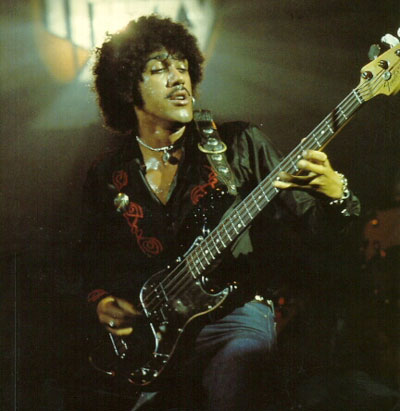
and the soul of the band was their bass player and singer, Phil Lynott. Phil
was an amazing, larger than life character, that most seldom of phenomena, a
black Irishman, whose singing was always characterised by a broad Dublin accent. His
childhood was not easy, growing up as an illegitimate mixed-race kid with his
grandmother in very modest circumstances in Dublin in the 1950s. But he came out of this
background with a suave, piratical coolness,
which he projected on a level comparable with Jimi Hendrix.
And, just
like Hendrix, he lived the rock and roll life in the fast lane, dying as a
result of drink and drugs at the age of only thirty-six. His native city of Dublin commemorated him
with a life-size bronze statue in 2005.
This little
story was inspired by a 1977 song by Lizzy, Dancing in the Moonlight. It’s a modest homage to the group, especially to Phil and Gary, who are now rocking
the angels.
So here’s
the link. And while you’re there, check out obnoxi.us. There is some very good stuff over there …
Forty five
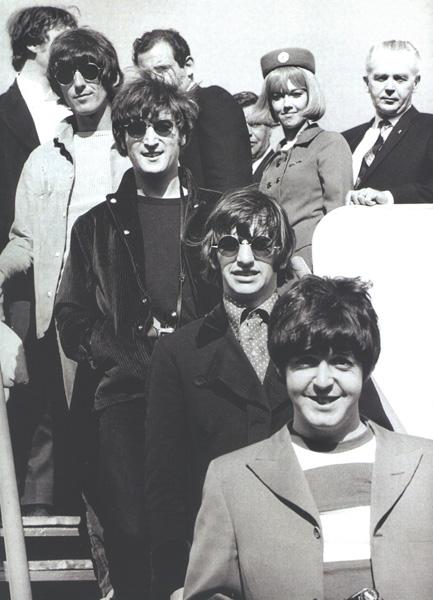
years ago (August 5, 1966) today, the Beatles released the album Revolver. It was their sixth studio
album, eagerly awaited by millions of fans, and topped, inevitably, the album
charts in both the UK and
the USA.
There is a
convention in rock history to regard the musical history of the Beatles as
falling into two periods; the first from 1962 to 1966, from their first album, Please Please Me to Revolver; and the second from Sgt.
Pepper to the break-up of the group in 1970. This division has much to do
with the release of the two compilation double albums in 1973; 1962-1966 (The “Red” Album) and 1967-1970 (The "Blue" Album). For my
generation, those who were children in the sixties and only really registered
the Fab Four in their last years, or after their break-up, these were
frequently among the first albums we bought – a chance to get the best of the
greatest rock group ever and to spend long teenage afternoons listening to the
songs again and again, mourning over the group’s breakup, apportioning blame
for the same (with Yoko usually occupying the role of prime villainess) and
speculating about the chances of a reunion.
The
convention is strengthened by the accepted wisdom which acclaims Sgt Pepper as the greatest Beatles
album, with everything before leading up to it and everything following as part
of the long disintegration period leading to the ultimate break-up of the
group. And there is certainly some validity in this view. Sgt Pepper is a magnificent album and encapsulates the Zeitgeist of the Summer of Love better
than anything else which happened in 1967. 1966 saw the Beatles do their last
live tour and their guiding mentor and manager, Brian Epstein (the “fifth
Beatle”), died in August 1967. Looking back, John Lennon saw this event as the
beginning of the end of the group, "I knew that we were in trouble then.
... I thought, we've fuckin' had it now."
But in
August 1966, when Revolver was
released, this was all still in the future and – despite all the growing
pressure the group was under, particularly through touring – they were at their
creative best. Lennon and McCartney were expanding in their musical maturity
and sophistication, still working easily together, each taking the other’s
ideas and mutually adding touches of refinement and genius, interacting
instinctively with their producer, George Martin. The rivalry, which was always
part of their relationship, had not yet reached the stage where it had started
to poison things between them. Harrison was
growing into his self-confidence as a musician and composer in his own right
and Ringo was … well, Ringo was happy.
With all
this in mind, I would like to suggest a different model for viewing the work
and history of the Beatles between 1962 and 1970 (leaving aside the earlier Quarrymen and Hamburg period), divided
into three periods; the Boy Group period, from Love Me Do to the film and album Help!, their harmonic peak of creativity and genius, where
everything came together, Rubber Soul,
Revolver and Sgt Pepper, and the long period of increasing rancour and break-up
from 1968 to 1970[*].
Against
this background, then, Revolver becomes
part of a triptych of albums. Following this artistic image, I would see Sgt Pepper as the central part of the
picture with Rubber Soul (characterised
by folk-rock influences) and Revolver (a
stronger emphasis on electric-rock) forming the two framing elements.
However you
want to see Revolver in the overall
context of the musical history of the Beatles, you cannot deny that it is a
wonderful album which stands the test of forty five years very well. From the
opening sarcastic Taxman to the
psychedelic final Tomorrow Never Knows
it is a creative tour de force, which
becomes even more evident when compared with an album like A Hard Day’s Night, released only two years earlier. This is not to
knock AHDN, which is a fine pop album
with many very good songs – nevertheless, the albums are musically light-years
apart and the contrast shows just how much the group has grown in this period.
The Beatles
were controversial in the latter half of the sixties because of their drug use –
Lucy in the Sky with Diamonds often
being given as an example of a description of an LSD trip. While I have never
really accepted the rather disingenuous denials of various members of the group
regarding this, publicly they have been much more open about the effects of
drugs on the creation of the songs on Revolver.
Doctor Robert is about a fantasy
doctor who cures his patients with drugs, McCartney has described Got To Get You Into My Life as “actually an ode to pot”, and confirms that Tomorrow Never Knows is about LSD trip. Shortly
before his death, Lennon told how She Said She Saidoriginated
“That was written after an acid trip in L.A. during a break in
the Beatles tour where we were having fun with the Byrds and lots of girls. Peter
Fonda came in when we were on acid and he kept coming up to me and sitting next
to me and whispering, 'I know what it's like to be dead.' He was describing an
acid trip he'd been on. We didn't 'want' to hear about that. We were on an acid
trip and the sun was shining and the girls were dancing, and the whole thing
was beautiful and Sixties, and this guy-- who I really didn't know-- he hadn't
made 'Easy Rider' or anything... kept coming over, wearing shades, saying, 'I
know what it's like to be dead,' and we kept leaving him because he was so
boring! And I used it for the song, but I changed it to 'she' instead of 'he.' It
was scary... I don't want to
know what it's like to be dead!”
I would
like to say that I remember the release of Revolver
as a significant event but I was only six years old and Bonanza, F Troop and, above all, Batman,
were much more important to me at the time. But Revolver even had something for kids too and, certainly not later
than 1967, if my memory serves me correctly, I remember singing Yellow Submarine with my friends. I
certainly didn’t know it was from the album Revolver,
I may not even have known it was by the Beatles, but one thing I did know … it was a cool song!
[*]In terms of albums, I would see the first clear signs
of a lack of coherence as a group in The
White Album. For Beatles purist fans, Magical
Mystery Tour then becomes a possible subject of controversy as to which
period it should be categorised under. Personally, I’ve always been inclined to
see MMT as a sort of seamless
continuation of Sgt Pepper – a coda,
if you will, still following and utilising the wave of creativity which that
album generated.
Those involved in creatively making pop and rock music can be divided into a number of categories. There are the classical bands, whose members (or some of them at least) generally write their own songs, record and perform them – bands like the Beatles, the Stones, Pink Floyd, REM, U2, Coldplay, etc. There are bands, often put together for commercial purposes, who don’t produce original material and often don’t have much to do with playing it either, a lot of boy and girl groups for example, like New Kids on the Block or The Spice Girls. There are also many solo artists who fall more or less into this category, like Brittney Spears or Justin Timberlake. These need the support of professional songwriters, session musicians and – above all – producers. Producers can indeed be seen as an almost separate category and some of them are of legendary genius; like Phil Spector, George Martin, Brian Eno, Alan Parsons or Quincy Jones.
Alanis Morissette
And then there are the singer-songwriters, in many ways a crossover group into modern music from a much more ancient tradition, the bards and the minstrels. The Germans have a lovely term for them; Liedermacher, songmakers. They are the original man or woman with a guitar (or often a piano – though pianos have the disadvantage of not being particularly portable), the successors of the men with a lute or harp. There’s something pure and honest about them, their whole art being predicated on their original individual ability to create a song and personally reach out to enthral and delight others with their performance of it. Firmly rooted as they are today (well, most of them anyway) within popular music, they form an unbroken tradition going back to Orpheus and Oisín, Homer and David. And what a roll of honour they present to us in the past fifty years!; Billy Joel and Sheryl Crow, John Denver and Joan Armatrading, Donovan and Melissa Etheridge, Don McLean and Kate Bush, Gilbert O’Sullivan and Enya and Elton John. A disproportionate number of the very best are, for some reason, Canadian (and I would be very grateful if anyone could offer a good explanation for this phenomenon); Avril Lavigne, Gordon Lightfoot, Bryan Adams, k.d. lang, Neil Young, Alanis Morissette.
Ah, but you are certainly thinking, he has left most of the very greatest out! This is because, in my opinion, there is only a small group of true royalty among the musical aristocracy of singer-songwriters who can also be truly regarded as poets.
Spontaneously one might tend to regard every songwriter as a poet, yet good poetry and songs do not necessarily go easily together. Of course, at a very basic level, the lyrics of every song are a kind of poetry, dependent as they generally are on very strict adherence to rhythm and, usually, rhyme. But the poetic possibilities of songs are limited by the very form of the song itself and the poetry becomes just one element among many in the synergy of factors which makes a song “work.” This is even more the case in modern pop or rock where the character of the performers, the interplay of the instruments and all the digital possibilities of the sound-studio come into play – not to mention issues like video or the theatrical planning and execution of live shows. And sometimes, working too hard on the poetic possibilities of a text is just pretentious and silly. Consider
Sweet Loretta modern thought she was a woman,
But she was another man.
All the girls around her say she’s got it comin’
But she gets it while she can.
Get back, get back, get back to where you once belonged;
Get back, get back, get back to where you started from.”
It’s stupid, pretty devoid of any deeper sense and certainly not the most poetic of Lennon and McCartney’s efforts. But it’s not important because, in the whole musical context of the song, it does its job. (As an aside, Lennon – the better poet of the two – jokingly suggested the alternative, “Sweet Loretta modern thought she was a woman, but she was a frying pan.”)
But the greatest of the singer-songwriters are possessed of the genius to be able to marry good poetry with arresting images and language, metaphors and expressions which pull you up, leave you amazed, wondering, awestruck, wanting to weep, with the music so that the whole becomes something very special indeed.
Looking at a few of these true creative giants, I suppose you have to start with Dylan. The only problem with His Bobness is that some may regard it as a little charitable to describe him as a singer-songwriter, since his singing prowess is … limited (I’ve written on this before here). But as to his poetic qualities – when he is at his best – there can be no doubt. Out of dozens of songs which I could take to illustrate that, let’s just revel in one verse of Mr. Tambourine Man – though if you really want a good jingle jangle version of the song, listen to the cover by The Byrds
Take me on a trip upon your magic swirlin' ship
My senses have been stripped, my hands can't feel to grip
My toes too numb to step, wait only for my boot heels
To be wanderin'
I'm ready to go anywhere, I'm ready for to fade
Into my own parade, cast your dancing spell my way
I promise to go under it.
Hey ! Mr Tambourine Man, play a song for me
I'm not sleepy and there is no place I'm going to
Hey ! Mr Tambourine Man, play a song for me
In the jingle jangle morning I'll come followin' you.
The next musical poet I want to take a glance at is Paul Simon. Simon has a beautiful sense for language and themes and a genius for mixing them with an unerring sense of melody and subtle and refined musical arrangements. One could take half a dozen examples from his time with Art Garfunkel –I am a Rockimmediately comes to mind – but the opening line of his solo hit Graceland stands alone as sufficient witness to great poetic skill
The Mississippi Delta was shining like a national guitar …
These nine words have so many resonances they just leave you dizzy.
Suzanne Vega
Although she’s not as famous as the others I’m looking at here, Suzanne Vega is one of my favourites. She too is a poet-singer-songwriter with a great feeling for themes and the language and music to give them deep expression. Lukais a heart-wrenching treatment of the theme of child-battering and the wonderful voyeur image of the woman hitching up her skirt to straighten her stockings in Tom’s Diner gives the picture-poem a realistic immediacy which is unsurpassed. As a small example of her poetic prowess I’ve chosen an extract from one of her less well-known songs, playing with an arresting image which leaves you savouring it for a long time afterwards
I am cold against your skin
You are perfectly reflected
I am lost inside your pocket
I am lost against
Your fingers
But at the summit of this musical Olympus, playing the roles of Hera and Zeus are – inevitably perhaps – two more Canadians, Joni Mitchell and Leonard Cohen.
Joni’s music is exciting, challenging and, for someone who sings and plays a modest bit of guitar himself, often quite difficult to cover. This is because, like every singer-songwriter, Mitchell writes primarily for herself and her own voice and style and her music, with various influences, is multi-layered. She is also renowned for using numerous strange open tunings on her guitar, a phenomenon she herself calls “Joni’s weird chords.” But she has also written beautiful more accessible songs and Both Sides, Nowbelongs for me to that select number of songs the singing of which have helped me win a way to a girl’s heart. The example I’ve chosen here is an excerpt from Chelsea Morning, a sensuous celebration of spontaneous unworried love
Woke up, it was a Chelsea morning, and
the first thing that I knew
There was milk and toast and honey
and a bowl of oranges, too
And the sun poured in like butterscotch
and stuck to all my senses
Oh, won't you stay
We'll put on the day
And we'll talk in present tenses
When the curtain closes and the rainbow runs away
I will bring you incense owls by night
By candlelight
By jewel-light
If only you will stay
Pretty baby, won't you
Wake up, it's a Chelsea morning
And the greatest of them all, at least for me, is Leonard Cohen. He’s been back on the road for the past couple of years and his concerts are reported to be something very special. Cohen has always been a poet and writer, as well as a songwriter and performer. It’s over thirty years since I came across his novel Beautiful Losers in a second-hand bookshop and I remember being deeply impressed at the beauty of his literary style. But even before that I had been deeply impressed by his music.
Leonard Cohen
I started teaching myself guitar at the age of sixteen and some of Cohen’s songs were among the earliest I attempted. They were good, not too difficult to play – rudimentarily at least – and offered the additional hopeful prospect (never far from the male 16-year-old mind) of helping win the way to girls’ hearts – and other interesting parts of their anatomies. What I did not know then – how could I? – is that while it’s quite easy to play and sing Cohen, it is another matter to play and sing Cohen well, not because the songs are so musically difficult in themselves (they aren’t) but because the depth and beauty of his songs demand respect, practice, hard work and a certain degree of self-knowledge and honesty to begin to interpret them adequately. You’ve had to have some experience of love, and women, and the world before you can even begin to understand what songs like So long, Marianne, Hey, that’s no Way to say Goodbye, or Suzanneare really about.
Some can write and sing beautifully and frankly about sex (arguably Cohen’s most famous musical description is that of his affair with Janis Joplin in Chelsea Hotel: “You were talking so brave and so sweet, giving me head on the unmade bed, while the limousines wait in the street.”) Some can write beautifully and frankly about God. Only Cohen can do both in three short lines (maybe you have to be Jewish to be able to do this!)
And remember when I moved in you
The holy dove was moving too
And every breath we drew was Hallelujah
Hallelujah is an amazing song, written by Cohen in the 80s, long after he had composed most of his other classics, and at the foot of this post I’m putting a sublime live cover of it by k.d. lang. I have one friend who never tires of quoting
There's a blaze of light
In every word
It doesn't matter which you heard
The holy or the broken Hallelujah
And there’s depth enough of meaning in that to meditate on for quite a while.
But I’ll finish this with the last verse of Suzanne, another marvellous word-picture in a song-poem full of beautiful images. They don’t get better than this
Now Suzanne takes your hand
And she leads you to the river
She is wearing rags and feathers
From Salvation Army counters
And the sun pours down like honey
On our lady of the harbour
And she shows you where to look
Among the garbage and the flowers
There are heroes in the seaweed
There are children in the morning
They are leaning out for love
And they will lean that way forever
While Suzanne holds the mirror
And you want to travel with her
And you want to travel blind
And you know that you can trust her
For she's touched your perfect body with her mind.
If you really want to pig-out on music, there’s a song behind every link - though because Sony won't let me access stuff they have title to in Germany, I wasn't always able to get the YouTube version I wanted - (just click on the words in purple, but do it with a right-mouse click and open a new tab, otherwise you’ll have to keep reloading here). If you don’t have the time or inclination for that, do take the time at least for k.d.’s Halleluja. Believe me, it’s worth it.
Last Saturday being John Lennon’s 70th birthday, I put up a link to “Imagine” on Facebook. A few hours later, Ian, a friend of mine in England (one of those virtual ones I referred to here recently, whom I haven’t yet met) added a one word comment – “Overrated.”
Overrated? I thought. Bloody too-clever-by-half, elitist English gobshite! How could John Lennon be overrated? That’s as unimaginable as … as … as a bishop abusing little children! And then, having overcome my shock at this expression of heresy most dire, I started to think about it. Has the world, have I overrated John Lennon, one of the few heroes I have had in life?
Ever since I became aware of modern pop and rock music, sometime around the age of ten, the Beatles were always right up there at the top. Even then, my feelings of admiration and awe for them was intensely mixed with one of deep regret that I had been born too late, discovered them too late, for they were already part of the past; they had broken up in acrimony and there seemed to be little concrete chance of a reunion, although you could always hope.
The quartet from Liverpool were all fab in their own way; Ringo was funny, George was a cool guitarist, Paul wrote great songs (although there were some niggling problems about Paul I’ll come back to directly) and John, well, John was in a league all of his own, somewhere near God (actually, in his own controversial words, more popular than Jesus). Witty, intelligent, idealistic, rebellious, irreverent – the combination was irresistible. Let the girls swoon over the sweet love-songs of the apple-cheeked Paul, John was the soul, the mind, the conscience of the Beatles, the one who, more than all the others, took the Fab Four out of the realm of simple pop singers and made them into something important, something significant for society at large.
Or so I saw it back in the early 70s, a few years after the break-up. Today, with more distance, more knowledge, more hindsight, I can see how much of this viewpoint was itself the product of legend, a projection of my own desires and wishes onto my hero, a simplification (at least) of a much more complex reality. But, of course, I was not alone in this simplification, it was one shared by millions of Beatles and Lennon fans worldwide.
The conventional story of the final Beatles years was pretty simple (if not always completely consistent), involving a distracted hero, a supporting actor – in turn striving desperately to save the group as well as occasionally succumbing to megalomania – and a villainess. John, of course, was the hero, Paul the supporting man and the villainess – well, that one’s easy; Yoko Ono was born for the role. If only that strange oriental had not seduced John, making him try to have her accepted as the fifth Beatle (forget for a moment that this role was already occupied by, variously, Brian Epstein and George Martin), the group would still be together, making marvellous music while the sun shone down from a diamond sky upon Penny Lane and Strawberry Fields.
The truth is somewhat different. In retrospect, I would suggest that the Beatles as a group had been slowly dying on the vine since they gave up performing live in 1966, the release of Sergeant Pepper, their masterpiece album and the death of their manager, Brain Epstein in 1967. They were all maturing and developing individually; musically and personally and the group was simply becoming too small for all of them. This is, above all, true of Lennon. Even prior to the advent of Yoko (who first turned up in 1968 during the recording of the White Album), he had, I believe, simply started to lose interest in the group, at least musically. He had entered into a period of personal development involving much confusion, including extensive use of drugs, among others LSD and heroin. He needed to find his own way, dealing with his own demons as he did so, and this way led beyond the Beatles and would have done anyway, even without Yoko.
All this leads me to a first hint about what made John Lennon artistically and musically important; there are few artists in the pop and rock area who have been able to use their talent so openly and honestly to portray their own inner struggles – Johnny Cash is an honourable exception who comes to mind – most not getting beyond lyrical descriptions of unhappy or terminated love-affairs (not that I would deny the intensity of significance of such events when we are involved with them). But songs such as Mother, which explores the fraught relationship between himself and his mother (“Mother, you had me, but I never had you …”) or Cold Turkey, which describes his withdrawal from heroin, have a quality of universality which goes beyond strict musical categories. His relationship with Yoko Ono, as much as it can get on one’s nerves, serves as an inspiration for many compositions and his song for his son Sean, Beautiful Boy, released on the Double Fantasy album a few months before his death, contains one of the greatest and wisest lines ever included in a pop-song; “Life is what happens to you while you’re busy making other plans.”
Then there’s the whole corpus of music which exists under the label, Lennon and McCartney. Every Beatle fan knows that, while all songs are credited to both of them, the ones Paul sings were written mainly by him, while John sings those songs on which he did most of the work. In the later Beatles years, when the atmosphere between the two was increasingly tense, their collaboration was, in most cases, minimal. But they still usually performed their ideas first before each other and there generally followed a phase of suggestions, corrections and amendments. Looking at the Beatles song catalogue, it is striking that the greatest popular hits, and most of the songs that could be described as having become part of the general world cultural musical heritage, like Yesterday, Hey Jude or Let It Be,are McCartney songs (in terms of their primary composition). Paul’s feeling for a catchy tune was always greater than John’s. Still, it was often Lennon’s acerbic wit which saved McCartney’s songs from maudlin sentimentality. In this context, I’m reminded that the working title for Yesterday before the lyrics were written was “Scrambled Eggs” – a real Lennonism, if ever there was one – and I can still break up in laughter at the thought of McCartney, his big, drooping eyes dripping sincerity, hunched over the piano, soulfully singing, “I said something wrong, now I long for scrambled eggs … I believe in scrambled eggs.” And if they had still been collaborating in 1977, I am convinced that a few clever Lennon amendments would have saved McCartney’s biggest selling hit, Mull of Kintyre, from its tendency to drive diabetics into sugar shock.
Still, despite all the caveats and reservations, the Lennon/McCartney catalogue has to be considered as a whole as the combined work of both composers. It is interesting that even in the phases where the relationship between both was at its most acrimonious – apart from a few niggling comments – neither of them ever seriously questioned the collaborative attestation of their music. And, following the Beatles break-up, Lennon himself produced some fine songs like Jealous Guy, Working Class Hero, Watching the Wheels and, of course, the sublime Imagine.
But, in the end, the ultimate reason why it is impossible to regard Lennon as “overrated” is his symbolic role as a public cultural avatar for the second half of the 20th Century, a role finally set in stone by his assassination on December 8, 1980. John Lennon, his music, his utterances and his life became the incarnation of so many of the themes, memes and concerns of the baby-boomer generation that he became a cultural receptacle, a popular icon. He shares this role, along with the Beatles in general, only with Elvis Presley and Bob Dylan in the musical sense, and in terms of the whole range of broader cultural themes, particularly many of those which occupied the public consciousness in the 60s and 70s – drugs, war and (especially) peace, protest, rebellion, relationships, feminism and the roles of women and men, etc. – he stands above all the others. If he had not died, ironically, it would probably have been different. Today he’d be just another filthy rich, ageing pop/rock superstar like McCartney, Phil Collins, Mick Jagger and all the others. Certainly, he would probably have added considerably to his musical portfolio and it is slightly interesting to speculate about how he would have reacted to many particular events and issues – could Bob Geldof have talked him into a Beatles reunion for Live Aid in 1985 (possible), would he have given his name for commercial sponsorship and advertising as Pink Floyd and the Stones, among others, did in the 90s (unlikely), would he have split with Yoko or had an affair with Madonna (unknowable), etc? It remains speculation, because John died, or rather was killed in the quintessential way so typical for his adopted homeland, the USA, in treating its anointed heroes, particularly those of the 60s, and so achieved sainthood in a moment, along with King and the Kennedy brothers, or Jim Morrison, Jimi Hendrix and Janis Joplin and various other rock and roll heroes.
No, Ian, neither John Lennon, nor the Beatles, are overrated. Musically he and the others remain giants, even if others, many others, could sing and play their instruments better. But above all, John Lennon cannot be overrated because he was made into a legend, a symbol for the hopes and dreams – for the very identity – of a whole generation. A symbol who achieved immutable immortality by dying young and thus taking himself beyond the inevitable relativising reality which would have come with time and age. Still, I’m thankful to you for raising the question, for forcing me to think about my own unquestioned idols – even if I choose to leave this one on his pedestal. And I take the gobshite back. J
It was twenty years ago today, Sgt. Pepper taught the band to play …
But on July 21, 1990, another was playing the music. A quarter of a million people, including yours truly, gathered on a huge patch of waste land (today completely redeveloped) between Potsdamer Platz and the Brandenburg Gate, where only eight months earlier the Berlin Wall had divided the city, to see Roger Waters and various rock stars perform “The Wall.”
Pink Floyd had originally released the double concept album, The Wall, largely composed by the group’s bassist, Waters, in 1979. It was their second most successful album after Dark Side of the Moon and the single, Another Brick in the Wall (Part 2), their most successful, reaching No. 1 in the charts all over the world (something unusual for Floyd, who were always primarily an album band). It was also the last major common artistic project from the complete group (Waters, Gilmour, Wright and Mason). The various tensions between different group members reached such epic proportions that Waters actually succeeded in throwing Wright out of the group during the recording process, although subsequently the other three members separated themselves from Waters.
The Wall is, in many ways, a source of contention among the huge community of Pink Floyd fans – my membership of which I unashamedly admit – and rock aficionados in general. Many regard it as their greatest work, others see it, as do I, as a flawed work of genius, which fails to live up to the artistic perfection of Dark Side of the Moon and Wish You Were Here. The flaws derive from the personality of its primary creator, Roger Waters himself.
The album is massively ambitious, dealing with themes such as alienation, isolation, madness, the basic difficulties in relationships, particularly between men and women, the horror of war. In many instances it makes powerful musical statements about these themes and much of the music is up to Floyd’s usual high standard. The artwork for the album (and the animated scenes in videos and film) are by Gerald Scarfe and are excellent. And, in a sense, the concept does work, especially when it is visualised, as in the live show or Alan Parker’s film; there is a sort of story-line/development/plot, leading to a kind of cathartic conclusion. But this is also where my problems with The Wall begin.
The themes treated in the album are powerful and serious, expressions of many central concerns of modernity which have occupied many artists, from Beckett to Picasso, from Sartre to Ginsberg. That’s part of the difficulty, others have set a very high standard here. The Wall approaches the subject through the autobiographical workings of the themes in Water’s own life and there is a distinct flavouring of the egoistical whining of a spoilt rock-star, crying into his champagne. Following the story of the rock-star Pink, whose father died in the war, who had an overpowering, dominating mother, who was mistreated at school, whose wife is unfaithful to him, who has problems coping with fame … I’ve always found part of me reacting with; tough shit, we all have our problems, lots of people would be happy to have yours, get over it!
And then there’s the music. Some good numbers like “Mother,” “Goodbye Blue Sky,” “One of my Turns,” and, of course, the one everyone knows “Another Brick in the Wall (Part 2) [“We don’t need no education …”]. Two great songs, “Run like Hell,” and “Comfortably Numb” – interestingly the only ones with a compositional credit to Dave Gilmour, Floyd’s guitarist. And a couple of painful pompous monstrosities like “Vera,” and “Bring the Boys back Home,” which are excruciatingly bad. But Waters had the bit between his teeth and increasingly wasn’t listening to anyone as the recording of the album proceeded.
The live show of The Wall was the last of the legendary Pink Floyd tours (with the complete group), setting – as always – new standards for elaborate effects, concept and production excellence. After it, the band and Waters basically split up. Nearly ten years after the whole thing, in July 1989, Roger Waters commented in a radio interview (as a joke) that the only way the live show would ever be resurrected would be if the Berlin Wall fell. Four months later … it did.
And so, on what was the hottest weekend of 1990, I spent over twelve hours driving around six hundred kilometres to Berlin, along with many thousands of others. The border posts to East Germany were deserted and the jams on the former transit autobahn through the GDR were endless, exacerbated by broken-down Trabis with boiling radiators. Waters had gathered a horde of prominent musicians and actors, an orchestra and a Soviet song and dance ensemble (including a military band) and the show was bombastic. Among all the guest stars and singers, one performance remains, for me, particularly memorable; Van Morrison singing “Comfortably Numb.” For that alone, the drive to Berlin was more than worth the effort.
“All alone or in twos,
The ones who really love you
Walk up and down outside the wall
…
And when they’ve given you their all
Some stagger and fall, after all it’s not easy
Banging your heart against some mad bugger’s wall.”
(Outside the Wall, Pink Floyd/Roger Waters)
[From December this year Waters is going on world tour with The Wall once more!]
Okay, I have a serious post half ready but I’ve just come off working nights and have two whole days (!) free before going back for more and frankly, the more nights I work the more I have the feeling that my brain is turning to mush so I’ll finish that some other time. Something lighter instead, something completely different…
I was born ten years too late to really get the music of the sixties when it was actually happening but when I really started to take pop and rock seriously in the seventies the shadow cast by the most creative decade in popular music was still long indeed. The first group I really lost my heart to was the Beatles and today, nearly forty years later, this has not appreciably changed; I still believe that the Fab Four were sublime geniuses, leaving all the contemporary competition far behind in their wake. Including, of course, their great rivals, the Rolling Stones. And, of course, as a teenager, I immediately indentified with this rivalry – even if it was artificially pushed by the media and Mick, Keith & Co., were, in fact, good friends of the Liverpool lads.
But as I’ve got older, I’ve learned to appreciate the works of Jagger and Richards more and more, even if my feelings about them still remain – in some areas – a bit ambiguous. First of all, I find their continued existence and their live touring a bit embarrassing. Jagger’s camp prancing has gone beyond being a parody of the original into the realm of pure comedy theatre. This kind of behaviour is just not worthy for a man in his mid-sixties, a man whose granddaughter was in my daughter’s class at school in Ibiza for chrissakes (and my daughter is now a grown woman)! I saw him on TV twice last week at the World Cup, first hobnobbing with his pal, Bill Clinton, at the game where the USA lost narrowly to Ghana and again the following day witnessing England being humiliated by Germany. Not a good week for Mick.
And then of course there’s Keith Richards. What can one say about Keith? A man who has turned Oscar Wilde’s Dorian Gray story around, with his face showing the traces of every binge with booze and other various mind-altering substances he has ever come into contact with. The guy’s liver deserves a place in the Guinness Book of Records (and, come to think of it, Ronnie Woods’ liver is in this category too, but Ronnie can at least play the guitar). Keith, on the other hand, has been described as the best bad guitarist in the world. A rock guitarist whose favourite guitar setting is an open G tuning with only five strings on the instrument (the bass E being removed for, er, convenience)! Still, Keith does have a deep love of classic rhythm n’ blues and, within his self-admitted limitations, what he does he does well.
But I didn’t really set out here to slam the Stones – frankly, that’s too easy and a bit cheap for they are, in their own way, musical legends with a long series of great songs, many of which were profoundly innovative and have well stood the test of time. From “Satisfaction” to “Sympathy for the Devil,” from “Jumpin’ Jack Flash” to “Paint it Black”, these are songs which get immediately get into your blood, make you want to turn the music up loud, get up and dance. And though they are synonymous with fast and dirty rock ‘n roll, they have also produced some very good slower numbers and ballads, such as “Ruby Tuesday” and “As Tears Go By.”
Above all, the Stones are fun! One of my most cherished musical memories concerns a time where I was part of a hobby band which, for complicated reasons I won’t go into here, had a constantly changing membership. At one stage, one of the guitarists was a Dutch Stones fanatic, who (I kid you not) in real life was a french horn player with the Hamburg Symphony Orchestra. Dave insisted that we add some Stones numbers to our set and so I had the privilege of singing “Satisfaction” and “Honky Tonk Woman” at an unforgettable live gig. Musically, I swear, it doesn’t get much better than that!
So, while they will never replace the Beatles in that very special corner of my heart, I cheerfully admit to having learned to love the Stones. I even find myself being struck by the wry wisdom often to be found in their lyrics. “You can’t always get what you want, but if you try, sometimes you might find you get what you need.” Deep, that! (Although, in my opinion, they should really quit the live touring; they’re too old for it, certainly don’t need the money and the prices they charge for tickets are simply outrageous!)
Here’s Mick, Keith, Ron, Bill and Charlie doing a marvellous country and western pastiche. As Mick sings, thank you, Jesus!
One would think that major, world-shattering events are clearly recorded and documented for posterity, especially when they take place in the modern media era. This however, as I have just discovered, is not always the case.
When did the Beatles break up? That’s the question. And, before anyone presumes to ask, it’s an event which I do regard as something major and world-shattering. After all, nobody can seriously argue that the Fab Four were the greatest rock group in history with an influence on contemporary music and wider culture unmatched by any other before or since. Easy, you may say. 1970, everyone knows that. But when exactly?
In fact, the break-up of the group was a long, complicated process. Their last live concert was in San Francisco in August 1966, although they did perform “All You Need Is Love” on TV in the first live global satellite link in June 1967 and some of the album Let It Be was performed on the roof of the Apple building in Saville Row on January 30th 1969. But basically, from August 1966 onwards, the Beatles were a studio group.
But what a studio group! Sgt. Pepper’s Lonely Hearts Club Band, Magical Mystery Tour, The White Album, Yellow Submarine and the break-up duo Abbey Road and Let it Be all come from this period, albums which contain dozens of songs which were works of genius, Sgt. Pepper (1967)being arguably the greatest rock album ever recorded. Nevertheless, throughout this whole period the tension in the group, and particularly between the two creative geniuses Lennon and McCartney, was growing steadily.
By 1969 it must have been clear to most observers that the band was moving towards an end. Lennon had begun his relationship with Yoko Ono and the fans, sensing that the centrifugal tendencies within the group were escalating reacted, for the most part, with deep suspicion and hostility towards John’s new Japanese muse. But the differences were deeper and more complex than Yoko’s influence. For fans, however, the prospect of the group breaking up remained unthinkable.
In September 1969 Lennon announced to the rest of the group that he was leaving but this announcement was not made public. He had already released his first single without the group, “Give Peace a Chance,” two months earlier. He never played with the other three together again. But there was still an album, Let it Be, in the works. It was released in May, 1970.
By then, though, the group was gone. On April 10th 1970, forty years ago today, Paul McCartney announced his departure from the group. Although various legal wrangling postponed the final wind-up of the group’s affairs until 1975, if any one incident can be defined as the definitive end of the Beatles, it was that public announcement.
Now you know.
“And in the end, the love you take/ Is equal to the love you make”
(The last line of “The End”, the last song all four Beatles recorded together, on the album Abbey Road)