Seiten

Showing posts with label philosophy. Show all posts

Monday, 3 September 2012

Human Dignity; My Friend Jimmy


For all of my working life in nursing – over twenty years now – I’ve been involved, in one way or another, with the basic limits, the boundaries of life. Either in geriatric care (accompanying people who are coming to the end of their life’s journey), or with people suffering from such serious, complex, debilitating and restricting illness that their continued survival would rapidly be impossible without the comprehensive, continuous support of professional health workers (in my case, people in Persistent Vegetative States). Even in the little group of five children with whom I currently work, three are in a PVS.

It is an area where some very fundamental questions arise. What’s the basic point of life? What is tolerable, intolerable? Where do we draw the line, or can we draw any lines at all? When is a life not worth living any longer? What does “basic human dignity” mean?

Hard questions, questions for which I am ever more unwilling to offer comprehensive answers, or even any answer whatsoever. There are those who find such things in faith, or dogmas derived from faith (though most believers who actually work in this area – in my experience – aren’t big into dogmas), but many of us are not believers, or don’t find our motivation to continue actually doing this work in any kind of religious faith.

I suppose one of the basic things which keeps us at it (apart from the fact that we know how to do it and we need to earn a living) is the very practical experience that this is work which has to be done; done now, done immediately, done continuously. I think it is this daily experience which leads most of those of us who do this kind of thing to a reaction of genuine bewilderment when others praise us for it, you know, “I really admire you for the work you do…” that kind of thing. There is, I suppose, a kind of deep satisfaction in doing the kind of work which you know (at some level) makes a literal life-or-death difference every day, every hour you’re doing it. It certainly beats processing piles of paper or data (something I once did for a year, and which nearly drove me batshit crazy), even if the ultimate results of being a part of such a complex process actually means that practical things happen somewhere.

Nonetheless, we do often find these deeper questions coming up in the course of our daily work. It’s inevitable in this kind of job. And, as I’ve already mentioned, there aren’t any easy answers. Sometimes, faced with someone who seems to be suffering a lot and, at the same time, doesn’t seem to be able to just die, there are no good answers at all. You learn to cultivate a kind of staid attitude of compassionate resignation; you do the best you can, the best possible for the person you’re looking after and try to leave the questions aside. Because, honestly, they don’t help.

No, I often don’t know any answers. What I do know are some stories, one of which I’d like to tell now.

Jimmy was the son of immigrants to Germany from a Mediterranean country. They had left their homeland as young adults over forty years ago, with little education or training, no knowledge of the German language, and very limited concrete knowledge of the kind of life they were going to lead. All they had – like millions of other migrants – was the hope that life elsewhere would offer them and their children more possibilities than a continued existence in the place of their birth.

They quickly found somewhere to live, and jobs to do. There was plenty of work available, even for people without high levels of training and very rudimentary language skills. And, though the work was hard and often monotonous, the money was good and the standard of living (material things like electricity and washing machines and motor cars, and other stuff like health care) almost immediately available to them was far beyond what they could have attained in the old country. Certainly they were homesick, and getting by in a foreign country was often stressful, but they felt sure that their decision had been the right one. If nothing else, their children would have opportunities which would have been impossible at home. And they themselves could dream of moving back home when they retired, the modest amount necessary to build a really comfortable house in their home village saved and a good German pension to give them security in their old age.

They soon had a daughter, but she died shortly after childbirth. And then Jimmy came along. It was a difficult birth and the doctors told the mother that there would be no further children. But Jimmy was a healthy and happy baby and grew up to be a healthy and happy boy.

He became the repository of all his parents’ love, and all of their hopes and expectations. And he lived up to all of these splendidly. He was a lively, fun-loving kid, bright as a button at school, helpful at home, popular in the neighbourhood. He became an altar-boy and learned to play the piano. After finishing secondary school with very good grades, he went back to his home country for a year to do the mandatory military service demanded of all young citizens, even those born and living abroad. When he came back to Germany, he could have gone to university, but elected instead to train as a bank-official. It meant he could continue living at home and it offered him the kind of career his parents could never have hoped for. While Jimmy could have aimed higher, he was quite content with the choice he had made and the life which was unfolding for him.

He had saved some extra money from summer-jobs he had done during his last years at school, and his parents topped up those savings and bought him a car for his twenty-first birthday. And, a few months later, driving to a placement in a branch of the bank which was training him, a few miles from his home town, on a cold January morning, Jimmy hit a patch of ice in a curve on the road and collided with a tree.

The tree won.

The car wasn’t the newest, which meant in January 1997 that it wasn’t equipped with airbags. And, if truth be told, Jimmy was probably travelling a bit faster than was wise when he hit that ice – he was, after all, young and didn’t have all that much driving experience. At any rate, when they pulled him from the wreck he had broken fourteen different bones and had a very serious skull fracture.

For months he wasn’t expected to survive. But his condition slowly stabilised, he came off most of the machines and started to heal. The problem was that skull fracture; Jimmy had very serious brain damage which was irreversible. But he had regained consciousness, and that was both the wonder and the tragedy.

Apart from leaving him almost completely paralysed, the brain damage had wiped out large parts of his rational capacities. It’s hard to really describe his situation to those who do not know him. In a vastly simplified sense, he is frozen at a mental age around equivalent to that of a six-month-old baby. Speech is beyond him, though he is able to understand some of what is said to him. He has a generally friendly disposition, though he is inclined to be a bit reserved with strangers – for he is able to recognise people he knows well. He can shout, or rather, howl, which is something he does continually when he is in discomfort or pain, a situation in which he becomes quite agitated. This happens regularly when he is being washed, cleaned up, or dressed, for all of these operations are both stressful and painful for him. Jimmy’s paralysis is that of the spastic variety, one with an enormously increased muscle tone. This means, for example, that his left forearm has – in the course of the years – completely pulled up flush with his upper arm, so that it takes all the strength of an adult to pull it far enough back to wash it, and check for irritation in the crook of the arm, something which frequently occurs as a result of skin chafing on skin and which then has to be treated. Something Jimmy does not enjoy. Or that his fingers are hopelessly twisted around each other.

As I mentioned, describing his mental state as that of a baby is only a first approximation, for it is no more accurate to describe people with traumatic brain injury as children, than it is to use the same comparison for people suffering from Alzheimer’s. There are superficial, almost coincidental similarities with babies (such as incontinence or linguistic inability), but the basic situation is quite different. And Jimmy has retained some capabilities which are far beyond those of a six-month-old.

Chief among these is a sense of humour. In one sense it has become a little cruder than it used to be – or it may be that some adult limiting conventions have just been burned away. At any rate, Jimmy loves slapstick, the broader the better. Somebody stubbing their toe and then cursing loudly in annoyance will send him into peals of laughter. Abbott and Costello or Laurel and Hardy would be right up his street, but – for some strange reason – Jimmy doesn’t seem able to process TV pictures. The sound alone of somebody cussing is something he finds amusing and the fouler the language the better, as far as he’s concerned. I’ve often driven him into paroxysms of laughter (and distracted him from the most uncomfortable aspects of what I was doing) while caring for him just by making farting noises.

The marvellous thing about Jimmy’s sense of humour is that it’s completely honest, and absolutely total. And it is a gift which he is capable of putting to work in a delightfully mischievous manner. Imagine a group of people sitting around a table, engaged in a serious discussion. Then imagine that Jimmy is there too. This can happen, for he is often sitting in the day-room of the ward where he lives during a staff meeting. Sometimes he simply appears thoughtful, lost in his own special world. But sometimes he feels like establishing communication and he starts looking around at the group, trying to catch someone’s eye. Beware – for if you look at him you’re lost!

When he gains eye-contact with you, he grins. Almost instinctively, you smile back. That’s all the encouragement he needs, indeed, even if you don’t respond, catching your gaze is usually all he needs. He starts to chuckle and this chuckling quickly develops into hearty laughter. Trying to hush him only makes it worse, as he finds such attempts hilarious.

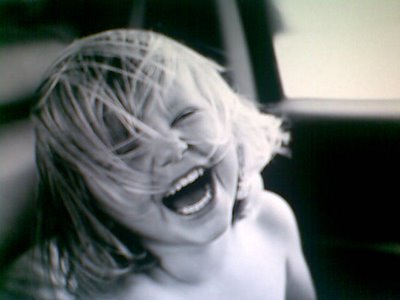
It really doesn’t matter what you do anyway, because Jimmy’s laughter has another killer characteristic. It is irresistibly infectious. There is something so honest, so complete, so true about his laugh that it conquers all attempts to gainsay it. Before you know it, you are laughing too, in the way that you found yourself uncontrollably laughing at something you found funny when you were a child. And, just like it used to happen when you were a child, you soon find everyone in the group trying unsuccessfully to control that urge to laugh, to laugh until your belly hurts and tears are running down your cheeks.

Jimmy has done it again. Wrecking all the pretentions of serious adults at a meeting, he has given them – us – all the priceless gift of joy, taking us beyond the mundane concerns of our reality into a realm of simply revelling in the sheer inexplicable fun of just being alive.

When I hear people discussing situations in which they imagine it would no longer be worth living, in which they feel they would rather be dead, I often find myself thinking of my friend (for this is the best word I can use to describe how I feel about my relationship to him), Jimmy. He is confined to a wheelchair, is incapable of almost every voluntary movement, drools and dribbles, has to be fed through a tube, would lie in his own piss and shit if he were not cleaned up regularly. Is his human dignity worth any less than mine – or yours – because of all this, and because he has been so severely mentally damaged? Is his joy worth less than that of a physicist discovering a new sub-atomic particle, or of a musician in that moment of performance when everything gels, or that of lovers during a shared orgasm?

Despite the conventional tragedy of his story, Jimmy is possibly the happiest person I know. The price he has paid for it in his life is, seen in a conventional way, unacceptably high – one none of us would willingly pay. The loss of the Jimmy who was, all that potential, the life destroyed the moment his car hit that tree, is, of course, heartbreaking. Yet does that detract in any way from the value of his happiness as he is today; make it somehow worth less than those all too seldom and fleeting moments of unalloyed joy the rest of us have to get by with?

I don’t have any answers to questions like that. But then, when I see Jimmy, I don’t need them.


Pictures retrieved from:

Saturday, 2 June 2012

The Debt Crisis


If there is one issue more than any other which has been exercising the public consciousness for the past four years, it has to be the question of debt.

From the bursting of the US property bubble, the collapse of Lehman Brothers, and the systemic threat of a global banking failure in 2008, through the first measures taken by many governments, individually and collectively, to try to head of that danger, to the current, deep-seated crisis in the Euro-zone, the theme of debt – public and private – has dominated world thinking, doings and commenting constantly, obsessively.

With serious consequences for millions; whether dispossessed hopeless home-owners in the USA, pensioners in Greece, or the more than half of the Spanish population between 18 and 30 who are currently unemployed. The “markets” are uneasy and, apparently, when “markets” are uneasy, the little people worldwide suffer.

I am reminded of nothing so much as the stereotypes of fearful, primitive, superstitious civilisations in bad adventure novels, where the natives, threatened with the outbreak of catastrophe, are convinced that they have become victims of the anger of the gods. Indeed, the analogy can be developed farther, for the general reaction of the natives in such pot-boilers is to offer ever more and ever more costly sacrifices to these angry gods, to try to propitiate them, before finally reaching the inevitable ghastly conclusion that nothing less than the sacrifice of their own children will serve to (possibly) appease the divine anger.

Substitute markets for gods in the previous paragraph and you get a description of the world of 2012.

In the past couple of months, I have intended many times to write something about this theme here. The reason I have not, up to now, is that I have a deep suspicion that most of the discussions being carried out on the subject are based on misrepresentations, subterfuges, and downright cynical lies. I am prepared to accept that many of those involved are sincere and genuinely believe the arguments they are making – but I am becoming more and more certain that most of those who really matter know that much of what they are saying is no more than platitudinous window-dressing and that they well recognise, at a deeper level, what it is really about … the retention, protection, and even expansion of power and wealth in the hands of those who have it, whatever the cost to those who do not have it.

Writing over 2,400 years ago, the famous Greek historian, Thucydides, records how the more powerful Athenians expressed their view of the world to the weaker Melians on demanding their surrender, “the strong do what they can and the weak suffer what they must.” Since then, despite all kinds of declarations of rights and facades of agreements and legality, very little has changed.

There is a conventional view of the current ongoing global crisis and, on the basis of this view, it’s fairly easy to describe what’s going on. For various reasons – to which nobody pays much attention now – speculative trading of finance products got out of control. The result was a bubble which burst, the crash of a few financial institutions and the threat of a crash in the whole banking sector in 2008. To avert this, most sovereign states intervened, providing billions of tax-payers’ money to prop up the banks and keep the whole system going (or at least limping). The new atmosphere of sobriety and financial rectitude focussed increased attention on the deficits and borrowing debts of those sovereign states – deficits which had had to be drastically increased to provide the money to prevent the banks from failing. The “markets” became increasingly nervous about the dependability of those sovereign debts, with the result that costs of servicing such debt rose steeply for a number of countries, thus putting ever more pressure on their “real” economies, which weakened their position even further in the eyes of the markets. A vicious circle.

This problem became particularly acute in Europe, where a large number of countries within the EU had adopted a common currency, the Euro, over a decade ago. The euro had brought considerable prosperity for its members – particularly those with strong export-based economies – by significantly simplifying trade, both between its members and with the wider world. But it also created a one-size-fits-all monetary situation for the member countries and the pressures caused by the financial crisis exacerbated hidden fault-lines enormously. Countries like Greece and Ireland could conceivably have eased their situation somewhat by currency devaluation, but such devaluation was not in the interest of other countries such as Finland, Luxemburg, Austria and, above all, Germany. Ireland, for example, could have let some of its banks fail and default, but, as these debts were practically all held in Wall Street, the City of London and Frankfurt thus potentially putting the powerful economies of the US, UK and Germany under pressure, this wasn’t allowed either. The Irish were told to unconditionally guarantee the debts of their – private – banks and the then Irish government, terrified at the prospect of being otherwise abandoned by its international “friends,” meekly complied.

For nearly three years now, the Euro-zone has been trying to deal with a situation in which the debt problems (which have different causes in each country) in Greece, Portugal, Ireland, Spain and Italy are putting the common currency under continual pressures of all kinds on the markets, thus exposing all the other member countries to major risk. All sorts of imagery is used to describe what’s going on, the most popular one being that taken from the language of illness – the threat of “contagion.” Or the other hoary old image, beloved of proponents of the Vietnam War nearly fifty years ago, the “domino theory.” A full-scale collapse in Greece, or Spain, or Italy, would serve to knock down the economies of all the other Euro-members, even the strongest, and rapidly lead to world-wide economic recession and ultimate collapse, the scale of which would make 2008 look like an insignificant blip on the line of global progress. Europe and the world are under threat of economic Armageddon and the only way to stave this off is to get the rampant sovereign debt problem somehow “under control.”

So there has been an ongoing series of frantic conferences, and bail-out measures, and stability mechanisms, and fiscal pacts, and injections of billions by the European Central Bank, etc., etc., etc. Three countries (Greece, Portugal and Ireland) have been put into a kind of international receivership and the domestic measures their partners (and the world in general, as represented by the IMF, which is one of the “receivers”) are demanding as conditions for their continual financial support, mean that their citizens – particularly their poorest citizens – are suffering badly. And the generally touted fear is that Spain or Italy could be next; in contrast to the three already hospitalised patients, economies “too large to fail.”

And still, despite all the measures taken so far, the mighty markets are still not impressed and the Euro members are divided on the question of what sacrificial offering might suffice to appease these gods and make them mild and gentle-mannered; even more austerity, measures to stimulate growth, Euro-bonds, the expulsion of Greece from the common currency …?

I am becoming increasingly convinced that all of this is just … pardon my French … bullshit.

I do not believe that it will be possible to solve the various problems besetting the global economy in any kind of enduring fashion using any of the various tools or mechanisms suggested, because the system is fundamentally broken. It has, in fact, been basically flawed all along, because it is based on axioms and assumptions which have no foundations, which have never applied, and which are nonetheless generally presented and accepted as being unquestionably true and self-evident.

Markets are natural and, in general, self-regulating.

The price of something is its value.

The basis of relations between people is one of exchange, with each party primarily pursuing his/her own (material) advantage.

Exchange usually makes everyone happy; everyone wins, nobody loses.

The fundamental principle of morality is that one should always pay one’s debts.

Our basic nature is one of lonely autonomy and our social relations and networks are secondary, conditional and ephemeral.

Everything is quantifiable.

Money “works” and can thus, somehow, increase itself.

Continuous growth is perpetually possible – even on a finite planet with, ultimately, limited resources.

These are the basic premises on which the so-called science of “economics” is based. They are all statements which can legitimately be challenged and, indeed, would be denied by most of us with respect to the way we live our everyday lives with families, loved ones, friends, neighbours, colleagues and communities.

How do you pay your debt to your parents, who gave you life and cared for you – not only materially – until you were able to stand on your own feet? How do you quantify kindness, or love, or beauty, or joy? Can you change your friends the way you change your socks? Is not a sincere “Thank You,” frequently a more than adequate payment for a favour/debt? Is monetary wealth really a measure of respect and regard? Do you always (or even usually) weigh up your own advantage before helping someone?

Yet, if economics – particularly the conventional economics upon which we seem to base our communal lives, as in my description of the current international debt crisis above – is an unquestionable science, then why does it not seem so easily applicable to our ordinary, real lives? It seems to me that there is a deep sort of schizophrenia present in the way we understand ourselves. If we really want to find solutions for the deep problems besetting our current global societies, I suspect this will only be possible if we find ways of surmounting this strange bifocal way of seeing things.

I am no utopian, no starry-eyed optimist. The current situation is the result of long, complicated processes, and concrete decisions will have very real effects on millions of people. Much as it might seem attractive, I don’t think we can just simply push some kind of “Reset” button. But I do see possibilities and potential for us, if we reflect on the way we see and understand things and are prepared to consider alternative ways of seeing and understanding them.

To admit, for example, that our various models of economic analysis may be deeply flawed and don’t provide us with an awful lot of good answers. To accept that economics, even as far as it goes, has very little basis in any of the basic moral principles which govern nearly everything we regard as important in our lives. To give this basic morality and decency the weight it deserves in our dealings, including our political and “business” dealings with each other, a weight far superior to simplistic “economic” considerations. To chose to do things, in the words of John F. Kennedy, “not because they are easy, but because they are hard.” But because they are truly worthwhile.

The questions I have been asking here crystallised, in part, for me after reading David Graeber’s Debt: The First Five Thousand Years. You don’t have to agree with all the author’s basic arguments to find this book compelling reading, but his analysis and the questions he asks will certainly open your mind to seeing things differently, above all, hopefully, to question the basic assumptions of the all-pervasive standard economics way of seeing things.

One final thought. The “Debt Crisis” can just as easily be called the “Credit Crisis.” The roots of the word credit are in the Latin word, credire, to believe. Credit is a basic fact of life, one of the fundamental things which keeps life going, on all sorts of levels. We believe each other, have faith in each other, trust each other, extend each other credit, in thousands of ways every day. Even on the level of conventional economics, trade, exchange, banking can only function at all on the basis of trust and faith. Yet, the whole world of the “markets” has abandoned this principle completely, and all those engaged in it seem to be operating on the principle that they are living in a vastly dangerous jungle, with every man’s hand raised against the other and where values like faith and trust are an immediate invitation to self-destruction. How sick is that?

It is no wonder, then, that the system is – possibly irrevocably – breaking down. Perhaps the first step forward would be to change our attitudes to all those involved in working in this area. Instead of admiring them as Masters of the Universe, or fearing them as powerful Priests in the Temple of the Gods of the Market, we should regard them with disdain and faint contempt; as sad and pitiable people, unfortunately condemned to work in an area where it is almost impossible for someone to work without losing their honour, their decency, and, ultimately, their basic humanity.


Pictures retrieved from:

[To all bloggers: Friends, you may have noticed an absence of comments from me recently on your sites. I have some kind of glitch in my Blogger account at the moment, which is making it impossible for me to leave comments. I actually can't even leave comments on my own site! Believe me, please, I'm not snubbing you. I hope to get around to doing something about it soon. Sorry!]

Saturday, 4 February 2012

The Eternal Question of God


“God is dead! God remains dead! And we have killed him. How shall we comfort ourselves, the murderers of all murderers? What was holiest and mightiest of all that the world has yet owned has bled to death under our knives: who will wipe this blood off us? What water is there for us to clean ourselves? What festivals of atonement, what sacred games shall we have to invent? Is not the greatness of this deed too great for us? Must we ourselves not become gods simply to appear worthy of it?”
Friedrich Nietzsche, The Gay Science

It is a question which won’t leave me alone, like a scab which keeps on itching and demanding that I scratch it. In the ordinary course of rationality, it should be a door I closed many years ago – at the end of a long process, I admitted to myself that I did not believe in God and this admission was, at the same time, honest, difficult, and liberating. So why should I find myself continually coming back to it?

My arrival at non-belief was the end of a long journey, one which had at least as much to do with the unfolding of my personal story as it had with the arrival at the conclusion of a rational discussion. That rational discussion was central; I am a person for whom the application of intellect and understanding to questions has always been of primary importance – I’m a head-type rather than a belly-type. It was my head, primarily, that had led me – a believing Catholic – to join the Dominican Order in my youth; the conviction that, if the Christian message was true, then there could be nothing more important than to dedicate my life completely to that truth.

In the nine years I spent in the Order, I studied history, philosophy and theology and, the more I studied these subjects, the more problems I developed intellectually with mainstream Catholic and Christian thinking. But, for one with growing doubts, a theology study can be useful, for it provides one with the intellectual framework and conceptual possibilities to redefine that which one professes as faith (within a particular tradition) so that it continues to be intellectually acceptable. The 70s and the 80s (when I was going through this process) was a particularly good time for such exercises – there was a tendency towards openness, intellectual experiment, testing the borders within the Catholic Church, the consequences of the opening of the windows with the Second Vatican Council, initiated by Pope John XXIII. For the survival of the faith of most intelligent, reasonable people, such an openness was vital. Can you really accept that the world was created in seven days, six thousand years ago and that Adam and Eve, our ultimate ancestors, fucked everything up by eating an apple? You don’t have to; these kinds of stories were the way pre-scientific societies with very different perception of the world explained things. The central message is that God is responsible for the “world,” his creation, loves it, cares for it, has a specific plan and goal for it and humanity has developed trouble in its co-operation with the achievement of this goal. There was a lot of talk of salvation history as opposed to literal, “real” history.

A useful – and indeed necessary – way of thinking for intelligent believers. It allows you to make use of much wider categories of talking about truth; symbolism, metaphor, deeper meaning, etc. It permits the use of (more or less) scientific methodology with reference to faith matters – archaeology, textual criticism, hermeneutics, for example. The question arises, however, about how far you can take this mind-set. What about the “virgin birth” of Jesus – does this really mean that Jesus didn’t (couldn’t) have a human, biological father? Are the depictions of the miracles of Jesus in the scriptures to be taken as literal descriptions of what really happened? And what does it really mean to speak of the “resurrection” of Jesus; is this some kind of proto-zombie Dawn of the Dead story or has it more to do with the communal realisation among Jesus’ followers that the man and his message – in some powerful sense – lives on?

There are hundreds of such questions which can be asked and discussed, and they map out the territories in which intelligent, thinking, questioning believers work out and define their understanding and expression of their faith. The alternative is to become a literal, unquestioning fundamentalist, praising Jesus and waiting for the rapture.

Such an approach brings other problems with it though. Where do you set the boundaries? In Catholicism these are officially set by tradition, enshrined in the “official” teaching of the Church, residing ultimately in the Councils of the Church, the bishops, and the pope – known as the Magisterium. However, the authority of this Magisterium, as defined by itself, is extremely extensive and generally very stringent and, it can be argued, implicitly not accepted in this form by the majority of Catholics and quite a large component of theologians, priests and people deeply engaged in the Church. It certainly wasn’t accepted in this form by me, during my time as a “professional” Catholic.

One well known example makes this clear. The official teaching on birth control is clear and has been pretty consistently propagated by almost every official incidence of the Magisterium ever since Pope Paul VI published the encyclical Humanae Vitae in 1968. Basically, it teaches that the use of artificial contraception – the pill and condoms in particular – is wrong. Period. Millions of Catholics – and tens of thousands of their pastors – have simply ignored this for over forty years.

I would like to be able to claim that my break with the Catholic Church came as a result of the development of my thinking with regard to Catholic doctrine and my own intellectual journey to a stage where I finally reached the conclusion that my rational convictions had reached the point at which I could no longer reconcile my position with that of the Catholic Church in a number of fundamental areas and thus felt myself forced to formally sever my connections with that organisation. It’s not true. Rather, in common with not a few others, I fell in love, found that it was impossible for me to continue living according to the Catholic requirement of priestly celibacy (even if interpreted in a very “liberal” fashion, as a prohibition of a deeper relationship with another person, expressed sexually, rather than a complete blanket prohibition of any kind of sexual activity), and just quit.

In the end, a decision based on the heart and not on the head.

* * *

Fast forward, fourteen years later. During this time, my religious faith, my obsession with God, has receded somewhat; I’ve been too busy dealing with more practical aspects of life. I had formally converted to the Lutheran-Reformed denomination of Christianity, the mainstream variety of Protestantism in the region of Germany in which I live, but had never really become seriously involved in the life of that church. To be honest, part of my motivation to this step was purely practical; I had trained as a geriatric nurse, and around three quarters of the institutions involved in this work in Germany were church-run – I had a family to take care of and a career to get going.

Things weren’t going well; my marriage had broken down, work was going badly and I was coming to the realisation that my long-time, deep relationship with alcohol had also become completely destructive (for me, the alcohol would certainly survive). After a lot of suffering, I finally put my hands up and took my first shaky steps down the road generally characterised by regularly meeting others with the same problem in a group and saying, “I’m Francis and I’m an alcoholic.”

It’s a stage of your life – if you’re unfortunate enough to finish up there – where you really hit bottom. In this situation, there’s a strong tradition of throwing yourself into God’s hands; admitting that you don’t have the power to cure yourself and that you need help from a higher power. The first three of the famous Twelve Steps formulated by the founders of Alcoholics Anonymous are as follows:

1. We admitted we were powerless over alcohol—that our lives had become unmanageable.
2. Came to believe that a Power greater than ourselves could restore us to sanity.
3. Made a decision to turn our will and our lives over to the care of God as we understood Him.

Fortunately, I was desperate enough at that stage to try anything – fortunately, I say, because I am convinced that the only way to recovery is the absolute admission that you are incapable of dealing with this problem on your own and need help. If someone had told me then that planting cabbages upside-down in the garden and then dancing around them naked waving a feather-rattle would help, I’d have been prepared to try that too.

But in another sense I was also fortunate because I found a self-help group (and, believe me, if you’re trying to kick an alcohol addiction, a self-help group is almost essential to survive those first few “dry” years), which, although it took a lot from the AAs, was consciously non-religious and non-theistic. I describe this as fortunate, because there was one aspect of the AA concept which definitely didn’t apply to me – the “Higher Power” thing.

It is the classic approach to that rock-bottom phase of alcohol addiction that when you find yourself in that empty, desolate wasteland of the realisation of what alcohol has done to you, where you look around that inner desert and see only the various parts of your life and soul that you have wrecked and poisoned under the influence of alcohol, you finally cry out to that “Higher Power” and find yourself, in some sense, supported, carried, borne up by It.

In the words of Psalm 130 (De Profundis), “Out of the depths I cry to you, O Lord, Lord, hear my voice.” In my desperation I called out to the God, my obsession with whom had determined so much of what had happened in my life and, I like to believe, my call was honest and sincere. And the answer I received was … Nothing. Nada. Zilch. I felt alone; the God to whom I had called in honest despair was supremely absent.

The strange thing was the result of the realisation that God was not there for me, that the Loving Father in whom I thought I believed was not giving me his grace, his comfort, his support – it was a feeling of deep relief, of liberation. Much of the conflict, the intellectual, moral and emotional struggles which had influenced my life so deeply, fell away in that moment. I felt like an astronomer at the end of the 16th century, driven half mad by the complicated mathematics involved in predicting the movements of the planets according to a geocentric model, first encountering Copernicus’ heliocentrism. Following this deeply subjective experience, I was able to revisit all the intellectual discussions and positions I had taken up to now and apply my new, improved, personalised model of Occam’s razor. I accepted that, as I did not believe in either the divinity or resurrection of Jesus of Nazareth, I could no longer call myself a Christian. Moving on from that, I realised that I did not find the rational arguments for the traditional theistic arguments for a God personally concerned for and involved in the universe he/she had putatively created intellectually convincing. I spent a while longer in a kind of minimalist “watchmaker” deism, before realising that – for me – the various arguments pointing out the flaws in this analogy (and other formulations of the teleological argument for God’s existence) made sense.

And so, I realised that, for all practical purposes, I had become an atheist.

* * *

This essay has become more personal (and lengthy J) than I had envisaged when I began writing it: That the question of “God” still fascinates me has, I think, much to do with my own personal history – and this is how it should be. For we are formed in our deepest attitudes, beliefs and intellectual positions by much more than just the rational part of our selves. In the end, it is our whole experience and history which make us what we are and, much as we often like to deny it, all the various aspects of our personality – including our “rationality” – are not hermetically sealed off from each other but are constantly dialoguing with and influencing each other.

It is this realisation which makes so many of the arguments between “believers” and “atheists” (and you can find a plethora of them on the web) so unsatisfying. Ostensibly rational, in fact nearly all of the protagonists have no real interest in seriously listening to what their opponents are saying, which is why one of the most common debating fallacies trotted out by both sides is that of the strawman. Proponents of the New Atheism (particularly Richard Dawkins) are just as guilty of resorting to this position as their opponents, who regularly resort to describing atheists as “immoral” and “spiritually impoverished” – though I will readily admit that the tone taken by believers with (dis)respect to atheists can frequently be seen as extreme provocation of the latter. And if you have trouble believing this, then I recommend that you just tune in to the current fight for the Republican presidential nomination in the USA, where, apparently, for a large proportion of Americans, atheists are in the same category as rapists.

At the beginning of this post, I placed Nietzsche’s famous “God is dead” quotation, intentionally extending it beyond its first three words so as to show something more of what the author was trying to say. The “killing” of God is not an easy option; it is a challenge to find grounds for order, morality, beauty and transcendence without short-cutting to a “Heavenly Father” (whose existence, purpose and will – in the Christian iteration at any rate – are ultimately more a matter of faith than reason). And it is a challenge to which most atheist thinkers rise magnificently.


Pictures retrieved from:
Friday, 1 July 2011

Death: Don't Fear the Reaper?


We nearly lost Jenny – the little girl I wrote about recently here – last Saturday.

She had seemed a little out of sorts after her nap. She and I had worked on a jigsaw puzzle together and she had trouble concentrating. She was staggering a bit more than usual, but we suspect that she may have some balance problems as a result of the damage to her ears I mentioned in that previous post – it’s a difficult thing to be sure about with a three year old, particularly when they’re always dragging a heavy, corrugated double hose from their neck attached to a respirator as Jenny has to.

I had just mentioned my suspicion that something wasn’t quite right to my colleague when Jenny keeled over. She’d lost consciousness, had turned deadly pale and her lips were turning that shade of blue which tells you that she’s not getting any air. I picked her up, my colleague grabbing the respirator and we rushed to her room where there was a new tracheotomy tube, CPR bag (also known as an Ambu bag), and more equipment generally. I removed her tube as quickly as possible (noting in passing that it was blocked with a thick plug of mucus) and inserted a new one. My colleague started working the bag immediately, efficiently pumping air into the child’s lungs while I connected a tube from the tank in the corner to the bag to try to put some of the oxygen she’d been missing in the previous minutes back into her as quickly as possible. Reboot the system with a kick-start.

And nothing happened. We’ve had Jenny in this situation before but up to now, as soon as the tube was replaced and she started to get air again, she responded almost immediately. Not this time. My colleague was pumping away but Jenny still lay there, unmoving, white and blue, her eyes wide open, seeing nothing.

I started doing compression, briefly alternating both bag and compression while my colleague phoned for an ambulance …

… tell them as quick as they can, sirens and lights, no, we’ve already started resuscitation … shit, come on Jenny, come on girl, everything’s all right, come on now, darling, you can do it, come back to us now …

A minute went by, maybe two. I’m not sure – I certainly didn’t have time to look at my watch – and we continued compressing and bagging. A black feeling of despair started to knock at the edge of my consciousness as I sensed the possibility that Death had joined us in the room. Then she twitched.

Just once, then nothing. We carried on. She twitched again and then started to trash around weakly. The horrid inky blue colouring around her lips faded back to something approaching normal. Jenny was there again. I could almost hear the whispering whish of his black robe as Death slowly withdrew. Obviously he’d decided there was nothing for him here. Not this time.

When the ambulance crew arrived a few minutes later, Jenny was huddled in my arms, clinging tightly to me. A little girl, needing comfort.

Thanks, guys, no, it’ll be all right now, we’ll keep her here, we can do nearly everything they’d do in hospital anyhow, it’d just freak her out and they’d probably have to sedate her … sure, we’ll call you again if we have the feeling anything’s not quite right …

* * * * *

In over twenty years of nursing in one form or another, I’ve shared a room with Brother Death more frequently than most people – if not as often as those colleagues who work in Accident and Emergency Rooms around the world. But I’ve been there often enough when he arrived on the scene and, noting that the sand in his hourglass had run through, beckoned implacably with his bony finger.

While I would have fought him every inch of the way for Jenny – for there is something especially insulting, deeply wrong, which we are properly hardwired to feel about the potential death of any child – there have been many times when I will admit that I have seen his coming as welcome, inevitable, even overdue. But then, most of the over twenty years I have now spent in nursing have been, in one way or another, either in the area of geriatric care or the care of long-term very seriously ill people. I suppose this gives me a different perspective on death to that of most people – particularly in our society.

The instinct to see death as the ultimate enemy, to fight it with every fibre of our beings is programmed into that very fibre of our beings – at its most ultimate biological level. That which makes the double helix of deoxyribonucleic acid (DNA) unique is its “drive” to replicate itself, to continue and, ultimately, develop its existence by reproducing itself. It is dynamism, life, in its most elemental form; it can do no other than to strive to live, for this is what defines it and thus death is its antithesis.

Yet if life is the governing postulate of the DNA which defines our biological reality, the second law of thermodynamics – the tendency to entropy, the decay of order in any system to a formless random soup – is its counter-postulate at the level of the physical reality in which biological existence finds itself; death. And it is within this field of tension created by our biological drive to live and the inevitable ultimate failure of that drive (at least on the individual level) in death that we experience and attempt to make sense of and infuse meaning into our individual livings.

Given this basic existential tension, it is no wonder, then, that our initial deepest reaction to death is one of instinctive negation; our very genes cry out, “No, this cannot be, this must not be!” Yet another part of us knows that it is inevitable, that it comes for every living thing, for the experience of birth, growth, growth, maturation, decay and death is something ever present. One of the images we use for death is that of “the Grim Reaper;” when the grain is ripe it will be harvested and the scythe will cut through the stems, mowing all that comes into its path.

This challenge for us to find meaning in the fundamental existential experience of contradiction between life and its inevitable ending defines us in all sorts of ways. It is, I believe, a basic impulse for our deep instinct towards religion – for most religions have, as one of their central themes, the question of death and our inability to accept it as a final ending. The unthinking urge to live, the defining aspect of our genetic coding at a level much deeper than our reason, finds an expression in our rational, “spiritual” attempts to affirm life as an absolute principle beyond the caesura of death. Death, the ending of the existence which defines our experience is unthinkable, unimaginable, therefore it cannot be the end – instead it is explained as a phase change, or as something which entered the world as a kind of flaw which is to be overcome.

It is not my intent here to use this argument to refute any religion, or religion as such; rather to try to see it within a wider existential context without making any claims of validity, one way or another.

Still, the contradiction between our drive to live and our realisation that this living must end has exercised humanity through all its history. While our very living is a continual negation of death – more, we also possess the ability to make new life through our children – at the same time we know how fragile that life is, how it can be wiped out in an instant. Memento mori [remember your mortality] is also a continual theme, from the slave whispering reminders of human finitude into the ear of the Roman general celebrating a triumph to the Catholic tradition of signing the foreheads of believers with ash on Ash Wednesday, accompanied by the saying, “Remember, man, that you are dust and into dust you shall return.”

And, of course, like most such antitheses, the art is in finding a balance – a balance between our driving lust for life and our realisation of our inevitable mortality. This challenge faces us daily as individuals, it also faces us as societies. For societies have tended in one direction or another – from the ancient Egyptian obsession with death to the sybaritic classical Roman Nunc est bibendum [let us eat, drink and be merry], from the post-plague medieval danse macabre to a tendency today to try to banish dying and death completely from the public consciousness into hospitals and funeral homes.

The immense advances made in hygiene, nutrition and medicine have made death a much less commonplace occurrence in the developed world in the past century and a half. Whereas for most of history death was an ever-present companion of life and could happen to you at any time, today, in much of the world, we confidently expect to live well beyond seventy or eighty. With tragic exceptions, death has become a province of the old and is done quietly, away from a society which often seems obsessed with the icons of youth, vitality and rude health.

Yet Brother Death is not defied, he still waits in the wings, the inevitable final encounter we will all make. It is right that we fight him with all the means available to us, for such is the very drive of life itself, but it is also the defining fact of our existence that this is a fight which we will all eventually lose. It is not space, as Gene Rodenberry poetically put it at the beginning of Star Trek, which is the final frontier, the final frontier is death and it is the boundary we all ultimately reach at the end of our journey through life.

Living fully, richly, is accepting that our lives are bounded by their ending, tapping into the power caused by the dynamic tension between our burgeoning vitality and the inevitable victory of entropy. Keeping the opposites in balance without denying or abandoning either. It is the very transitory nature of life which makes it so marvellously sweet. At the moments which are the most wonderful, the most ecstatic, we find ourselves wishing that this could go on forever. But the very impetus of that wish has its roots in the germ of knowledge that this too, like all other things, will pass.

Do not go gentle into that good night,
Old age should burn and rage at close of day;
Rage, rage against the dying of the light.

Though wise men at their end know dark is right,
Because their words had forked no lightning they
Do not go gentle into that good night.

Good men, the last wave by, crying how bright
Their frail deeds might have danced in a green bay,
Rage, rage against the dying of the light.

Wild men who caught and sang the sun in flight,
And learn, too late, they grieved it on its way,
Do not go gentle into that good night.

Grave men, near death, who see with blinding sight
Blind eyes could blaze like meteors and be gay,
Rage, rage against the dying of the light.

And you, my father, there on the sad height,
Curse, bless me now with your fierce tears, I pray.
Do not go gentle into that good night.
Rage, rage against the dying of the light.
Dylan Thomas, 1951


Pictures retrieved from:

Thursday, 19 May 2011

Holiday Snapshots (2): F-16s, Derrida and Little Boys


Snapshot 3: Knock, knock, knocking on Europe’s Door
It’s Tuesday morning and I’m lying beside the pool in the warm Aegean sun, thinking of nothing in particular and enjoying the experience. Then there’s a distinctive space-filling roar and a fighter-plane zooms across the sky. I remember that noise – we had it regularly in Western Germany up to the fall of the wall – and, looking up, I see the familiar form of an F-16 to the west, flying south.

Many others follow that day. I wonder idly whether World War III has broken out and I (blissing out in holiday lotus-eater land) haven’t heard anything about it. Thinking about it a bit more, I realise that they could also be flying off to try to make Ghadaffi’s life in Libya a bit more uncomfortable. Or maybe it’s just a day of training flights and the Turkish air force is taking a testosterone fuelled regular opportunity to remind the Greeks that they are there. It wouldn’t be all that surprising; these are two countries not exactly in love with each other, even if they both share a common NATO membership.

On a large general scale, the history of Europe from Neolithic times to the Middle Ages can be seen against the background of repeated large movements of peoples, generally from the East to the West. Many of the nations and peoples now inhabiting areas of Europe originally came from somewhere else, including the various Celtic peoples (from Scotland to Galicia in Spain), Anglo-Saxons, Franks (French), Hungarians, Bulgarians, Albanians and most (if not all) of the Slavic peoples. These recurrent waves of invasion (often called by the German term Volkerwanderung), while often giving rise to great upheavals and chaos (the most famous being the collapse of the Roman Empire), eventually led to the settlement and integration of the newcomers within the general European culture.

With one exception – the last wave. Around 950 years ago, the Seljuk Turks erupted into Anatolia, temporarily replacing the hegemony of Constantinople over most of Asia Minor. They were eventually pushed back but their successors, the Ottoman Turks, succeeded in taking over all of Anatolia, finally capturing Constantinople in 1453, thus putting an end to the Greek culture which had dominated much of the area now known as Turkey for two thousand years.

Experts believe that the various groups described as Turkic peoples had their origins around the Altai mountains in Central Asia, where Russia, Mongolia, China and Kazakhstan come together. Like many other groups of steppe nomads they moved westwards. Having conquered Byzantium, the Ottomans continued to push westwards, conquering Greece and most of the Balkans and, under Suleiman the Magnificent (1494 – 1566), even besieging Vienna in 1529.

Suleiman’s Empire was one of the most civilized areas in the world at the time – it is, therefore, somewhat ironic that his push west is one of the major components of the western European stereotype of the Turks as bloodthirsty savages. On the one cloudy day of our holiday, Lara (my daughter) and I walked through the ruins of a fortress he had built in Sığacık as part of his campaign to throw the militant order of church knights, whose piracy in the Aegean was seriously annoying him, out of Rhodes. He succeeded and they moved their base to another Mediterranean island to become the Knights of Malta.

Turkey has been an associate member of the EU since 1963 and its formal application to join the Union as a full member is now 24 years old. Negotiations are creeping on interminably and, despite all sorts of official statements of positive intent, it does not look like they will be brought to a conclusion at any time in the foreseeable future. Opinion polls show a majority against Turkish accession within the EU. Put brutally and bluntly, it seems that Europe does not really want Turkey – never did and never will. The ongoing difficulties regarding the integration of large sections of the immigrant Turkish communities in many Western European countries are not helping.

In the end, I suspect a large component of the problem Europe has had, and still has with Turkey has to do with the fact that the country is overwhelmingly Muslim, despite its constitutional structure as a secular republic installed by Ataturk (and under the moderate Islamist Erdogan – Turkey’s current Prime Minister – sometimes brought into question). If the Turks had embraced the Byzantine Christ rather than Muhammad’s Allah, I believe that they would have been accepted as Europeans long ago. Recent polls in Turkey show a cooling of enthusiasm among Turks for the whole EU project. Can you really blame them?

I’m not sure. I have my own problems with Islam and many attitudes identified with Islamic culture. Still, as far as EU accession goes, even from a realpolitik point of view, I’m inclined to remember Lyndon Johnson’s aphorism about it being better to have someone you’re not completely sure of inside the tent pissing out rather than outside the tent pissing in. Even as a tourist visiting the country, I have seen enough to realise that it is a complex, sometimes contradictory mix of modernity and tradition, Islam and secularism. And very many lovely, friendly, very welcoming people, who are almost pathetically grateful if you manage to stammer out even merhaba [hello] or tesekür ederim [thank you] in their own language.

Snapshot 4: Derrida, Différance and Four Year Old Boys
It is afternoon and once more I’m lying by the pool. Occasionally I’m active enough to read a few pages of a Peter F. Hamilton science fiction novel, but most of the time I simply lie with my eyes closed or watch my grandson playing with some other children he has met here. Lara is more productive. She has an oral exam on deconstruction coming up next month and is reading Derrida.

“I think I understand what he’s saying all right,” she says. “Basically, everything is already a construction – in that sense, you can’t get beyond the ‘text’, because even language itself is a construction.”

“That’s what I like so much of the game he plays with the word différance. There’s the inference in it that meaning is always deferred, you never really get to the “thing-in-itself” Husserl was always looking for. It’s always interpretation. And then there’s always difference as well …”

“That goes even farther,” she breaks in. “The word différance is an invention of Derrida’s. It sounds the same as the French différence, it’s only when you see it written that you realise that it’s something else. He uses this to show how words themselves are already a construction. He even says that you find different meanings every time you reread a text.”

“We create our own meaning,” I say. “Individually and communally. In that sense, Derrida’s thinking follows on that of Camus. Interesting, that; Camus was a pied noir too, an Algerian Frenchman, just like Derrida. I wonder if that’s a train of thought worth pursuing …
If you ask me, most of this kind of stuff is only a footnote on Kant anyway. He was the one who initially posited our field of meaning as existing in the phenomenon, the point of meeting between the “thing-in-itself” and “subjective” perception. Husserl and Heidegger went on from that, as did the French existentialists …”

“Papa, maybe you should do the exam instead of me. You can talk about this kind of stuff much better.”

“Talk? Waffle, you mean. Anyway, I already have my degree in philosophy. Besides, if I were to impersonate you I’d have to shave my beard and I’m not doing that!
You’ll do fine. All you have to do is just throw about the slogans and palaver. That’s what most continental philosophers do anyway; it’s one of the reasons why the British analysts get so annoyed with them. Though they’re just as bad in their own way.”

I look at Ryan – her four year old son, my grandson. He’s having a great time with two other little boys, the three of them chasing each other around the pool, whooping with delight. Right now, Ryan has joined forces with Leo, who’s French. They call out excitedly to each other. The fact that they don’t understand each other’s languages doesn’t seem to bother them. They’re having fun and, at four, you don’t let something like a language barrier get in the way of that.

Lara is watching them too. We both smile.

“Look at them,” I say. “They don’t have any trouble communicating, even if they can’t use language. Maybe you just have to be four years old to finally get beyond the text …”

* * * * *
The holiday is now over and I’m back at work. If, as Derrida once said, all is context, then I’m now in another context, one I find, subjectively, a lot less pleasurable. And the EU is a context (or not) for Turkey and Turkey itself is a context for those who live and find their identity there. As it was for me, for a much too short week. Though if I am honest, part of the context which gave shape to the time I spent in Club Atlantis was its limited, temporary nature. The time-limited break from normal routine is one of the things which characterises the very idea of holiday. And there will, hopefully, be others in the future.


Photos by the author with the exception of:

LinkWithin

Related Posts Plugin for WordPress, Blogger...