Confessions of an Ex-Priest (2)
 In a piece
I published here about a year ago, Confessions of an Ex-Priest (1), I attempted to formulate my complex
relationship with the Roman Catholic Church, particularly in relation to my own
personal history. I gave that post a number, because I confidently expected to
come back to the subject before long. In the event, it has taken me a year to
get around to this (though I have touched on other aspects regarding God,
Christianity and religious belief in the interim).
In a piece
I published here about a year ago, Confessions of an Ex-Priest (1), I attempted to formulate my complex
relationship with the Roman Catholic Church, particularly in relation to my own
personal history. I gave that post a number, because I confidently expected to
come back to the subject before long. In the event, it has taken me a year to
get around to this (though I have touched on other aspects regarding God,
Christianity and religious belief in the interim).
Bob Dylan
wrote these words in October 1963. Amazingly, the one group of the older
generation who had seemed to have heard the message he was preaching were the
bishops of the Roman Catholic Church. Under the leadership of Pope John XXIII,
who declared that it was time to open the windows of the church and let in some
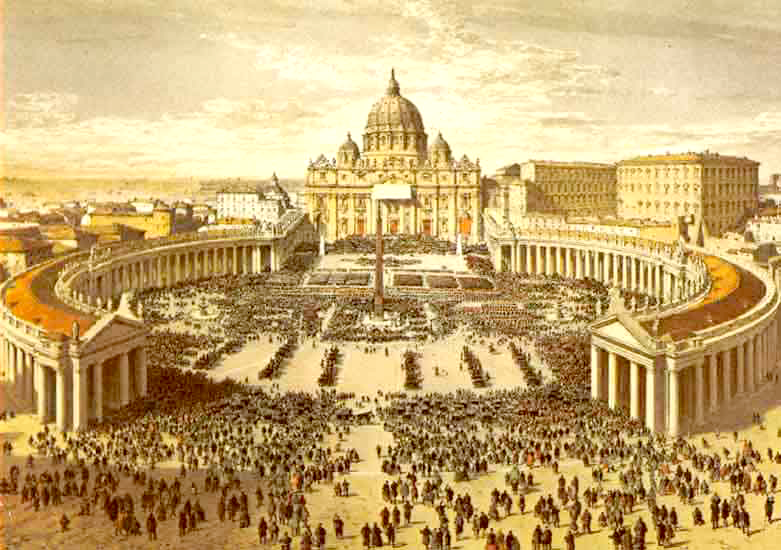
fresh air, they had gathered in Council in the Vatican
 I will
admit that in some of these processes there were incidents where enthusiasm
overcame taste, particularly in the heady early years, where lack of experience
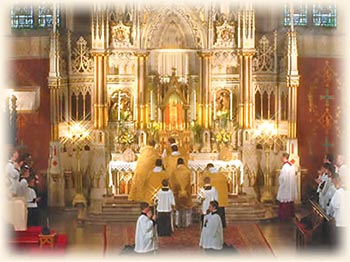
with the new liturgical freedom led to some shallow phenomena perhaps best
described (misquoting REM) as “shiny happy Christians holding hands.” But, in
general, this settled down pretty quickly with most parishes and local church
groups finding tasteful, meaningful ways of celebrating liturgy – at least in
those church communities where ministers and laity worked on it together.
I will
admit that in some of these processes there were incidents where enthusiasm
overcame taste, particularly in the heady early years, where lack of experience
with the new liturgical freedom led to some shallow phenomena perhaps best
described (misquoting REM) as “shiny happy Christians holding hands.” But, in
general, this settled down pretty quickly with most parishes and local church
groups finding tasteful, meaningful ways of celebrating liturgy – at least in
those church communities where ministers and laity worked on it together.
 Seven years
of Benedict XVI have seen the closing of the last of the windows opened by John
XXIII, half a century ago. It is reported that his greatest wish before his
death is the reconciliation of the Society of Saint Pius X, a right-wing group
which explicitly rejects the reforms of Vatican II, with
Seven years
of Benedict XVI have seen the closing of the last of the windows opened by John
XXIII, half a century ago. It is reported that his greatest wish before his
death is the reconciliation of the Society of Saint Pius X, a right-wing group
which explicitly rejects the reforms of Vatican II, with Rome

Towards the
end of that post I wrote about a tendency I perceive within the Catholic
Church since the end of the 70s “away from openness, dialogue and courage.” I
want to come back to this now.
Around
fifty years ago, a new Zeitgeist seemed
to be sweeping across the world. Its roots were many and complex, going back to
the end of World War II and the bi-polar post-war settlement, but also
involving a growth of prosperity, the beginning of the dismantling of political
colonialism, the threat of imminent nuclear annihilation, the growth of the
Youth Culture, the spread of TV, the Kennedy-Camelot, the emergence of rock and
roll and the Beatles. It all led to an atmosphere, almost impossible to
describe, but immediately recognisable to all of us – the Sixties.
“Come mothers and fathers
Throughout the land
And don't criticize
What you can't understand
Your sons and your daughters
Are beyond your command
Your old road is
Rapidly agin'
Please get out of the new one
If you can't lend your hand
For the times they are a-changin'.”
Throughout the land
And don't criticize
What you can't understand
Your sons and your daughters
Are beyond your command
Your old road is
Rapidly agin'
Please get out of the new one
If you can't lend your hand
For the times they are a-changin'.”
 |
| Pope John XXIII |
It was an
amazing phenomenon. In the first session of the Council the bishops basically
threw out all the careful plans which had been made by the professional Vatican bureaucrats – designed to produce a lot of
sonorous discussions resulting in practically no real change whatsoever – and
made it quite clear that everything was
on the agenda. In an unparalleled atmosphere of courage and hope, they
proceeded to initiate a vast programme of reform, from the liturgy to the
structures of church government and the making of decisions.
But beyond
all of this was something more; something essential, something intangible. If I
were still a believer, I would describe it as a sense of the movement of the
Holy Spirit; a creative wind tossing ossified, petrified structures up into the
air, letting wonderful new patterns form, like the shaking of a kaleidoscope.
It is what has been called “the Spirit of the Council” ever since.
It is
something which is now being systematically stifled and liquidated by the
official organs of the Catholic Church. This process began quietly and
tentatively soon after the Council ended, grew in strength and confidence
during the pontificate of John Paul II, and has become comprehensive during the
reign of Benedict XVI.
The
official line taken by the conservative neo-traditionalists who are now in firm
control of nearly all the positions of power in the Church is that many of the
changes implemented in the wake of the council were never formally approved and
nearly all of the changes still demanded by many Catholics were never intended
by the fathers of the Council. They go on to argue that Vatican II was a purely
“pastoral” council and never understood itself as in any way having a mandate
to deliberate and make decisions on “issues of doctrine.”
Such a line
of argument is disingenuous, to say the least. It is true that the Council did
not concern itself with such doctrinal issues as the internal relations between
the three persons of the Trinity, the understanding of the two natures – human
and divine – in the person of Christ, or the relationship between faith and
good works in the economy of salvation. But Vatican II did have a very specific doctrinal aspect, one that was as
far-reaching as it was practical. For the main theme of the Council was the Church; and it put forward a
theological vision of the Church which was open, hopeful, tolerant and
visionary – and one with many practical consequences.
I’m not
going to go into further theological specifics here – though I am sure, even as
a former believer, that I can back up any of my analysis with sound (orthodox)
Catholic theological argument (I did, after all, spend quite a number of years
studying theology). Suffice it to say that the ideas presented in Lumen Gentium, the Constitution on the
Church which was the first formal document produced by the Council – concepts
such as that of the Church as the People of God, collegiality, the common
priesthood of the faithful (laity), as well as what it has to say about
non-Catholic Christians and non-believers – have vast theological consequences,
as well as organisational ones.
And this is
where the nub of the problem lies. The teaching of Lumen Gentium, even taken on its own, but particularly when read
together with Gaudium et Spes (the
Constitution of the Church in the Modern World) in the context of the open,
hopeful, positive “Spirit of the Council,” is incompatible with an exclusivist,
top-down, authoritarian model of power and unity in the Church. This is
something which the majority of committed Catholics recognised immediately. The
first area in which it was acted on was that of liturgy. Following the lead of
the Council, which removed the requirement for the mass to be celebrated in
Latin and emphasised a broader, richer view of the Eucharist beyond the
sacrificial, the laity (by and large) eagerly empowered themselves in a
continuing, creative, living celebration of liturgy, making it rich and
meaningful in hundreds of different cultural situations.
However the
liturgy is only the final expression of a living, vibrant church. And that
vibrancy comes from a church where all its members can identify with a church
as their church, where they have
accepted the teaching of the council that they are the church.
In the end,
it comes down to a basic human reality – though not one which the “official”
Catholic Church likes to talk open and honestly about – power. This is all the
more hypocritical, because the conservative neo-traditionalists show in their
every action that this, in fact, is what they are really concerned about. The
message of the Council was that the Church was not the administrative organisation of priests, bishops and pope,
organised from the top down in Rome
But all of
this involves embracing a basic faith in the church, defined as all its
members. I would even go farther and suggest that it involves embracing a basic
faith in the presence of God, through the Holy Spirit, guiding the church.
In
retrospect, it was all too good to be true. It would have meant an exclusivist
elite accepting a more generous, inclusive reality and giving up power,
privilege and the assurance that they were always right. It was never going to
happen.
Back in the
late sixties and the seventies, however, many believed that it would.
Disorganised, knocked off balance by the fresh wind of the Spirit of the
Council, the traditionalist conservatives took cover. The Zeitgeist was against them. But even in the sixties they saw fresh
signs of hope. The Council had left the vexed question of artificial
contraception to the new pope, Paul VI, generally seen as a sympathiser with
moderate reform. A theological commission reported in favour of the Church
allowing contraception for Catholics. But Paul lost his nerve in the face of
what he saw as a too drastic change in the traditional teaching of the Church
and reaffirmed the ban on contraception with Humanae Vitae in 1968.
However, it
was ten years later that the atmosphere definitively changed in favour of the
traditionalists. The election of Karol Wojtyla as John Paul II put a man at the
helm of the Catholic Church whose understanding of the way things should be
organised was deeply influenced by his Polish experience. The Catholic Church
in Poland Poland
Many of us
gave up and got out. And, in doing so, we inevitably strengthened the position
of a growing group of new traditionalists, who saw a life in the church as a
possibility for a life governed by certainties, for a life in a secure enclave,
undisturbed by the complexity of real life where things aren’t always black and
white and there aren’t always clear answers to every question. A security made
even easier by the identification of the enemy within; the liberals, those who
challenged the newly-embraced old certainties. Those teaching – oh, how
ghastly! – heresy.
John Paul
II was pope for over twenty six years. This meant that practically all the
cardinals voting for his successor had been appointed by him. It was no real
surprise, then, when they elected Josef Ratzinger, the man who had been the Vatican
 Seven years
of Benedict XVI have seen the closing of the last of the windows opened by John
XXIII, half a century ago. It is reported that his greatest wish before his
death is the reconciliation of the Society of Saint Pius X, a right-wing group
which explicitly rejects the reforms of Vatican II, with
Seven years
of Benedict XVI have seen the closing of the last of the windows opened by John
XXIII, half a century ago. It is reported that his greatest wish before his
death is the reconciliation of the Society of Saint Pius X, a right-wing group
which explicitly rejects the reforms of Vatican II, with
The last
vestiges of the “Spirit of the Council” are now being dealt with. Dissenting theologians
are being silenced – this link tells of some of them. For
English-speaking countries, a new translation of the Roman Missal (the basic
official textbook for all major liturgy) has been mandatory for a few months
now. From what I have seen of it (and read and heard about it), it seems to be
deliberately obscurant, stilted, and, at times, downright incomprehensible. Getting
the first (and last) areas where openness and innovation ruled back under
control, or simply Rome
Does it
matter, anyway? As someone who has also trained as a historian, I sometimes
wonder whether the conservatives’ analysis may not be more correct in the long
term. Perhaps that wonderful outburst of chaotic creativity, of rapprochement with modernity, of a
vision of the church inspired by fearlessness, hope, and faith in the
Resurrection unleashed by the Council was simply a momentary aberration in the millennial-long
history of an organisation which regards everything not under its direct
control with deep suspicion. Perhaps the pre-conciliar view of humanity as
deeply sinful, untrustworthy, in need of constant guidance and ruling by an
infallible spiritual leadership, a humanity whose unworthiness in the face of a
stern but loving God could only be propitiated by the sacrifice of His Only Son
on the cross, is the more enduring Catholic vision. Maybe that vision of
freedom, of liberation, of the humiliation of the powerful and the exaltation
of the lowly, of trust, of love – that vision inspired by a Jesus whose most
frequent greeting was, “Fear not!” – which inspired me in my youth to think I
could give my life to the church, was nothing more than hippy-dippy sixties
thinking.
If so, then
I am well out of it. Still, though I no longer believe in God, and though my
ideals have taken more than a few knocks in the course of my life, I refuse to abandon
a more generous vision in favour of a more niggardly one – though the grounds
on which I accept it are now different, freely chosen ones. But that is another
story. That the Catholic Church, or, rather, those who lead it and exercise
power within it, prefer a message dominated by pessimism, fear, and control,
rather than one inspired by openness, trust, and hope seems to me to show a weakness
of faith in the life and message of the man/God they claim as their foundation
and inspiration.
Pictures retrieved from:
https://glenwj.files.wordpress.com/2010/10/jesus-christ-superstar.jpg?w=500&h=500
https://glenwj.files.wordpress.com/2010/10/jesus-christ-superstar.jpg?w=500&h=500